Group · Vegetables
Courgette
The courgette is a fruit-vegetable of the gourd family, harvested before maturity while its skin is still tender and shiny. It comes in several varieties: long green, yellow, round Nice-style, and courgette flowers. A star of Mediterranean cooking, it suits countless preparations, raw or cooked. With only 15.5 kcal per 100 g, rich in water and low in fat, it fits perfectly into a balanced diet and a light menu. Its nutrition facts make it a great ally: little carbohydrate (1.4 g), gentle fibre, and a useful amount of potassium and vitamin C. Versatile and inexpensive, the courgette delights food lovers and active people watching their figure alike.

Macronutrient breakdown
Nutrition table per 100 g
| Calories | 16 kcal |
| Kilojoules | 65 kJ |
| Protein | 1 g |
| Carbohydrate | 1,4 g |
| Fat | 0,4 g |
| Fibre | 1,5 g |
Micronutrients per 100 g
All measured nutrients, ranked by share of the daily reference intake.
- Potassium238 mg12 %
- Phosphorus65 mg9 %
- Copper0,09 mg9 %
- Magnesium22,3 mg6 %
- Vitamin K14,2 µg6 %
- Omega-3 ALA0,11 g6 %
- Manganese0,09 mg4 %
- Vitamin C2,9 mg4 %
- Vitamin B9dietary folate equivalents32,8 µg
See the other 6 nutrients
- Calcium19,3 mg2 %
- Iron0,32 mg2 %
- Zinc0,22 mg2 %
- Vitamin A14,4 µg2 %
- Vitamin E0,12 mg1 %
- Omega-6 LA0,04 g0 %
Anses Ciqual 2025. Source: Anses, 2025, Ciqual food composition table
Tips
The courgette can be enjoyed all year round, but its peak season runs from spring to late summer. Choose one that is firm, smooth and not too big: smaller ones have more flavour and less water. Keep it for a few days in the fridge salad drawer, without washing it beforehand.
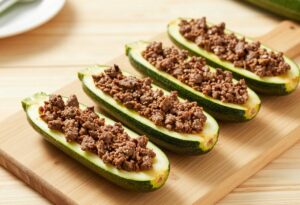
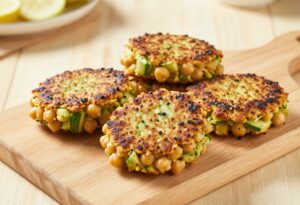
In the kitchen, the courgette is surprisingly versatile. Raw, cut into thin slices or into spaghetti (the famous “courgetti”), it adds crunch to salads. Cooked, it can be steamed, pan-fried, roasted or turned into ratatouille with aubergine, tomato and pepper. To preserve its vitamin C and potassium, choose gentle, quick cooking, steamed or just seared. Also think of stuffed courgettes, fritters, velvety soups and lighter gratins.
Key nutrients: the courgette is more than 90% water, which explains its low calorie density. It provides gentle fibre that is well tolerated by sensitive guts, as well as minerals (potassium, magnesium) and antioxidants such as lutein. Its low glycaemic index and low sugar content make it an ideal vegetable for weight control and blood sugar balance.
- Recommended portion: 150 to 250 g per meal, as a side or a main dish.
- Smart pairings: with a drizzle of olive oil, garlic, herbs or a lean protein source.
- Weight-loss tip: it can replace part of the starchy foods in a gratin or stir-fry to lighten the plate.
For active people: low in calories, the courgette does not provide immediate energy before exercise, but it is perfect for recovery, rehydrating and replenishing minerals without weighing down digestion. Combine it with a source of complex carbohydrate and protein for a complete post-training meal. If you want to balance your intake, discover our guidelines for a balanced diet and explore other low-calorie vegetables in our Vegetables family.
Things to watch: the courgette is very low in calories, but keep an eye on how it is prepared. Fried, breaded or drowned in cream and cheese, its calories climb quickly. To enjoy its benefits without excess, go for light cooking and controlled seasoning. You can compare its figures with other foods using the calorie table.