Group · Fish
Sprats
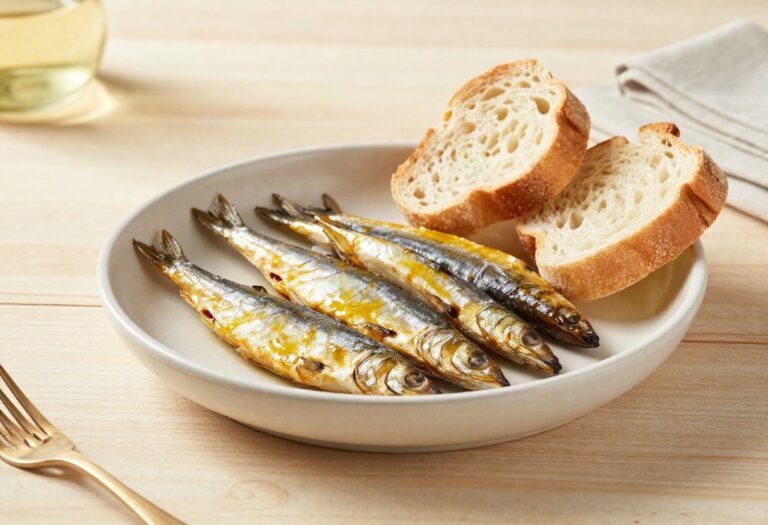
The sprat is a small oily fish of the Baltic and North Sea, close to herring and sardine. It is mostly eaten smoked or tinned, and it is often the fish sold as « Norwegian sardines ».
In terms of nutrition facts, raw: 189 kcal per 100 g, with 11.9 g of fat including 2.56 g of omega-3, and 19.8 g of protein. It provides 220 mg of phosphorus, 230 mg of potassium and 1.02 mg of zinc per 100 g.
Macronutrient breakdown
Nutrition table per 100 g
| Calories | 189 kcal |
| Kilojoules | 787 kJ |
| Protein | 19,8 g |
| Carbohydrate | 0,6 g |
| Fat | 11,9 g |
Micronutrients per 100 g
All measured nutrients, ranked by share of the daily reference intake.
- DHA1,39 g556 %
- EPA0,75 g300 %
- Total omega-32,56 g102 %
- Phosphorus220 mg31 %
- Vitamin B35 mg31 %
- Omega-3 ALA0,42 g21 %
- Vitamin E2,5 mg21 %
- Vitamin B20,26 mg19 %
See the other 9 nutrients
- Selenium10 µg18 %
- Copper0,13 mg13 %
- Potassium230 mg12 %
- Zinc1,02 mg10 %
- Manganese0,13 mg7 %
- Magnesium20 mg5 %
- Omega-6 LA0,46 g5 %
- Iron0,59 mg4 %
- Vitamin B10,04 mg4 %
Anses Ciqual 2025. Source: Anses, 2025, Ciqual food composition table
Tips
2.56 g of omega-3: on a par with the best oily fish. That includes 1.39 g of DHA and 0.75 g of EPA. A 100 g portion covers several times the recommended daily intake of long-chain fatty acids.
It is one of the cheapest fish there is. Its size and abundance make it very accessible, even though it rivals salmon on omega-3.
A small fish, few contaminants. It lives two to three years and feeds on plankton: it hardly accumulates any mercury. That is the decisive argument in favour of small oily fish.
Smoked, it becomes salty. The values above are for the raw fish. A smoked version contains several grams of salt per 100 g: do not add salt to anything served with it (see salt).
It is eaten whole, bones included. Like sardine, its soft bones provide calcium. Pan-grilled, it needs no added fat.