Group · Fish
Grilled herring
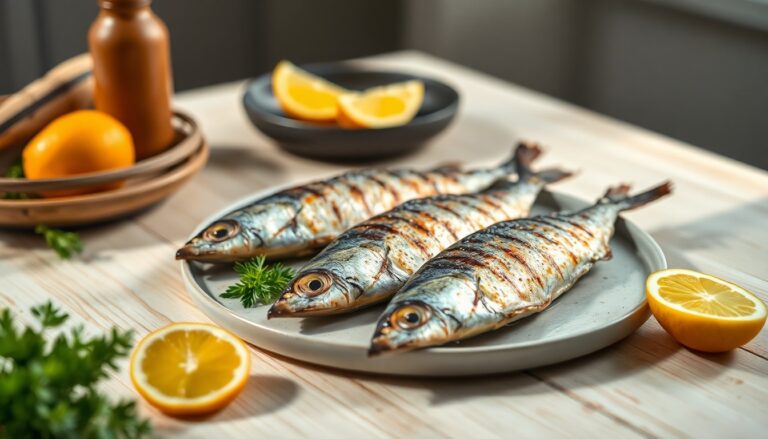
The grilled herring is a tasty preparation of an emblematic oily fish from the cold waters of the North Atlantic and the Baltic. Cooked on a grill or in a pan, this strongly flavoured fish has tender, fragrant flesh, much appreciated in Nordic and Breton cooking. With around 193 kcal per 100 g, it provides 21.6 g of high-quality protein and 11.4 g of fat, including a valuable share of polyunsaturated omega-3 fatty acids. With no carbohydrate or fibre, grilled herring fits easily into a balanced, varied diet. It is a filling option, rich in good nutrients, that deserves a regular place on your weekly menu.
Macronutrient breakdown
Nutrition table per 100 g
| Calories | 193 kcal |
| Kilojoules | 806 kJ |
| Protein | 21,6 g |
| Carbohydrate | 1 g |
| Fat | 11,4 g |
Micronutrients per 100 g
All measured nutrients, ranked by share of the daily reference intake.
- Vitamin B1214,1 µg564 %
- DHA1,23 g492 %
- EPA1,05 g420 %
- Vitamin D10,8 µg216 %
- Total omega-32,28 g91 %
- Selenium46 µg84 %
- Phosphorus307 mg44 %
- Iodine47,7 µg32 %
See the other 17 nutrients
- Vitamin B34,06 mg25 %
- Vitamin B60,35 mg25 %
- Potassium425 mg21 %
- Vitamin B20,28 mg20 %
- Copper0,15 mg15 %
- Vitamin B50,76 mg13 %
- Zinc1,24 mg12 %
- Vitamin E1,37 mg11 %
- Magnesium41,5 mg11 %
- Iron1,51 mg11 %
- Vitamin B10,11 mg10 %
- Calcium76,5 mg10 %
- Vitamin B911 µg6 %
- Vitamin A35 µg4 %
- Manganese0,05 mg2 %
- Vitamin C0,7 mg1 %
- Vitamin K10,1 µg0 %
Anses Ciqual 2025. Source: Anses, 2025, Ciqual food composition table
Tips
The grilled herring is best eaten hot, straight off the grill, with steamed potatoes, a green salad or seasonal vegetables. A portion of 100 to 130 g is just right for a meal. To preserve its delicate flavour and its omega-3, choose quick, controlled cooking: gentle cooking remains an excellent way to limit the breakdown of the healthy fatty acids.
Nutrition facts and benefits: herring is an oily fish, like mackerel or sardines. It provides complete protein, omega-3, vitamin D, vitamin B12, selenium and phosphorus. Its glycaemic index is zero because it contains no carbohydrate, which makes it an interesting food for keeping energy steady during a meal.
- Seasonality: herring is traditionally caught in autumn and winter, when its flesh is at its richest and tastiest.
- Smart pairings: fresh herbs (dill, parsley), lemon, shallot, mild mustard or a drizzle of oil to lift the flavour without going overboard.
- Storage: eat fresh herring quickly, within 24 to 48 hours, and keep it well chilled.
For active people: with its 21.6 g of protein per 100 g, grilled herring supports muscle recovery and tissue building after exercise. Its fat content makes it better suited to post-workout meals than to a pre-workout snack, as fats slow down digestion. To top up your protein intake over the day, you can vary with other sources such as the leaner cod. If you plan your meals around sport, our guide to fitness nutrition will help you balance protein, carbohydrate and fat.
Weight control: at 193 kcal per 100 g, grilled herring is reasonable but higher in calories than white fish because of its fat content. If you are trying to lose weight, watch the amount of added fat during cooking and serve it with vegetables. These good fats, eaten in moderation, have their place in a balanced diet. Discover other tasty fish in the fish family to vary your menus throughout the year.