Group · Fish
Trout
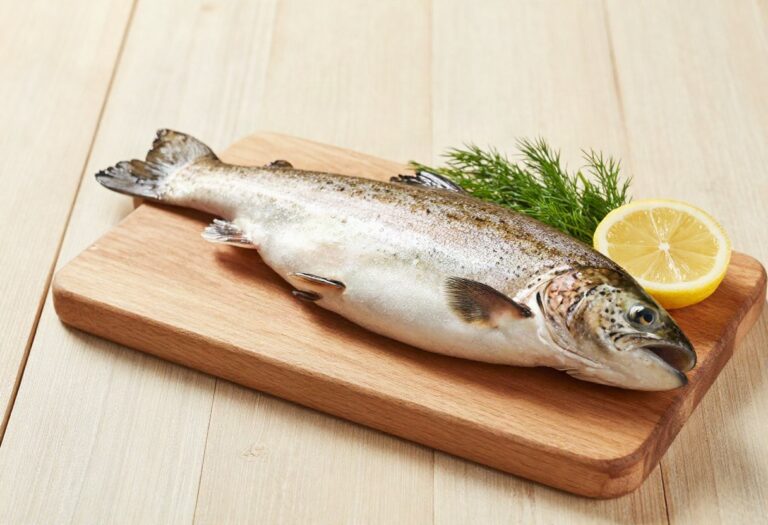
Trout is a freshwater fish prized for its fine, delicate flesh, which is slightly pink depending on the species. It comes in several forms: brown trout, rainbow trout, salmon trout or farmed trout, available fresh, smoked or as fillets. Versatile in the kitchen, it slips easily into a balanced diet. With around 190 kcal and nearly 26.6 g of protein per 100 g, trout offers appealing nutritional values: rich in good-quality protein, it also provides omega-3 fatty acids, B vitamins and selenium. It is a moderately oily fish, tasty and available all year round.
Macronutrient breakdown
Nutrition table per 100 g
| Calories | 183 kcal |
| Kilojoules | 766 kJ |
| Protein | 26,6 g |
| Fat | 8,5 g |
Micronutrients per 100 g
All measured nutrients, ranked by share of the daily reference intake.
- Vitamin B127,49 µg300 %
- DHA0,66 g264 %
- EPA0,28 g112 %
- Phosphorus314 mg45 %
- Vitamin B10,43 mg39 %
- Total omega-30,94 g38 %
- Vitamin B52,24 mg37 %
- Vitamin B35,77 mg36 %
See the other 14 nutrients
- Vitamin B20,42 mg30 %
- Potassium463 mg23 %
- Vitamin B60,23 mg16 %
- Copper0,14 mg14 %
- Iron1,92 mg14 %
- Vitamin B915 µg8 %
- Magnesium28 mg7 %
- Zinc0,71 mg7 %
- Calcium55 mg7 %
- Selenium3 µg5 %
- Iodine6 µg4 %
- Vitamin A19 µg2 %
- Manganese0,03 mg1 %
- Vitamin C0,5 mg1 %
Anses Ciqual 2025. Source: Anses, 2025, Ciqual food composition table
Tips
Trout suits many cooking methods: grilled, poached, baked in a parcel, oven-baked or pan-fried with a drizzle of olive oil and a few herbs. Gentle cooking keeps the flesh tender and protects fragile nutrients, notably its omega-3. A portion of 100 to 150 g suits a meal, served with green vegetables and a wholegrain cereal for a complete, filling dish.
Nutritionally, trout is an excellent source of protein (nearly 26.6 g per 100 g), with no carbohydrates or fibre at all. Its glycaemic index is therefore zero, making it a good food for weight loss or a balanced diet. Its fat (about 8.47 g) is partly made up of beneficial unsaturated fatty acids. It also provides vitamin B12, vitamin D, phosphorus and selenium, micronutrients that are useful every day.
- Varieties and seasonality: trout is available all year round thanks to farming, but river fishing is more marked in spring and summer.
- Storage: eat fresh trout within 24 to 48 hours, or freeze it quickly. The smoked version keeps for a few days in the fridge.
- Pairings: lemon, dill, flaked almonds, courgettes or steamed potatoes bring out its delicate flavour.
For active people, trout is a heavyweight ally: its wealth of complete protein supports muscle recovery and the maintenance of lean mass. Include it in the meal after a training session, paired with a source of carbohydrates such as rice or sweet potato. If you are looking for other protein sources, discover our protein snack ideas to round out your day. To organise your intake in more depth, also read our advice on fitness nutrition.
For weight control, trout stays reasonable in calories as long as you avoid fatty sauces and deep-frying. Choose simple cooking methods and limit added fat. If you enjoy fine-fleshed fish, you can ring the changes with rainbow trout or explore the whole fish family to diversify your diet. To compare energy content, the calorie table remains a handy reference.