Lutein and zeaxanthin: benefits for eyes, AMD, foods and dose
The short answer
Lutein and zeaxanthin are two yellow pigments found in leafy greens and egg yolk. They build up in the macula, the part of the retina used for sharp central vision. Their benefit is best shown in one situation: existing age-related macular degeneration (AMD). In the large AREDS2 trial, 10 mg of lutein and 2 mg of zeaxanthin a day did not beat placebo in the main analysis, but they proved a better replacement for beta-carotene in the eye formula, since beta-carotene raised lung cancer risk in former smokers. For everyone else, food is enough: spinach, kale, peas and eggs are rich sources. Supplements are well tolerated.
This article is for information and does not replace medical advice. Blurred central vision, wavy lines or a dark spot need a prompt eye exam.
What is lutein?
Lutein and zeaxanthin are carotenoids your body cannot make. They concentrate in the macula as macular pigment, thought to filter some blue light and limit oxidative damage. Supplements usually extract them from marigold petals (Tagetes erecta).
Lutein for eyes: what the AREDS2 trials show
The original AREDS formula
The first AREDS trial found that 500 mg vitamin C, 400 IU vitamin E, 15 mg beta-carotene, 80 mg zinc and 2 mg copper slowed intermediate AMD. The 2023 Cochrane review rates this as moderate-certainty evidence: about 78 fewer cases of late AMD per 1,000 people with intermediate AMD, but only 4 per 1,000 with early AMD.
AREDS2: adding lutein and zeaxanthin
AREDS2 followed 4,203 people aged 50 to 85 for 5 years. On top of the AREDS formula, they were randomized to 10 mg lutein + 2 mg zeaxanthin, omega-3s, both, or placebo.
| Analysis | Progression to late AMD |
|---|---|
| Main analysis: lutein/zeaxanthin vs placebo (5 years) | No significant difference |
| Secondary: with vs without lutein/zeaxanthin | 10% lower risk |
| People with the lowest dietary lutein | 26% lower risk |
| Lutein/zeaxanthin instead of beta-carotene | 18% lower risk; wet (neovascular) AMD 22% lower |
| 10-year follow-up | 9% lower risk with lutein/zeaxanthin |
These secondary analyses are exploratory, but consistent. The key finding: beta-carotene nearly doubled lung cancer risk, mostly in former smokers (2.0% vs 0.9% during the trial; odds ratio 1.82 at 10 years), while lutein showed no significant increase. That is why today’s AREDS2 formula uses lutein and zeaxanthin instead.
Lutein alone?
Cochrane concludes that lutein alone has little or no effect on AMD progression or vision loss versus placebo (low certainty). Its proven role is within a full AREDS2-type formula for people with intermediate AMD.
Cataracts and everyday vision
- Cataracts: in AREDS2, lutein did not reduce cataract surgery overall;
- Macular pigment and contrast: a 38-trial network meta-analysis (Hu, 2024) found supplements raise macular pigment density and contrast sensitivity, with low-quality evidence;
- Screens and blue light: none of these trials shows protection from screen-related eye strain.
Lutein foods: the best sources
| Food | Lutein + zeaxanthin per 100 g |
|---|---|
| Raw spinach | 12.2 mg |
| Raw kale | 6.3 mg |
| Pistachios | 2.9 mg |
| Raw green peas | 2.5 mg |
| Raw zucchini | 2.1 mg |
| Raw egg yolk | 1.1 mg |
| Raw sweet corn | 0.6 mg |
A 100 g serving of spinach matches an AREDS2-dose capsule. Egg yolk has less, but it is well absorbed: a meta-analysis of 5 trials found daily eggs raised macular pigment (see how many eggs a day). Add some fat, as in our kale avocado salad or a spinach avocado omelette.
Lutein and zeaxanthin side effects
Lutein is one of the best-tolerated supplements: thousands took it for 5 years in AREDS2 with no rise in lung cancer. EFSA set an acceptable daily intake of 1 mg per kg of body weight for marigold lutein (70 mg a day at 70 kg), far above the usual 10 mg.
- Smokers and former smokers: avoid eye formulas containing beta-carotene;
- Zinc: AREDS-type formulas contain 25 to 80 mg; in AREDS, zinc caused stomach upset and more genitourinary problems in men;
- Pregnancy and breastfeeding: food sources are fine; ask your doctor about supplements;
- Interactions: none notable for lutein alone; show full formulas to your pharmacist.
How much lutein per day?
- Studied dose: 10 mg lutein + 2 mg zeaxanthin a day (AREDS2), with a meal containing fat.
- Duration: long term; AREDS2 lasted 5 years. Decide with your eye doctor if you have AMD.
- Healthy eyes: eat greens and eggs several times a week; no supplement has been shown to prevent AMD.
Dynveo: lutein at the AREDS2 dose
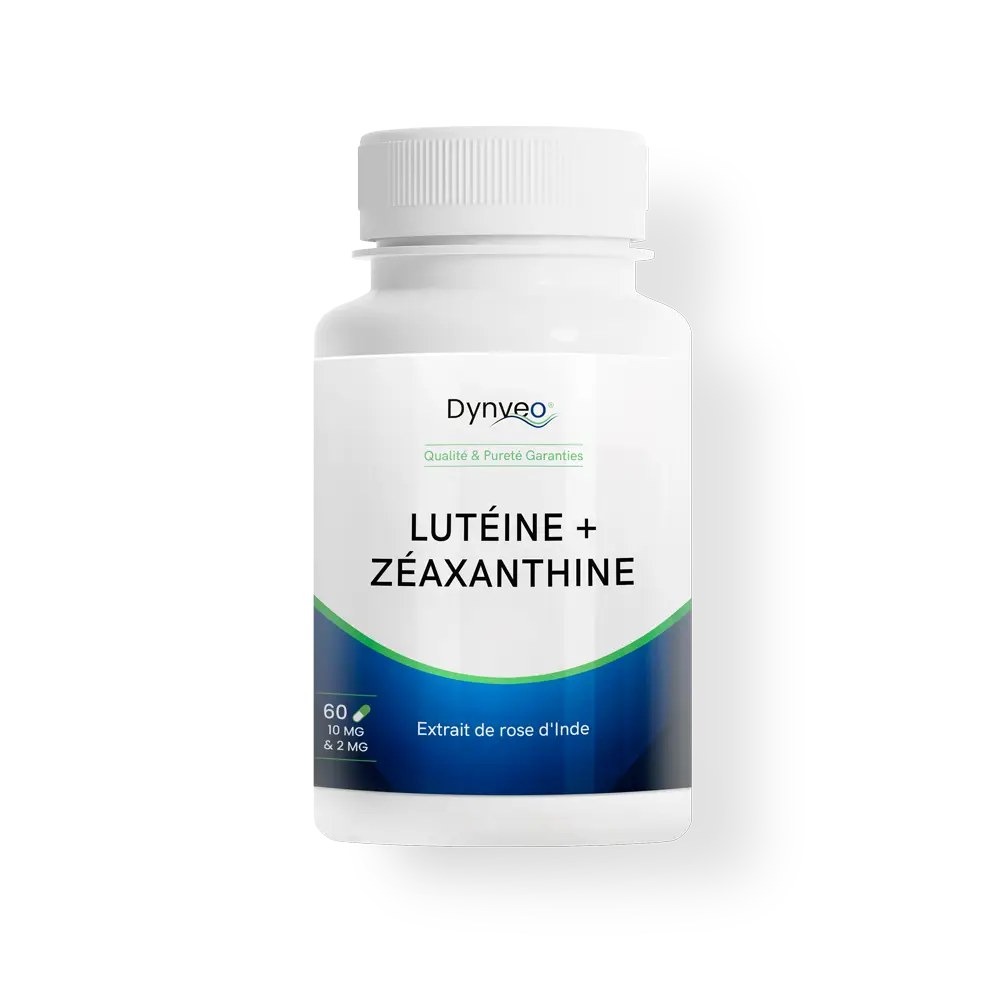
Dynveo’s Lutéine & Zéaxanthine matches the AREDS2 doses in a short formula:
- 50 mg marigold petal extract standardized to 20% lutein and 4% zeaxanthin: 10 mg lutein + 2 mg zeaxanthin per capsule;
- 1 capsule a day with a meal containing fat; 60 capsules, a 2-month supply; pullulan plant capsule;
- HPLC assay and published certificates of analysis for each batch; the brand states French manufacturing;
- €15.90 per jar (price checked on 22/11/2026), about €0.27 a day.
How does the dose compare? It matches AREDS2, but in the trial lutein was added to the AREDS formula; alone, Cochrane found little effect on AMD. This product has not been studied as such.
See Dynveo Lutein + Zeaxanthin →
Partner link: we earn a commission if you order through this link, at no extra cost to you.
Another option: Nutrition•pro Visioptine, a broader formula
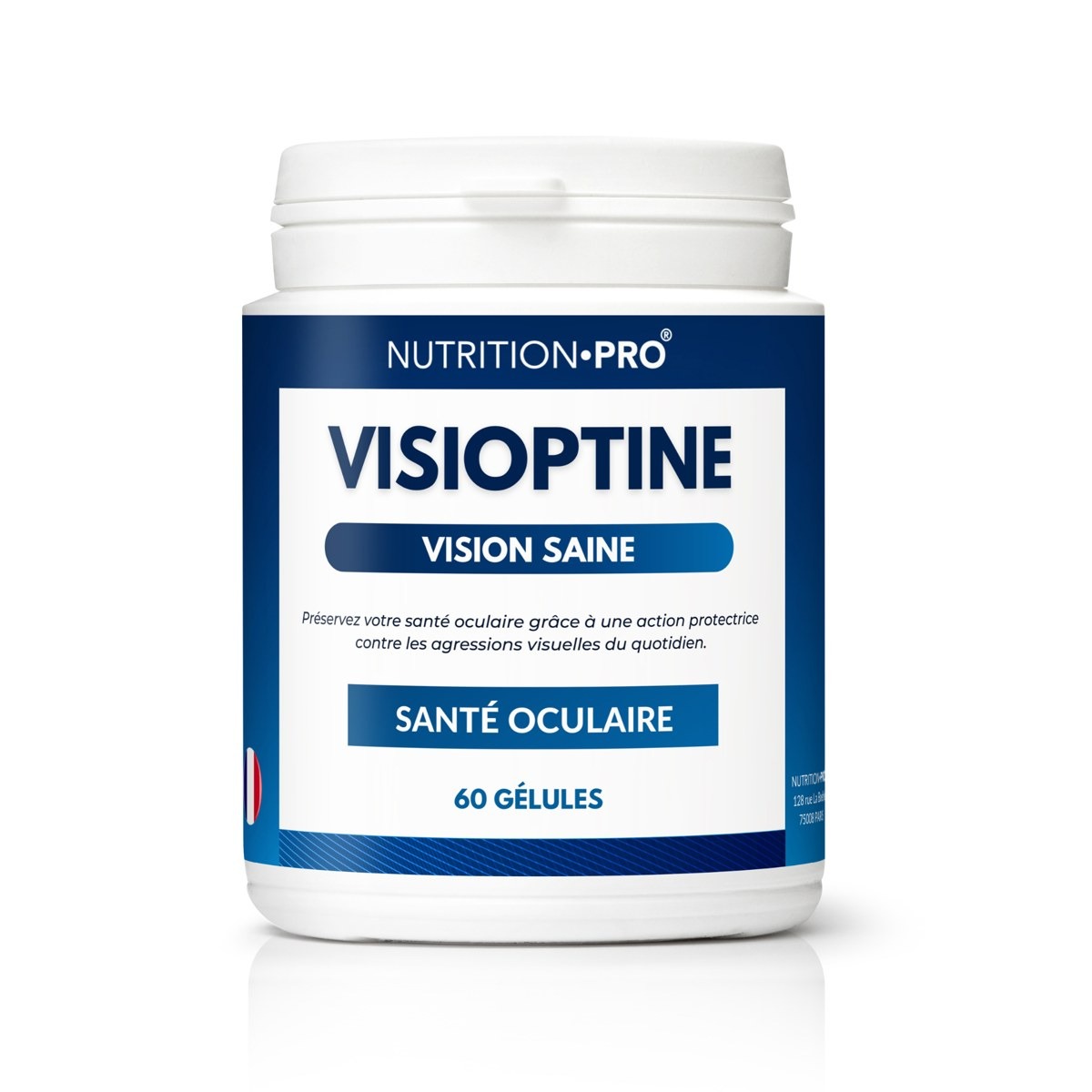
Visioptine provides, per 2 capsules: 10 mg lutein and 5 mg zeaxanthin (marigold extract), 300 mg bilberry, 160 mg vitamin C, 30 mg vitamin E and 3.4 mg zinc, with no beta-carotene. Take it at breakfast; 60 capsules last 30 days. The brand says it designs and makes its formulas in France. €29.99 (price checked on 22/11/2026), about €1 a day, or €26.99 with code SEOCONSULTINGSL (10% off). Lutein matches AREDS2; vitamins C, E and zinc are well below the AREDS formula, and bilberry was not part of those trials. Adults only; not for pregnancy or breastfeeding, per the label.
See Nutrition•pro Visioptine →
Partner link: we earn a commission if you order through this link, at no extra cost to you.
Frequently asked questions
What is lutein good for?
It raises macular pigment. In an AREDS2-type formula, it helps slow intermediate AMD and safely replaces beta-carotene. Alone, its effect on AMD is small or absent.
Which foods are highest in lutein?
Spinach (12.2 mg per 100 g raw) and kale (6.3 mg), then pistachios, peas, zucchini and egg yolk.
Does lutein have side effects?
It is very well tolerated; no specific risk appeared in AREDS2. EFSA’s acceptable intake (1 mg/kg a day) is far above supplement doses.
Lutein vs zeaxanthin: what is the difference?
Two closely related pigments found together in the macula and in the same foods; zeaxanthin is concentrated at the very center. Supplements usually pair 10 mg and 2 mg.
Should I take lutein if my eyes are healthy?
No supplement has been shown to prevent AMD in people without signs of it. Eat greens and eggs, and have regular eye exams after 50.
Sources
- AREDS2 Research Group. Lutein + zeaxanthin and omega-3 fatty acids for age-related macular degeneration: the AREDS2 randomized clinical trial. JAMA, 2013; 309(19): 2005-15. PubMed 23644932
- AREDS2 Research Group. Secondary analyses of the effects of lutein/zeaxanthin on AMD progression: AREDS2 report No. 3. JAMA Ophthalmol, 2014; 132(2): 142-9. PubMed 24310343
- AREDS2 Research Group. Lutein/zeaxanthin for the treatment of age-related cataract: AREDS2 report no. 4. JAMA Ophthalmol, 2013; 131(7): 843-50. PubMed 23645227
- Chew E.Y. et al. Long-term Outcomes of Adding Lutein/Zeaxanthin and ω-3 Fatty Acids to the AREDS Supplements: AREDS2 Report 28. JAMA Ophthalmol, 2022; 140(7): 692-698. PubMed 35653117
- Evans J.R., Lawrenson J.G. Antioxidant vitamin and mineral supplements for slowing the progression of AMD. Cochrane Database Syst Rev, 2023; 9: CD000254. PubMed 37702300
- Hu W. et al. Effect of Antioxidant Supplementation on Macular Pigment Optical Density and Visual Functions. Adv Nutr, 2024; 15(5): 100216. PubMed 38582248
- Khalighi Sikaroudi M. et al. A positive effect of egg consumption on macular pigment and healthy vision. J Sci Food Agric, 2021; 101(10): 4003-4009. PubMed 33491232
- EFSA ANS Panel. Scientific Opinion on the re-evaluation of lutein (E 161b) as a food additive. EFSA Journal, 2010; 8(7): 1678. PubMed 42005760
- USDA, FoodData Central (SR Legacy), lutein + zeaxanthin. fdc.nal.usda.gov