Ultra-Levure: is it a probiotic? Benefits, duration and best time to take it
The short answer
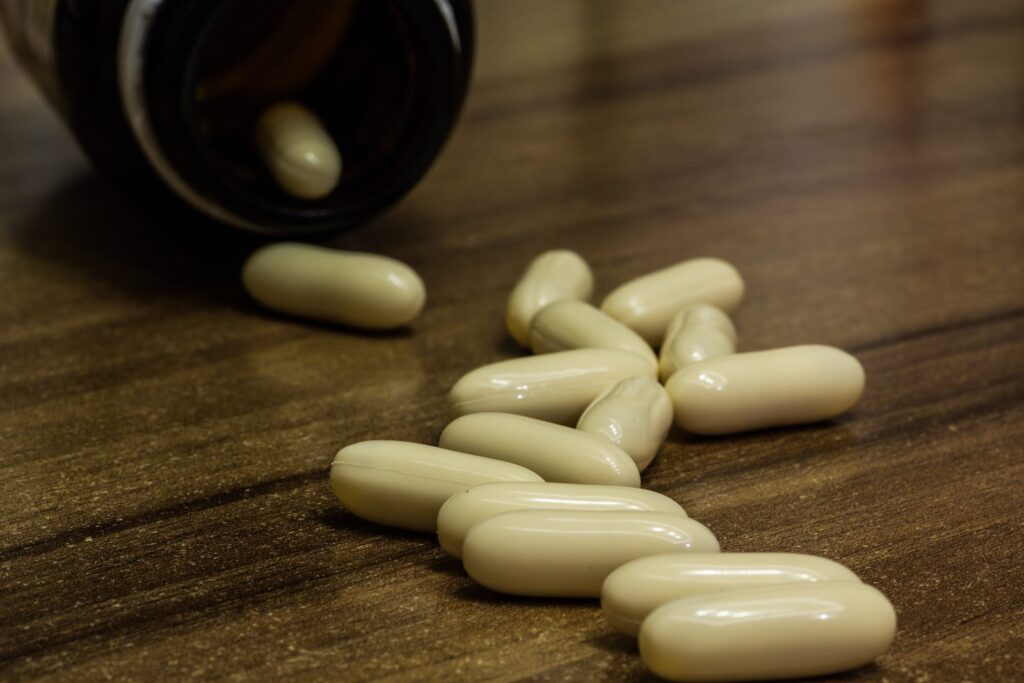
Yes, Ultra-Levure is a probiotic, but above all it is a medicine. It contains a live yeast, Saccharomyces boulardii CNCM I-745, and its official authorisation covers a single use: the supportive treatment of diarrhoea, alongside rehydration. The leaflet gives no timing in relation to meals: what matters is to swallow the capsule with a glass of water and not to mix it with food or a drink that is too hot, ice-cold or alcoholic. Because it is a yeast, antibiotics do not destroy it; however, it must not be combined with an antifungal.
This article is based on the official leaflet and published studies; it does not replace the advice of your doctor or pharmacist.
What exactly is Ultra-Levure?
Ultra-Levure is a medicine made by the laboratory Biocodex, sold in French pharmacies without a prescription and not reimbursed. Its active substance is a yeast, Saccharomyces boulardii strain CNCM I-745, freeze-dried so that it stays alive. The French medicines agency (ANSM) classes it among the « antidiarrhoeal micro-organisms » and describes it as a « replacement flora ».
A yeast is a microscopic fungus, not a bacterium. That is what sets it apart from most probiotics, which are based on lactobacilli or bifidobacteria, and it explains two of its particularities: antibiotics do not affect it, whereas antifungals do.
Another important point: according to the summary of product characteristics, the yeast « passes through the digestive tract alive without colonising it » and disappears from the stools 2 to 5 days after the treatment stops. So it acts while you take it, then it leaves.
The three forms and their official dosage
| Form | From age | Dosage |
|---|---|---|
| Ultra-Levure 200 mg, capsule | 6 years | 1 capsule a day |
| Ultra-Levure 50 mg, capsule | 6 years | 4 capsules a day, in two doses |
| Ultra-Levure 100 mg, powder in sachet | 2 years | 2 sachets a day, in two doses, in a glass of water |
The capsules are contraindicated before the age of 6, because a child risks choking. For a child aged 2 to 6, the sachet form is the one available, and the leaflet points out that at this age rehydration « may be the essential part of the treatment ».
Before or after a meal?
This is the most frequently asked question, and the answer is simple: the leaflet gives no instruction in relation to meals. So you can take it whenever suits you, before, during or after eating. The only official instructions are these:
- swallow the capsule with a glass of water;
- do not mix it with a liquid or food that is too hot, above 50 °C, or ice-cold, or alcoholic: these are living cells, which grow at 37 °C;
- for the sachets, mix the powder into a glass of water.
In other words, avoid tipping it into a coffee or a scalding soup, but do not worry about the timing of your meal.
Ultra-Levure and antibiotics
Antibiotics act on bacteria, not on yeasts. That is why S. boulardii is often suggested during a course of antibiotics, and it is in this situation that it is best studied.
| Antibiotic-associated diarrhoea | Without S. boulardii | With S. boulardii |
|---|---|---|
| All patients (21 trials, 4,780 people) | 18.7% | 8.5% |
| Children (6 trials) | 20.9% | 8.8% |
| Adults (15 trials) | 17.4% | 8.2% |
Put simply, the yeast roughly halved the risk of antibiotic-associated diarrhoea: 10 people had to be treated to prevent one case. For Clostridium difficile diarrhoea, the reduction was significant only in children, based on just two trials, and not in adults.
Note that this is not the official indication of Ultra-Levure in France: the leaflet refers to treating diarrhoea, not preventing it. If you want to take it during a course of antibiotics, ask your doctor or pharmacist for advice.
The real trap is antifungals. The leaflet is explicit: « owing to its fungal nature, do not combine this medicine with an oral or systemic antifungal ». An oral treatment for a fungal infection makes the yeast useless.
Does it work against diarrhoea?
We should be honest: the summary of product characteristics itself states that « the clinical efficacy of this medicine in the treatment of diarrhoea has not been documented by controlled trials ». Since then, studies have accumulated, mainly in children:
| Situation | What the studies show | Level of evidence |
|---|---|---|
| Prevention of antibiotic-associated diarrhoea | risk roughly halved | meta-analysis of 21 trials |
| Acute gastroenteritis in children | diarrhoea shortened by about one day, hospital stay shortened by 0.85 days | low to very low |
| European recommendation for gastroenteritis in children | weak recommendation in favour of S. boulardii | low to very low |
The 2020 meta-analysis notes that most trials were of limited methodological quality, with only one properly blinded. The European paediatric gastroenterology group did not find, for any strain, two high-quality trials showing a benefit, and so issued only weak recommendations. S. boulardii remains the most studied strain.
In every case, rehydration comes first. The yeast is only an add-on.
Other studied uses of S. boulardii
The yeast in Ultra-Levure has been tested in situations other than ordinary diarrhoea. These uses are not part of the medicine’s official indication in France, but they are often mentioned:
| Situation | What the studies show |
|---|---|
| Treatment of Helicobacter pylori infection, alongside antibiotics | across 11 trials and 2,200 participants, the bacterium was eradicated in 80% of patients with the yeast against 71% without; side effects of the treatment were reduced by more than half, mainly diarrhoea and nausea |
| Relapses of Clostridium difficile diarrhoea | in a 1994 trial, in patients who had already relapsed, 34.6% had a further relapse with the yeast added to antibiotics against 64.7% on placebo; no benefit demonstrated in a first episode |
| Prevention of C. difficile diarrhoea during antibiotics | significant reduction in children only, based on two trials |
For Helicobacter pylori, the authors point out that even with the yeast, the cure rate remained lower than desired: it does not replace a suitable antibiotic treatment. For C. difficile, a serious infection, management is always a matter for a doctor. In all these cases, the yeast is a supplement to treatment, never a substitute, and its use should be discussed with the prescriber.
In children: rehydration first
The Ultra-Levure leaflets insist on one point, especially for young children: the yeast is only an add-on, and the priority is to replace the water and salts that are lost. For the sachets, intended from age 2, the summary of product characteristics states that in children aged 2 to 6, rehydration « may be the essential part of the treatment » and that it is done with an oral rehydration solution, following the reconstitution instructions.
- Oral rehydration solutions are sold in pharmacies, as sachets to dissolve in water.
- If in doubt, and always for an infant, quickly ask a doctor for advice.
Reminder: before the age of 6, the capsules are contraindicated because of the risk of choking. Only the sachets are intended, from age 2.
How long should you take it for?
The leaflet sets no maximum duration, but it gives a clear benchmark: in adults and children over 6, you should see a doctor promptly if nothing improves after 2 days. You should also seek advice without waiting in the case of:
- fever or vomiting;
- blood or mucus in the stools;
- intense thirst or a dry tongue, signs of early dehydration.
Can you take it continuously? Nothing in the leaflet provides for long-term use: the indication is diarrhoea, a one-off episode. Diarrhoea that lasts or comes back often should be investigated by a doctor rather than masked by permanent use. And as the yeast disappears 2 to 5 days after you stop, continuous use does not « rebuild » the gut flora in a lasting way.
Who should not take it?
| Situation | Verdict | Why |
|---|---|---|
| Healthy adult, short-lived diarrhoea | 🟢 possible | official indication, alongside rehydration |
| Child aged 2 to 6 | 🟠 sachets only | capsules contraindicated (choking); rehydration takes priority |
| Pregnancy | 🟠 best avoided as a precaution | insufficient data to rule out any risk |
| Oral antifungal treatment under way | 🔴 do not combine | the antifungal destroys the yeast |
| Hereditary galactose intolerance, total lactase deficiency | 🔴 capsules not recommended | the 200 mg capsule contains 36 mg of lactose |
| Central venous catheter, intensive care patient or weakened immune system | 🔴 contraindicated | risk of the yeast passing into the blood |
The most serious risk concerns vulnerable people: very rare cases of fungaemia, where the yeast passes into the blood, and of sepsis have been reported, mainly in patients with a central venous catheter, in intensive care or with a weakened immune system. That is why the capsules must not be opened in the room of these patients, even if they are not being treated themselves, as the yeast can spread through the air or via the hands.
Side effects
They are rare. The leaflet lists constipation (very rare), hives (rare), and allergic reactions of unknown frequency: redness, itching, swelling of the face, and exceptionally anaphylactic shock. In the event of an overdose, « no symptoms are to be feared ».
Medicine or food supplement?
Saccharomyces boulardii is also found in food supplements. The difference is not trivial:
| Ultra-Levure, medicine | Food supplement | |
|---|---|---|
| Authorisation | marketing authorisation issued by the ANSM | notification to the DGCCRF (the French consumer protection authority), with no prior assessment of efficacy |
| Strain and dose | strain CNCM I-745, fixed and controlled dose | to be checked on the label |
| Leaflet | detailed indications, contraindications and side effects | more limited labelling information |
| Permitted claim | supportive treatment of diarrhoea | no health claim may state that it treats a disease |
The contraindications linked to the yeast itself, people with a weakened immune system, in intensive care or with a catheter, and combination with antifungals, apply whatever the product.
Storage and presentations
- Storage: at a temperature not exceeding 25 °C, away from moisture; shelf life of 3 years for the 200 mg capsule.
- Presentations: 200 mg capsules in a glass bottle or blister packs, 50 mg capsules, 100 mg powder sachets.
- Excipient with known effect: 36 mg of lactose per 200 mg capsule.
- Price: free pricing, non-reimbursable medicine, supplied without a prescription.
As the yeast is alive, heat is its enemy: that is also why you should not mix it with a drink or food above 50 °C.
What should you eat during diarrhoea?
The Ultra-Levure leaflet accompanies the treatment with simple dietary advice:
- drink plenty, salty or sugary drinks, to make up for the losses;
- keep eating, favouring grilled meats and rice;
- temporarily avoid raw vegetables, fruit, green vegetables, spicy dishes, and ice-cold foods and drinks.
To find out more about gut flora, read our guide to probiotics and the gut microbiome.
For probiotics based on bacteria, the timing of the meal matters more: see probiotics morning or evening.
Frequently asked questions
Is Ultra-Levure a probiotic?
Yes: it is a live yeast, Saccharomyces boulardii CNCM I-745. But in France it is a medicine, indicated as a supportive treatment for diarrhoea.
Should you take Ultra-Levure before or after a meal?
The leaflet says nothing on this. Swallow the capsule with a glass of water, and avoid mixing it with food or a drink above 50 °C, ice-cold or alcoholic.
Can you take Ultra-Levure with an antibiotic?
Yes, antibiotics do not act on yeasts. However, it must not be combined with an oral antifungal.
How long should you take Ultra-Levure for?
For as long as the diarrhoea lasts. If there is no improvement after 2 days, or if you have a fever, blood in the stools or signs of dehydration, see a doctor promptly.
Can you take Ultra-Levure continuously?
The leaflet does not provide for it. Diarrhoea that lasts should be seen by a doctor.
Ultra-Levure during pregnancy?
As a precaution, the leaflet says it is preferable not to use it, owing to insufficient data.
Does Ultra-Levure cause constipation?
It is possible but very rare, according to the leaflet.
Does Ultra-Levure help against Helicobacter pylori?
Combined with antibiotic treatment, the yeast S. boulardii improved the eradication rate, 80% against 71%, and reduced the diarrhoea and nausea caused by the treatment, across 11 trials. This is not an official indication: talk to your doctor.
Can you open an Ultra-Levure capsule for a child?
The leaflet provides for the capsules to be swallowed; for a child aged 2 to 6, the sachet form is the one intended. Ask your pharmacist for advice.
Is Ultra-Levure reimbursed?
No: it is a non-reimbursable medicine, with free pricing, supplied without a prescription.
Where should you store Ultra-Levure?
Below 25 °C, away from moisture, according to the leaflet.
Our sources
- ANSM, public medicines database: summaries of product characteristics and leaflets for Ultra-Levure 200 mg capsule, 50 mg capsule and 100 mg powder in sachet, updated on 5 August 2024.
- Szajewska H, Kołodziej M. Systematic review with meta-analysis: Saccharomyces boulardii in the prevention of antibiotic-associated diarrhoea. Aliment Pharmacol Ther, 2015 (PMID 26216624).
- Szajewska H, Kołodziej M, Zalewski BM. Systematic review with meta-analysis: Saccharomyces boulardii for treating acute gastroenteritis in children, a 2020 update. Aliment Pharmacol Ther, 2020 (PMID 32056266).
- Szajewska H et al., ESPGHAN working group. Use of probiotics for the management of acute gastroenteritis in children: an update. J Pediatr Gastroenterol Nutr, 2020 (PMID 32349041).
- Szajewska H, Horvath A, Kołodziej M. Systematic review with meta-analysis: Saccharomyces boulardii supplementation and eradication of Helicobacter pylori infection. Aliment Pharmacol Ther, 2015 (PMID 25898944).
- McFarland LV et al. A randomized placebo-controlled trial of Saccharomyces boulardii in combination with standard antibiotics for Clostridium difficile disease. JAMA, 1994 (PMID 8201735).