Group · Meat
Corned beef
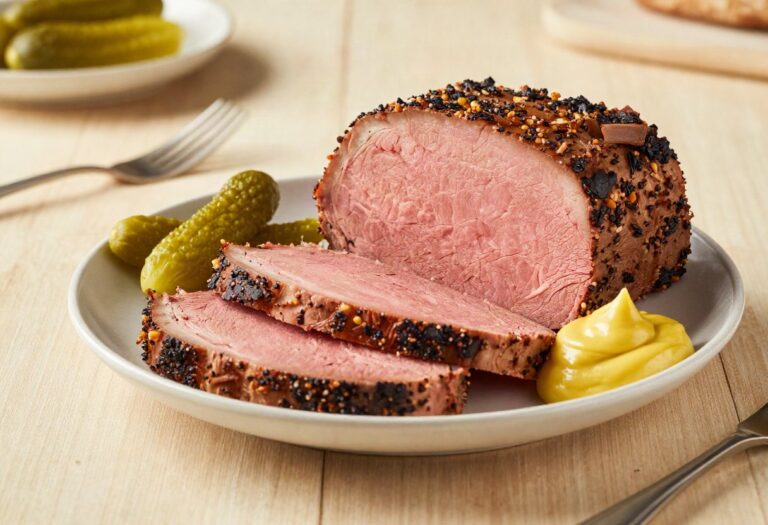
The corned beef we are talking about here is a salted beef preparation, traditionally made from brisket or less prized cuts, cooked and then preserved in brine. You probably know it in its most common form: the tinned version, handy and long-lasting, though sliced versions are also sold at the deli counter. At around 191 kcal per 100 g, corned beef stands out for its good protein (23.2 g) content and its complete absence of carbohydrate and fibre. As for fat, it provides nearly 15 g per 100 g. It is a rich, tasty meat that can have a place in a balanced diet, as long as you watch the portion because of its salt content.
Macronutrient breakdown
Nutrition table per 100 g
| Calories | 191 kcal |
| Kilojoules | 796 kJ |
| Protein | 23,2 g |
| Fat | 10,9 g |
Micronutrients per 100 g
All measured nutrients, ranked by share of the daily reference intake.
- Vitamin B121,62 µg65 %
- Zinc3,57 mg36 %
- Vitamin B33,32 mg21 %
- Iron2,24 mg16 %
- Phosphorus111 mg16 %
- Vitamin B20,19 mg14 %
- Potassium244 mg12 %
- Vitamin B50,63 mg11 %
See the other 12 nutrients
- Vitamin B60,13 mg9 %
- Copper0,06 mg6 %
- Vitamin B10,06 mg5 %
- Vitamin B99 µg5 %
- Vitamin D0,2 µg4 %
- Magnesium14 mg4 %
- Omega-3 ALA0,05 g3 %
- Omega-6 LA0,24 g2 %
- Vitamin K11,6 µg2 %
- Calcium14,5 mg2 %
- Vitamin E0,15 mg1 %
- Manganese0,01 mg1 %
Anses Ciqual 2025. Source: Anses, 2025, Ciqual food composition table
Tips
Corned beef is above all a store-cupboard standby and a treat. To enjoy its nutrition facts without overdoing it, aim for a portion of 60 to 80 g, roughly a few slices or a few spoonfuls from the tin. Its protein content (23.2 g per 100 g) makes it filling, but its calorie density and above all its salt content call for moderation.
- How to eat it: in a sandwich with wholemeal bread and raw vegetables, crumbled into a salad, added to a shepherd’s pie, or fried with eggs for a hearty breakfast. The classic corned beef hash combines potatoes and onions.
- Smart pairings: serve it with crunchy vegetables and wholegrain starchy foods to balance the meal and limit the impact of the salt.
- Storage: once the tin is open, keep it in the fridge in an airtight container and eat it within 2 to 3 days.
In terms of nutrients, corned beef provides complete protein, haem iron, zinc and B vitamins (notably B12), typical of red meats. Its glycaemic index is zero since it contains no carbohydrate, which may interest anyone keeping an eye on their blood sugar. Sodium, however, remains the number one point of attention: limit other sources of salt in the same meal.
For active people, corned beef can come in handy after a workout thanks to its substantial protein content, which is useful for muscle recovery. For everyday eating, though, choose less salty and less fatty sources such as chicken breast or sliced cold roast beef, which are leaner. If you want to structure your protein intake around training, the article on fitness nutrition gives you practical guidelines for balancing carbohydrate and protein according to your goals.
If you are watching your weight, keep in mind that corned beef combines fat and salt: have it occasionally rather than every day. You can explore other options in the meat family to vary your meals, such as pastrami, another salted and spiced beef. To compare the energy content of your favourite foods easily, also check the food calorie table. In short, corned beef is a good occasional protein ally, to be enjoyed in moderation and with the right accompaniments.