Group · Meat
Pastrami
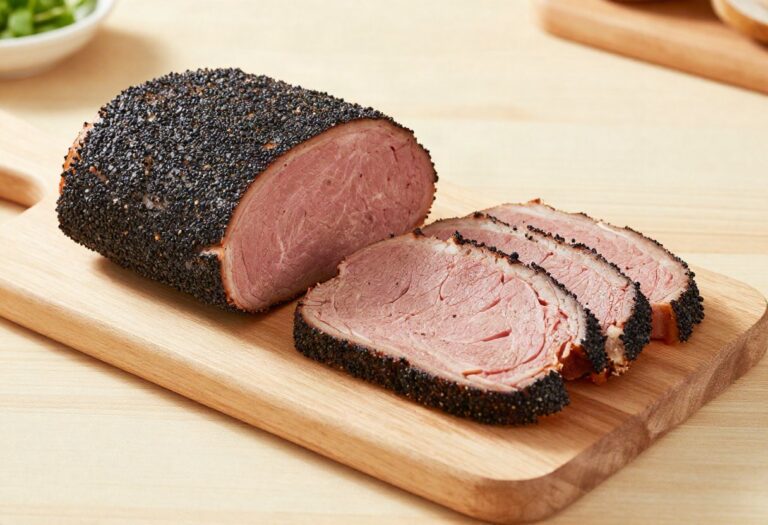
Pastrami is a charcuterie of Eastern European origin, popularised by the New York deli tradition. Most often made from beef brisket or breast, it is brined, rubbed with a spice mix (pepper, coriander, garlic, paprika), then smoked and cooked at a low temperature. It is eaten in thin slices, in a sandwich made with bread (often rye) or on a cold plate. With around 147 kcal per 100 g, nearly 21.8 g of protein and only 5.82 g of fat, pastrami has a relatively interesting nutritional profile for a processed meat. Its near-total lack of carbohydrate makes it popular in some eating approaches, as long as you keep an eye on the salt content.
Macronutrient breakdown
Nutrition table per 100 g
| Calories | 147 kcal |
| Kilojoules | 615 kJ |
| Protein | 21,8 g |
| Carbohydrate | 0,4 g |
| Fat | 5,9 g |
Micronutrients per 100 g
All measured nutrients, ranked by share of the daily reference intake.
- Vitamin B121,87 µg75 %
- Zinc4,98 mg50 %
- Selenium17,7 µg32 %
- Vitamin B34,26 mg27 %
- Phosphorus175 mg25 %
- Iron2,22 mg16 %
- Vitamin B60,22 mg16 %
- Vitamin B20,16 mg12 %
See the other 12 nutrients
- Potassium210 mg11 %
- Copper0,09 mg9 %
- Vitamin B10,05 mg5 %
- Magnesium17 mg5 %
- Vitamin B50,27 mg4 %
- Vitamin D0,1 µg2 %
- Manganese0,03 mg1 %
- Calcium10 mg1 %
- Vitamin E0,12 mg1 %
- Vitamin K10,7 µg1 %
- Vitamin C0,3 mg0 %
- Vitamin A2 µg0 %
USDA FoodData Central (SR Legacy)
Tips
Pastrami is best enjoyed cold, in very thin slices. To benefit from its nutrition facts without overdoing it, aim for a sensible portion of 40 to 60 g, the equivalent of a few slices. Its richness in protein (nearly 22 g per 100 g) makes it a good ally for putting together a filling meal, while its very low carbohydrate content appeals to those watching their sugar intake.
How to eat it The great classic remains the hot sandwich on rye bread with mustard and gherkins. You can also add it to a mixed salad, a wrap, an omelette or a plate of raw vegetables. Gently reheated in a steamer, it regains its characteristic tenderness. For storage, keep it well wrapped in the fridge and eat it quickly once the packaging is open.
- Smart pairings: crunchy vegetables, green salad, pickles and wholegrain starchy foods for a balanced meal.
- Gentle cooking: choose to reheat it by steaming rather than in a frying pan to preserve texture and flavour. This approach is explained in the article on gentle cooking.
- Spices: black pepper and coriander give it its inimitable smoky taste.
For active people: pastrami provides good-quality protein to support muscle recovery, with a moderate calorie intake. It can fit into a post-workout snack or a lean muscle-building meal. Be aware, however, that like any charcuterie it does not replace a fresh protein source on a daily basis. For variety, turn to chicken breast or sliced cold beef. If you want to optimise your intake, the advice on nutrition for fitness is a good complement to these guidelines.
Weight control: at around 147 calories per 100 g, pastrami remains reasonable in terms of calorie density. Its weak point is mainly its salt content, due to the brining and smoking. If you are aiming to lose weight, limit fatty sauces and serve it with a large portion of vegetables. You can compare its figures with those of other foods using the calorie table. Also explore the rest of the meat family to diversify your protein sources through the week.