Group · Meat
Roast pork shoulder
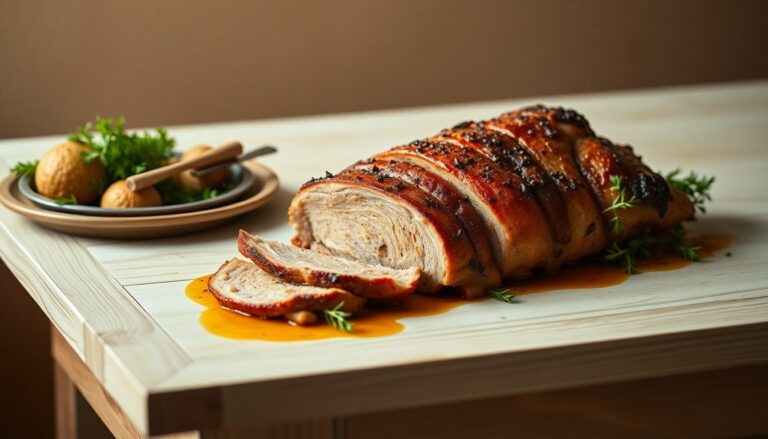
Roast pork shoulder is a tasty, tender cut from the front part of the pig. Renowned for its succulence after slow cooking in the oven, it suits a Sunday roast as well as shredded pulled pork. Its marbled meat gives it a juiciness appreciated by lovers of indulgent meat. In terms of nutrition facts, roast pork shoulder provides about 253 kcal per 100 g, with 30 g of protein, 14.8 g of fat and no carbohydrate. It is therefore an interesting source of complete protein, but relatively high in fat. Well incorporated and eaten in moderation, it has a place in a balanced, varied diet, alternating with leaner meats and fish.
Macronutrient breakdown
Nutrition table per 100 g
| Calories | 253 kcal |
| Kilojoules | 1060 kJ |
| Protein | 30 g |
| Fat | 14,8 g |
Micronutrients per 100 g
All measured nutrients, ranked by share of the daily reference intake.
- Vitamin B10,71 mg65 %
- Zinc4,23 mg42 %
- Selenium16 µg29 %
- Phosphorus195 mg28 %
- Vitamin B34,26 mg27 %
- Vitamin B60,34 mg24 %
- Vitamin B120,58 µg23 %
- Vitamin B20,3 mg21 %
See the other 14 nutrients
- Vitamin D1 µg20 %
- Potassium318 mg16 %
- Copper0,12 mg12 %
- Omega-6 LA1,2 g12 %
- Iron1,58 mg11 %
- Vitamin B50,65 mg11 %
- Magnesium20 mg5 %
- Omega-3 ALA0,06 g3 %
- Vitamin B95 µg3 %
- Calcium18 mg2 %
- Vitamin E0,25 mg2 %
- Manganese0,03 mg1 %
- Vitamin C0,6 mg1 %
- Vitamin A2 µg0 %
Anses Ciqual 2025. Source: Anses, 2025, Ciqual food composition table
Tips
To make the most of roast pork shoulder while watching your calorie intake, aim for a reasonable portion of 100 to 130 g of cooked meat. With 14.8 g of fat per 100 g, this cut remains quite fatty: it is its calorie density that you need to keep an eye on if you are trying to lose weight. A simple tip is to trim the joint before cooking and let some of the fat melt in the oven, then discard the overly rich cooking juices.
Cooking methods and pairings
- Favour slow, gentle, low-temperature cooking, which tenderises the fibres without drying out the meat. This approach is in the spirit of gentle cooking to preserve nutrients and flavour.
- Serve your slice with green vegetables, pulses or wholegrain starchy foods to provide the fibre that meat lacks and balance the meal.
- Avoid piling on fatty sauces: deglazed juices, herbs and spices are enough to lift the flavour.
Key nutrients and profile
Roast pork shoulder provides good-quality protein, rich in essential amino acids, as well as B vitamins (notably B1, B6, B12) and minerals such as zinc, iron and selenium. Its glycaemic index is zero as it contains no carbohydrate. Above all it is a building food, useful for maintaining muscle mass.
Tips for active people
With over 30 g of protein per 100 g, roast pork shoulder can contribute to muscle recovery after a session. In a muscle-building phase, its fat content provides useful extra calories. For cutting or weight loss, however, alternate with leaner meats such as chicken breast or roast turkey. To top up your daily protein intake, you can take inspiration from fitness nutrition.
Storage
Once roasted, the shoulder keeps for 2 to 3 days in the fridge in an airtight container, and freezes very well in portions. Reheat it gently with a little of its juices so that it does not dry out. To compare its calories with other cuts such as roast pork loin, see the food calorie table or explore the whole meat family.