Group · Meat
Roast pork
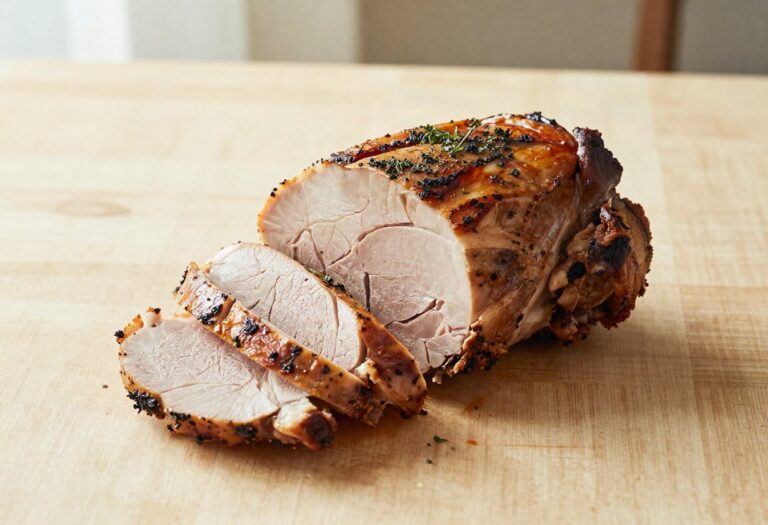
Roast pork is an emblematic joint of meat in family cooking, most often cut from the shoulder, tenderloin or loin. Traditionally cooked in the oven and browned on all sides, it is eaten hot with vegetables, or cold in slices in a sandwich. In terms of nutrition facts, roast pork provides per 100 g around 163 kcal, nearly 30.5 g of good-quality protein, barely 0.65 g of carbohydrate and 4.31 g of fat. It is therefore an interesting source of protein, but also quite a fatty meat depending on the cut and the cooking method. Well chosen and eaten in moderation, it has its place in a balanced, varied diet.
Macronutrient breakdown
Nutrition table per 100 g
| Calories | 163 kcal |
| Kilojoules | 689 kJ |
| Protein | 30,5 g |
| Carbohydrate | 0,7 g |
| Fat | 4,4 g |
Micronutrients per 100 g
All measured nutrients, ranked by share of the daily reference intake.
- Vitamin B10,89 mg81 %
- Vitamin B36,63 mg41 %
- Phosphorus204 mg29 %
- Selenium14 µg25 %
- Vitamin B60,34 mg24 %
- Zinc1,74 mg17 %
- Potassium330 mg17 %
- Vitamin B120,33 µg13 %
See the other 13 nutrients
- Vitamin B20,16 mg11 %
- Vitamin B50,67 mg11 %
- Vitamin D0,5 µg10 %
- Magnesium32,6 mg9 %
- Copper0,05 mg5 %
- Iron0,64 mg5 %
- Omega-6 LA0,25 g3 %
- Iodine3,1 µg2 %
- Vitamin E0,11 mg1 %
- Calcium6,97 mg1 %
- Omega-3 ALA0,01 g1 %
- Manganese0,01 mg0 %
- Vitamin A1 µg0 %
Anses Ciqual 2025. Source: Anses, 2025, Ciqual food composition table
Tips
To enjoy the benefits of roast pork without piling on the calories, go for a reasonable portion of 100 to 130 g per meal. The energy density remains high because of the fat: choose a lean cut such as loin or tenderloin, and trim off any visible fat before cooking. Roasting in the oven at a moderate temperature, basting with stock rather than fat, limits added calories. The way you prepare it makes a big difference to the final result.
- Cooking: oven, casserole or low-temperature cooking to keep it tender. Avoid frying and sauces that are too rich in cream.
- Pairings: serve it with green vegetables, a vegetable purée or pulses to provide fibre and fullness.
- Storage: 2 to 3 days in the fridge, or sliced in the freezer. Ideal for the week’s batch cooking.
Nutritionally, roast pork provides complete protein, iron, zinc and B vitamins (notably B1 and B12). Its glycaemic index is almost zero, as its carbohydrate content is insignificant. It is therefore a food compatible with a low-sugar diet, as long as you watch the amount of fat.
For active people, roast pork is a good source of protein for muscle recovery and maintaining lean mass. It is best eaten after exercise, with a source of complex carbohydrate (rice, sweet potato). If you want a leaner meat for everyday, alternate with chicken breast or roast turkey, which are lower in fat. To top up your intake, also think about the tips in nutrition for fitness.
When slimming or watching your weight, bear in mind that 100 g of roast pork provides around 163 kcal, mainly because of the fat. Limit portions, avoid pairing it with fatty starchy foods or sweet sauces, and count the rest of your plate. You can compare its figures with other meats in the calorie table or explore the whole meat family to vary your meals. Well integrated, roast pork remains a tasty, nourishing treat.