Group · Meat
Calf liver
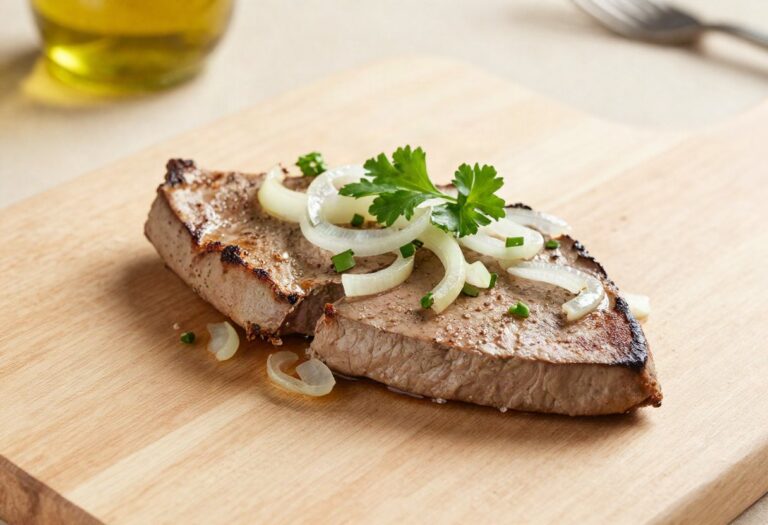
Calf liver is a prime offal, appreciated for its fine texture and delicate flavour, which is milder than that of beef liver. Considered one of the most tender and sought-after cuts in the kitchen, it is traditionally pan-fried, cooked as an escalope or served with parsley and garlic. Nutritionally, it is a real treasure trove: per 100 g, it provides about 140 kcal, nearly 19 g of protein of very high biological value, only 3.02 g of fat and a little naturally occurring carbohydrate. Rich in iron, B vitamins and vitamin A, calf liver has a place in a balanced, varied diet, as long as you keep your consumption reasonable.
Macronutrient breakdown
Nutrition table per 100 g
| Calories | 140 kcal |
| Kilojoules | 592 kJ |
| Protein | 19 g |
| Carbohydrate | 9,3 g |
| Fat | 3,1 g |
Micronutrients per 100 g
All measured nutrients, ranked by share of the daily reference intake.
- Vitamin B1252,6 µg2104 %
- Copper20,1 mg2010 %
- Vitamin B9592 µg296 %
- Vitamin B21,72 mg123 %
- Vitamin B318,8 mg118 %
- Selenium40,9 µg74 %
- Vitamin B61,03 mg74 %
- Vitamin D2,52 µg50 %
See the other 10 nutrients
- Zinc4,6 mg46 %
- Phosphorus302 mg43 %
- Iron4,5 mg32 %
- Vitamin B51,81 mg30 %
- Potassium450 mg23 %
- Vitamin C13,2 mg17 %
- Vitamin B10,15 mg14 %
- Magnesium28,3 mg8 %
- Iodine5 µg3 %
- Calcium9 mg1 %
Anses Ciqual 2025. Source: Anses, 2025, Ciqual food composition table
Tips
Calf liver is quick and easy to cook. Sear it over a high heat in a little fat, 1 to 2 minutes per side, to keep the centre pink and tender. Cooking it for too long makes it tough and dry. You can deglaze with vinegar, serve it Venetian style with onions, or prepare it with parsley and garlic. A portion of 100 to 120 g suits a meal, served with green vegetables and a source of carbohydrate such as rice or potatoes. Buy it very fresh from your butcher and eat it within 24 to 48 hours.
In terms of nutrition facts, calf liver stands out for its density of micronutrients: highly absorbable iron, zinc, selenium, copper, vitamins B9 and B12, and a high vitamin A content. Its protein (about 19 g per 100 g) makes it an ally for maintaining muscle mass, while its calories remain moderate for such a nourishing offal. You will find comparable offal such as beef liver or lamb liver, which have similar profiles but stronger flavours.
For athletes, calf liver is useful during recovery: its complete protein and iron content support the production of haemoglobin, which is important for oxygen transport. Include it once or twice a week rather than daily, and pair it with a source of vitamin C (peppers, parsley, citrus fruit) to help iron absorption. If you are watching your figure, its good satiety and low fat content make it compatible with a weight-loss goal, as long as you keep the cooking fat to a minimum.
- Point to watch: very high in vitamin A, liver is not recommended in large amounts, particularly during pregnancy.
- Smart pairing: crunchy vegetables and wholegrain starchy foods for a balanced meal.
- Storage: in the coldest part of the fridge, or frozen quickly after purchase.
To vary your intake of lean, protein-rich meats, you can alternate with veal escalope or explore the whole meat family. And if you want to compare the energy content of different products, see our food calorie table. Well incorporated, calf liver remains a valuable nutritional asset in a varied diet.