Group · Meat
Lamb liver
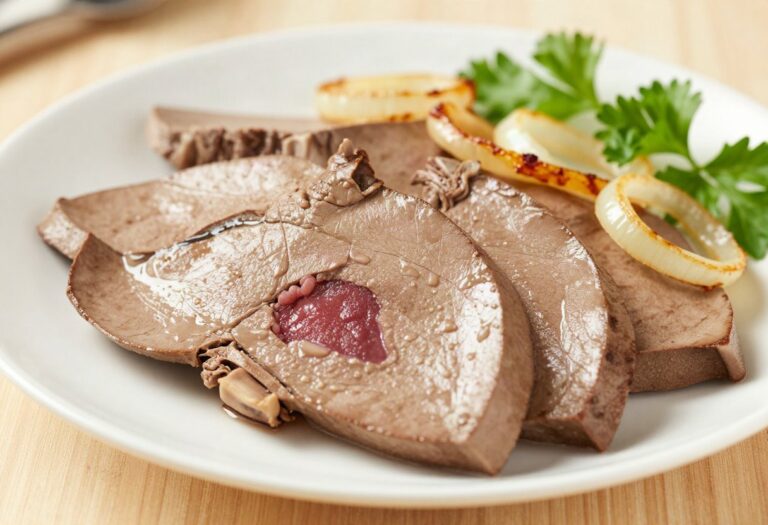
Lamb liver is one of those traditional offal meats, long appreciated for its pronounced flavour and nutritional richness. Tender and finely textured, it has a milder taste than beef liver, which makes it accessible even to those discovering offal. In terms of nutrition facts, per 100 g it provides about 162 kcal, 23 g of protein, 5.8 g of fat and 4.37 g of carbohydrate. It is therefore an interesting source of high-quality protein, naturally rich in iron and vitamins. Eaten in moderation as part of a balanced diet, lamb liver brings nutritional density and character, as long as you manage the cooking and portions well.
Macronutrient breakdown
Nutrition table per 100 g
| Calories | 162 kcal |
| Kilojoules | 680 kJ |
| Protein | 23 g |
| Carbohydrate | 4,4 g |
| Fat | 5,8 g |
Micronutrients per 100 g
All measured nutrients, ranked by share of the daily reference intake.
- Vitamin B1260 µg2400 %
- Copper9,83 mg983 %
- Vitamin B24,59 mg328 %
- Vitamin B9457 µg229 %
- Vitamin B512,6 mg210 %
- Vitamin B318,5 mg116 %
- Phosphorus427 mg61 %
- Zinc4,7 mg47 %
See the other 11 nutrients
- Vitamin B10,46 mg42 %
- Vitamin B60,54 mg39 %
- Manganese0,59 mg30 %
- Iron4,1 mg29 %
- Vitamin C17,6 mg22 %
- Potassium352 mg18 %
- Vitamin D0,51 µg10 %
- Magnesium23 mg6 %
- Iodine5 µg3 %
- Vitamin K11,6 µg2 %
- Calcium9 mg1 %
Anses Ciqual 2025. Source: Anses, 2025, Ciqual food composition table
Tips
Lamb liver cooks quickly and does not tolerate overcooking: pan-fried for 2 to 3 minutes per side over a high heat, it stays pink in the centre, tender and tasty. Cooking it for too long makes it tough and bitter. To bring out its aromas, deglaze with a splash of balsamic vinegar, and serve with softened onions, parsley and garlic or a vegetable purée. A reasonable portion is around 100 to 120 g, once or twice a month, as offal is very concentrated.
In terms of benefits, lamb liver is one of the most micronutrient-dense foods: it is naturally rich in highly absorbable iron, vitamin A, B vitamins and zinc. With over 23 g of protein per 100 g, it provides all the essential amino acids, for just a few grams of carbohydrate. Its glycaemic index is very low, which makes it compatible with a well-constructed weight-loss diet. Do keep an eye on the fat (about 5.8 g per 100 g) and the calorie density: cook without too much added fat and limit rich sauces.
- Athletes: its high protein content makes it an ally for recovery and for maintaining muscle mass. The iron it contains contributes to oxygen transport, which is useful for endurance. Eat it preferably at lunch, with starchy foods to replenish glycogen stores.
- Storage: highly perishable, lamb liver should be cooked within 24 to 48 hours of purchase, or frozen straight away to preserve its freshness.
- Pairings: a touch of acidity (lemon, vinegar) aids digestion and balances its intense flavour.
If you like offal, you can vary the pleasure with calf liver, which is more delicate, or lamb heart, which is firmer. For an everyday lean meat, leg of lamb remains a safe bet. You will find other cuts and offal in the Meat family, and you can compare energy content using the food calorie table. Because of its high vitamin A content, lamb liver is not recommended for pregnant women: an important point to keep in mind for calm, reasonable consumption.