Group · Dairy
Tartiflette cheese
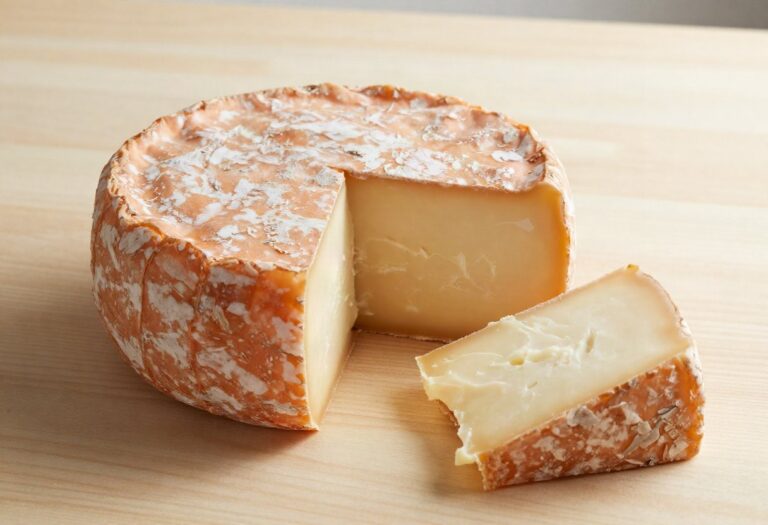
Tartiflette cheese is a Savoyard cheese with a soft paste and a mixed rind, sold pre-cut for this dish. It is not Reblochon: Reblochon is PDO and its name is protected, so it cannot be sold as « tartiflette cheese ».
In terms of nutrition facts: 320 kcal per 100 g, with 26.4 g of fat of which 18.5 g is saturated, and 19.8 g of protein. It provides 495 mg of calcium per 100 g and 1.48 g of salt.
Macronutrient breakdown
Nutrition table per 100 g
| Calories | 320 kcal |
| Kilojoules | 1330 kJ |
| Protein | 19,8 g |
| Carbohydrate | 0,8 g |
| Fat | 26,4 g |
Micronutrients per 100 g
All measured nutrients, ranked by share of the daily reference intake.
- Calcium495 mg62 %
Anses Ciqual 2025. Source: Anses, 2025, Ciqual food composition table
Tips
A tartiflette uses 100 to 125 g of cheese per person. That is 320 to 400 kcal for the cheese alone, before the potatoes, the bacon lardons and the cream. It is a one-pot meal and should be treated as such: a green salad on the side is enough.
The real lever is the cream. The cheese melts and binds the dish already: the cream is optional, and leaving it out saves 200 to 300 kcal for four people without changing the result.
495 mg of calcium is decent. A portion of tartiflette covers more than half of the reference intake for calcium. It is not the main selling point of the dish, but it is real.
1.48 g of salt, plus the lardons. Lardons are two and a half times saltier than this cheese: it is they, not the cheese, that push the total up. Never add salt to a tartiflette: see salt.
Pasteurised, unlike farmhouse Reblochon. This is one of the rare cases where the industrial product has an advantage: it is suitable for pregnant women.