Group · Dairy
Reblochon
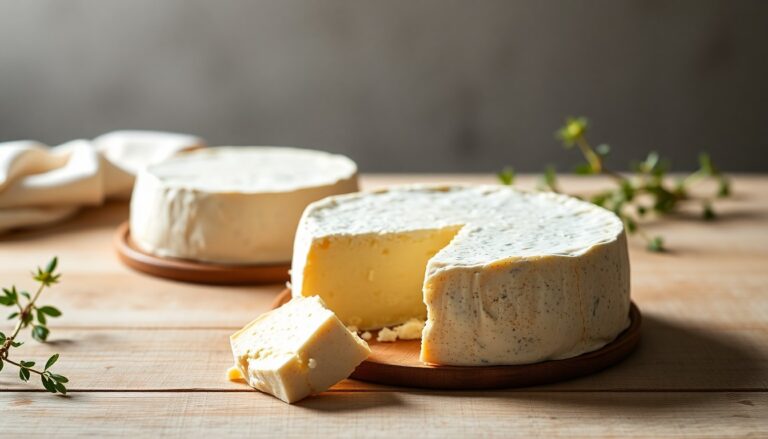
Reblochon is an uncooked pressed cheese from Haute-Savoie, made from cow’s milk and recognisable by its thin saffron-coloured rind and its soft, melting texture with a delicate hazelnut flavour. The star of tartiflette, it comes in a farmhouse version (made with raw milk) or a dairy version, and has PDO status, which guarantees its Alpine origin. With around 322 kcal and 26.9 g of fat per 100 g, it is a tasty but rich cheese, which also provides nearly 19.9 g of protein and calcium. Indulgent and sociable, it has its place in a balanced diet, as long as you enjoy it in moderation.
Macronutrient breakdown
Nutrition table per 100 g
| Calories | 322 kcal |
| Kilojoules | 1330 kJ |
| Protein | 19,9 g |
| Fat | 26,9 g |
Micronutrients per 100 g
All measured nutrients, ranked by share of the daily reference intake.
- Calcium471 mg59 %
- Phosphorus322 mg46 %
- Zinc4,44 mg44 %
- Iodine19,4 µg13 %
- Vitamin B925 µg13 %
- Copper0,11 mg11 %
- Omega-3 ALA0,2 g10 %
- Selenium5,1 µg9 %
See the other 6 nutrients
- Total omega-30,22 g9 %
- EPA0,02 g8 %
- Magnesium20,2 mg5 %
- Potassium104 mg5 %
- Omega-6 LA0,41 g4 %
- Iron0,32 mg2 %
Anses Ciqual 2025. Source: Anses, 2025, Ciqual food composition table
Tips
Reblochon is best enjoyed at room temperature, taken out of the fridge 30 minutes before eating to bring out its full aroma. A sensible portion is around 30 g, equivalent to about 95 to 100 kcal. It can be eaten raw on country bread at the end of a meal, but it really shines melted in mountain dishes: tartiflette, croziflette, potato gratins or grilled open sandwiches.
In terms of nutrition facts, reblochon contains 0 g of carbohydrate, which makes it a cheese that suits a low-sugar diet, but its density in fat (26.9 g per 100 g) calls for moderation. It provides calcium, phosphorus, vitamin B12 and vitamin A, which are useful for bone health and metabolism. Its nearly 19.9 g of protein also contribute to your daily intake.
- Pairings: it goes well with steamed potatoes, a dressed green salad, mountain cured meats or a Savoie white wine.
- Storage: keep it in its original packaging at the bottom of the fridge, and eat it quickly once cut.
- Cooking: its soft paste melts beautifully, but this concentrates the calories in the dish, so be careful with quantities.
To vary your cheese choices, you can explore milder cheeses such as Morbier or a great Alpine classic such as Comté. To understand where cheese fits on your plate, see the dairy products family, and easily compare intakes with the food calorie table.
For active people: reblochon provides useful protein and a flavour that makes meals sociable, but its richness in fat makes it better suited to bulking phases or meals away from training. When cutting or watching your weight, choose a small portion as an accompaniment and top up your protein with leaner sources. For a post-exercise snack, lighter options such as 0% fat fromage blanc are often more suitable.
In short, reblochon is an indulgent cheese, rich in flavour and calcium, to be enjoyed for pleasure while keeping an eye on the portion. Its calorie density calls for moderation as part of a varied, balanced diet.