Group · Drinks
Kombucha
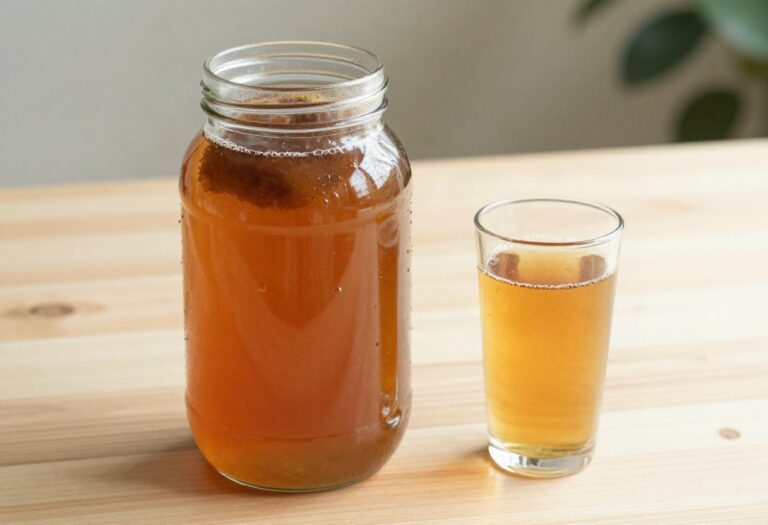
Kombucha is a fizzy drink made by fermenting sweetened tea with a culture of bacteria and yeasts called a SCOBY. As the sugar is largely used up during fermentation, the finished drink stays light: about 6.61 kcal per 100 g. Tangy and slightly vinegary, it is often used as an alternative to fizzy drinks, with a more complex taste and much less sugar.
Macronutrient breakdown
Nutrition table per 100 ml
| Calories | 7 kcal |
| Kilojoules | 28 kJ |
| Protein | 0,3 g |
| Carbohydrate | 1,5 g |
| Fat | 0,1 g |
Micronutrients per 100 ml
All measured nutrients, ranked by share of the daily reference intake.
- Manganese0,07 mg4 %
- Total omega-30,03 g1 %
- Calcium5,7 mg1 %
- Magnesium1,5 mg0 %
- Potassium7,7 mg0 %
- Vitamin B50,01 mg0 %
- Phosphorus0,5 mg0 %
- Vitamin A0,21 µg0 %
Anses Ciqual 2025. Source: Anses, 2025, Ciqual food composition table
Tips
Kombucha is drunk fresh, as an alcohol-free aperitif or with a meal. A 200 ml glass is plenty. It contains traces of alcohol from the fermentation (generally less than 0.5%), so it is not recommended for pregnant women and young children.
- Nutrition: very low in calories, about 6.61 kcal per 100 g, but shop-bought recipes vary a great deal, and some are much sweeter.
- Good to know: check the sugars on the label before you buy. Our guide on hidden sugar explains how to read these labels.
Like kefir or kimchi, kombucha relies on fermentation: our guide to probiotics and the gut microbiome reviews their real effects. Compare its calories with those of other drinks or see the calorie table.
Sources
Nutrition values per 100 ml based on the Anses Ciqual 2020 table (pre-packed kombucha). Indicative data: the sugar content varies considerably between brands and with fermentation time.