Group · Vegetables
Kimchi
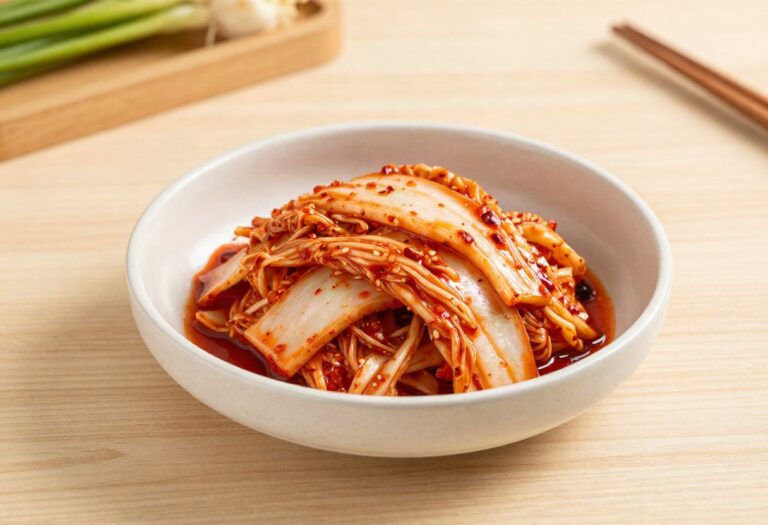
Kimchi is the signature condiment of Korean cooking: Chinese cabbage salted and then fermented with chilli, garlic, ginger and sometimes daikon radish. Crunchy, tangy and spicy, it is very low in calories while providing fibre and live cultures. Its main drawback is a high salt content, a result of the way it is made.
Macronutrient breakdown
Nutrition table per 100 g
| Calories | 15 kcal |
| Kilojoules | 65 kJ |
| Protein | 1,1 g |
| Carbohydrate | 2,4 g |
| Fat | 0,5 g |
| Fibre | 1,6 g |
Micronutrients per 100 g
All measured nutrients, ranked by share of the daily reference intake.
- Vitamin K143,6 µg58 %
- Iron2,5 mg18 %
- Vitamin B60,21 mg15 %
- Vitamin B20,21 mg15 %
- Potassium151 mg8 %
- Vitamin B31,1 mg7 %
- Calcium33 mg4 %
- Magnesium14 mg4 %
See the other 7 nutrients
- Phosphorus24 mg3 %
- Copper0,02 mg2 %
- Zinc0,22 mg2 %
- Vitamin E0,11 mg1 %
- Selenium0,5 µg1 %
- Vitamin B10,01 mg1 %
- Vitamin A5 µg1 %
USDA FoodData Central (SR Legacy)
Tips
Kimchi is used in small amounts, as a condiment: two to three tablespoons are enough to liven up a bowl of rice, a soup or a cabbage salad. Add it towards the end of cooking or serve it cold: heated for a long time, it loses its live cultures and its crunch.
- Nutrition facts: about 15 kcal per 100 g, with fibre and very little fat. It is salty, though, which is worth bearing in mind if you are watching your blood pressure.
- Good to know: shop-bought kimchi is sometimes pasteurised, which removes the live cultures. Versions sold in the chilled aisle, which keep fermenting, retain more of them.
Kimchi is a good example of lactic fermentation, just like sauerkraut. To understand why these foods matter for gut flora, read our guide to probiotics and the gut microbiome. You can also explore the vegetables family.
Sources
Average nutrition values per 100 g, from USDA FoodData Central (cabbage kimchi). Indicative data: salt and chilli content vary widely from one recipe to another.