Group · Vegetables
Molokhia (jute leaves)
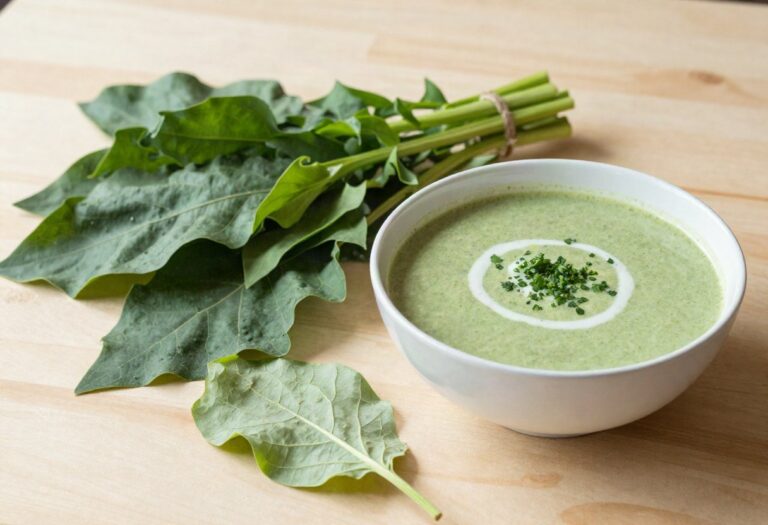
Molokhia, or jute mallow, is a leafy green eaten in Egypt, Lebanon and throughout the Horn of Africa. Cooked, it develops a mucilaginous texture comparable to that of okra, which makes the dish as recognisable as a thick soup.
On nutrition facts, cooked without salt, it shows 37 kcal per 100 g, with 3.68 g of protein (a lot for a leaf), 2 g of fibre and 7.29 g of carbohydrate. It provides 211 mg of calcium, 3.14 mg of iron, 550 mg of potassium and 33 mg of vitamin C per 100 g. These values come from the USDA FoodData Central database, as the Ciqual table does not list molokhia.
Macronutrient breakdown
Nutrition table per 100 g
| Calories | 37 kcal |
| Kilojoules | 153 kJ |
| Protein | 3,7 g |
| Carbohydrate | 7,3 g |
| Fat | 0,2 g |
| Fibre | 2 g |
Micronutrients per 100 g
All measured nutrients, ranked by share of the daily reference intake.
- Vitamin K1108 µg144 %
- Vitamin C33 mg41 %
- Vitamin B60,57 mg41 %
- Vitamin A259 µg32 %
- Potassium550 mg28 %
- Calcium211 mg26 %
- Copper0,26 mg26 %
- Iron3,14 mg22 %
See the other 10 nutrients
- Magnesium62 mg17 %
- Vitamin B20,19 mg14 %
- Phosphorus72 mg10 %
- Vitamin B10,09 mg8 %
- Zinc0,79 mg8 %
- Manganese0,12 mg6 %
- Vitamin E0,7 mg6 %
- Vitamin B30,89 mg6 %
- Selenium0,9 µg2 %
- Vitamin B50,07 mg1 %
USDA FoodData Central (SR Legacy)
Tips
3.68 g of protein and 211 mg of calcium: exceptional for a leafy vegetable. It sits at the level of the best-supplied cabbages, with 3.14 mg of iron on top, which is 22% of the reference intake. It is a serious food, not just a side dish.
Plant iron needs vitamin C. Its 33 mg per 100 g already helps, and a squeeze of lemon juice when serving (a traditional step in the Egyptian recipe) improves absorption further. Tea taken at the same meal, by contrast, reduces it.
The texture is the point. It thickens like a roux, with no flour or fat: a useful culinary property. To tone it down, cook briefly and chop the leaves coarsely; to emphasise it, chop finely and simmer.
The ta’leya provides all the flavour, and all the calories. This garlic fried with coriander, added at the end of cooking, is the soul of the dish. Made with a teaspoon of oil rather than clarified butter, it keeps the effect without the cost.
Frozen, it is as good as fresh. It is found as chopped blocks in Middle Eastern grocers, and is often the only form available in France. Frozen leaves retain most of their minerals.
Sources
Average nutrition values per 100 g, given for guidance (spices and condiments are eaten in small amounts; values vary by brand and preparation).