Group · Herbs & spices
Coriander
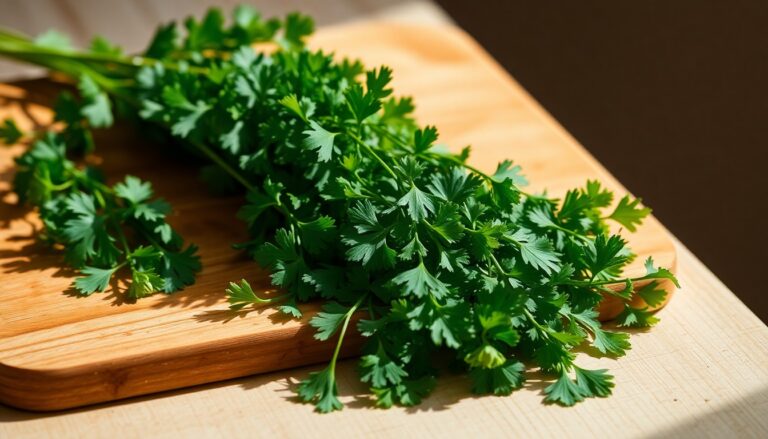
Coriander is an essential aromatic herb in cuisines around the world, from Asia to the Maghreb and Latin America. Both its fresh, finely chopped leaves and its dried seeds, with a warmer, lemony scent, are used. With only 22.3 kcal per 100 g, fresh coriander is a real ally for lifting your dishes without adding to the calorie bill. It provides fibre (2.8 g), a little plant protein (2.13 g) and characteristic aromatic compounds. It has an ideal place in a balanced diet: it flavours, colours and lifts light, tasty cooking, while helping you limit salt and fatty sauces.
Macronutrient breakdown
Nutrition table per 100 g
| Calories | 22 kcal |
| Kilojoules | 93 kJ |
| Protein | 2,2 g |
| Carbohydrate | 0,9 g |
| Fat | 0,6 g |
| Fibre | 2,8 g |
Micronutrients per 100 g
All measured nutrients, ranked by share of the daily reference intake.
- Vitamin K1310 µg413 %
- Vitamin A328 µg41 %
- Vitamin C27 mg34 %
- Potassium521 mg26 %
- Copper0,23 mg23 %
- Manganese0,43 mg22 %
- Vitamin E2,5 mg21 %
- Iron1,77 mg13 %
- Vitamin B9dietary folate equivalents62 µg
See the other 9 nutrients
- Vitamin B20,16 mg11 %
- Vitamin B60,15 mg11 %
- Vitamin B50,57 mg10 %
- Calcium67 mg8 %
- Vitamin B31,11 mg7 %
- Magnesium26 mg7 %
- Phosphorus48 mg7 %
- Vitamin B10,07 mg6 %
- Zinc0,5 mg5 %
Anses Ciqual 2025. Source: Anses, 2025, Ciqual food composition table
Tips
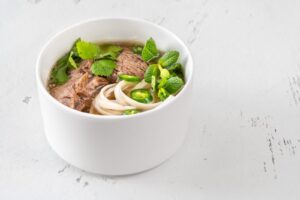
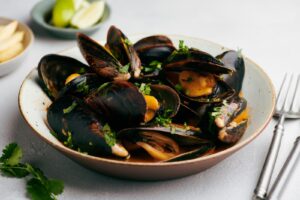
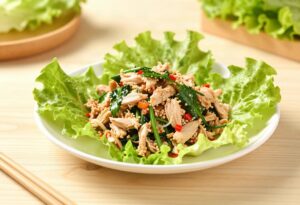
Fresh coriander goes in just about anything: chopped over a salad, a curry, an Asian soup, guacamole or tabbouleh. Always add it at the end of cooking or raw, as its volatile aromas evaporate quickly with heat. The coriander seeds, on the other hand, stand up better to cooking and flavour slow-cooked dishes, marinades and breads. Allow a small handful of leaves per person: there is no need to overdo it, its powerful scent is enough to transform a dish.
Storage: keep the bunch in the fridge, stems in a glass of water and leaves covered with a bag, or freeze it chopped in an ice cube tray with a little water or olive oil. This prolongs its freshness without losing its aromatic qualities.
Nutrition facts and benefits: low in calories, coriander provides fibre that supports digestive comfort, vitamin K, provitamin A and various natural antioxidants. Its glycaemic index is negligible, making it a perfect herb for a slimming or rebalancing approach. To go further, you can explore foods rich in antioxidants and why they matter day to day.
- To lift flavour without salt: pair coriander with cumin and ginger in your spiced dishes.
- For freshness: combine it with fresh spearmint and lemon for zesty sauces.
- In world cuisine: it is essential in Thai curries, salsas and soups.
Tip for active people: coriander provides no significant energy, but it lets you season your recovery meals generously without fat or excess sodium. Scatter it over a plate of rice, vegetables and chicken after exercise, or over a high-protein omelette: you gain flavour while sticking to your meal plan. For balanced everyday cooking, gentle cooking best preserves its aromas and nutrients.
Weight point to note: good news, fresh coriander has a very low calorie density and has practically no impact on energy intake. The real risk comes from what goes with it (creamy sauces, fried foods). Rely on it to give character to light dishes. Discover other flavourings in the Herbs & Spices family to vary flavours without guilt.