Group · Fish
Sablefish (black cod)
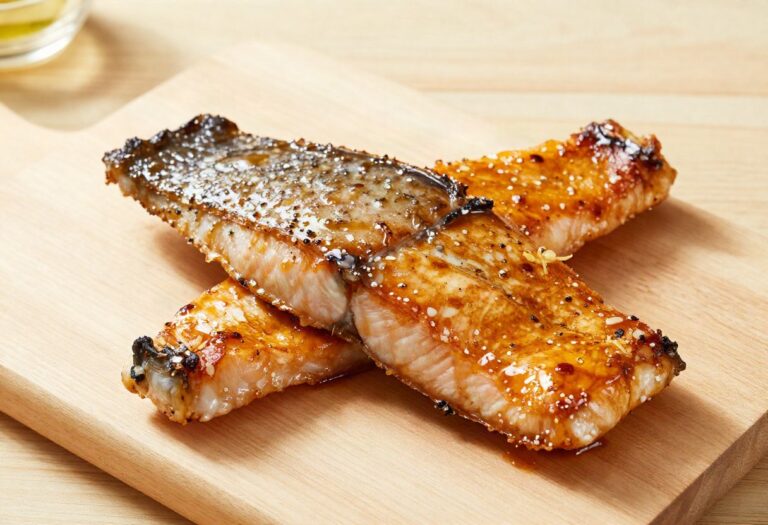
Sablefish, also known as black cod or coalfish in French cooking, is a sea fish with white, melting and slightly pearly flesh. Its buttery texture and delicate taste make it a sought-after dish, often compared to that of cod or halibut. Despite its name, it does not belong to the same family as true cod, but shares with it a place of honour in fish cooking. Rich in quality protein and good fats, it provides around 250 kcal per 100 g. Its nutritional values make it an interesting food in a varied diet, whether you enjoy it grilled, poached or smoked.
Macronutrient breakdown
Nutrition table per 100 g
| Calories | 250 kcal |
| Kilojoules | 1046 kJ |
| Protein | 17,2 g |
| Fat | 19,7 g |
Micronutrients per 100 g
All measured nutrients, ranked by share of the daily reference intake.
- DHA0,92 g368 %
- EPA0,87 g347 %
- Selenium46,8 µg85 %
- Total omega-31,79 g71 %
- Vitamin B121,44 µg58 %
- Vitamin B35,13 mg32 %
- Phosphorus215 mg31 %
- Vitamin B60,35 mg25 %
See the other 11 nutrients
- Potassium459 mg23 %
- Magnesium71 mg19 %
- Vitamin B50,87 mg14 %
- Vitamin A102 µg13 %
- Iron1,64 mg12 %
- Vitamin B10,12 mg11 %
- Vitamin B20,12 mg8 %
- Calcium45 mg6 %
- Zinc0,41 mg4 %
- Copper0,03 mg3 %
- Manganese0,02 mg1 %
USDA FoodData Central (SR Legacy)
Tips
Sablefish stands out for its richness in fat (about 19.62 g per 100 g), including a worthwhile share of omega-3 fatty acids, and for its complete lack of carbohydrates and fibre. With nearly 17.19 g of protein per 100 g, it is a useful source of amino acids to support your daily intake.
How should you eat it? Its fatty flesh copes very well with gentle cooking that preserves its tenderness. You can pan-fry it, cook it in a parcel, poach it in court-bouillon or roast it in the oven. To limit added fat, choose gentle cooking with a few herbs, lemon and a drizzle of olive oil. Its texture goes well with steamed green vegetables, brown rice or lentils.
- Recommended portion: 100 to 150 g per meal, as a main course.
- Storage: keep it chilled and eat it quickly, or freeze it as soon as you buy it if it is very fresh.
- Pairings: dill, ginger, light soy sauce, citrus fruits or crunchy vegetables.
For active people: sablefish provides protein that is useful for muscle recovery after exercise, along with fat that makes it an energy-giving food. Have it at the evening meal or at lunch, paired with a source of carbohydrates such as starchy foods to replenish your stores. If you are looking for other protein ideas for your training day, see our suggestions on nutrition for fitness.
Weight control: at 250 kcal per 100 g, this fish is higher in calories than lean species such as cod or whiting. If you are watching your waistline, moderate the portions and balance them with light vegetable side dishes. For weight loss, alternate with less fatty white fish while keeping sablefish for the pleasure of its melting flesh.
To explore other species and compare their profiles, browse the fish family. You will find a wide variety of flavours, textures and preparation methods to put together balanced, tasty meals all year round.