Group · Starchy foods
Brown rice
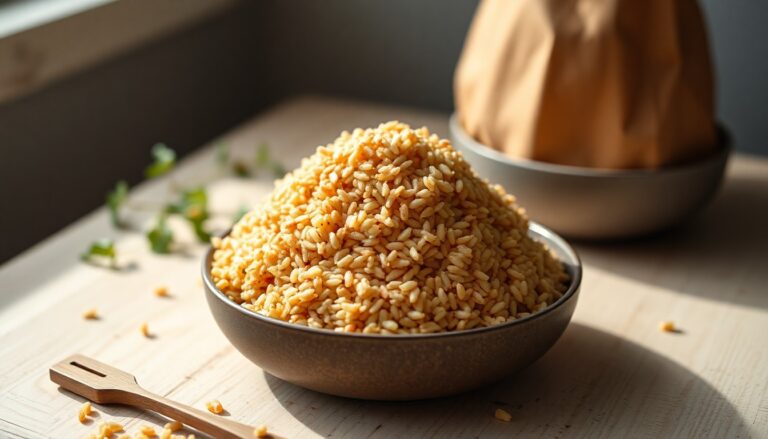
Brown rice, also called wholegrain rice or cargo rice, is a whole grain that keeps its outer layer (the bran) and its germ, unlike refined white rice. This is what gives it its amber colour, slightly firm texture and hazelnut-like taste. It comes as long, round or semi-brown grains, in basmati, Thai or red versions. At around 187 kcal per 100 g once cooked, it provides complex carbohydrates, fibre, plant protein and minerals. Its nutritional richness and a glycaemic index lower than that of white rice make it a smart starchy food in a balanced diet, enjoyed by athletes and by people watching their weight alike.
Macronutrient breakdown
Nutrition table per 100 g
| Calories | 187 kcal |
| Kilojoules | 792 kJ |
| Protein | 4,1 g |
| Carbohydrate | 37,6 g |
| Fat | 1,8 g |
| Fibre | 2,1 g |
Micronutrients per 100 g
All measured nutrients, ranked by share of the daily reference intake.
- Manganese1,3 mg65 %
- Phosphorus138 mg20 %
- Magnesium57,8 mg15 %
- Copper0,12 mg12 %
- Zinc0,9 mg9 %
- Omega-6 LA0,44 g4 %
- Vitamin B120,09 µg4 %
- Calcium28,6 mg4 %
- Vitamin B9dietary folate equivalents29,4 µg
See the other 6 nutrients
- Vitamin B30,57 mg4 %
- Potassium70,5 mg4 %
- Vitamin B50,19 mg3 %
- Iron0,44 mg3 %
- Omega-3 ALA0,02 g1 %
- Vitamin A1,25 µg0 %
Anses Ciqual 2025. Source: Anses, 2025, Ciqual food composition table
Tips
Brown rice is cooked in about two and a half times its volume of salted water for 25 to 40 minutes, depending on the variety. To bring out its aroma, you can fry it for a minute in a little oil before adding the water, or cook it pilaf style. A tip for digestion: rinse it, then soak it for a few hours before cooking. A sensible portion is 60 to 80 g raw (about 150 to 200 g cooked).
Nutrition facts and benefits. With 37.6 g of carbohydrate, 4.06 g of protein, 1.8 g of fat and nearly 2.1 g of fibre per 100 g cooked, brown rice releases its energy gradually. Its glycaemic index, lower than that of white rice, promotes lasting fullness. It also provides magnesium, phosphorus, manganese and B vitamins, which matter for energy metabolism.
- Smart pairings: combine it with pulses such as lentils or chickpeas to get complete protein, or with colourful vegetables and a source of good fats.
- Storage: keep cooked rice in the fridge for 2 to 3 days in an airtight container. It is perfect for healthy batch cooking and weekly lunchboxes.
- Cooking methods: in water, steamed or in a rice cooker, preferably using gentle cooking to preserve nutrients.
For active people. Brown rice is an excellent complex-carbohydrate fuel. Eat it 2 to 3 hours before training to fill up on energy without weighing down digestion. After exercise, it helps replenish glycogen stores, especially when paired with a source of protein such as chicken, fish or tofu. When bulking up, it makes a dense, nourishing base for meals. For recovery, you can top it up with a protein snack suited to your goals.
Weight control. Even though brown rice is nourishing, its calorie density climbs quickly with fatty sauces and big portions. Weigh your portions, rely on its filling fibre and vary your starchy foods: alternate with quinoa, bulgur or the other starchy foods to enjoy different nutritional profiles throughout the week.
If you have diabetes: the glycaemic index of rice ranges from 48 for parboiled rice to over 89 for jasmine rice. See the comparison in our guide to rice and diabetes.