Group · Sweet foods
Panna cotta
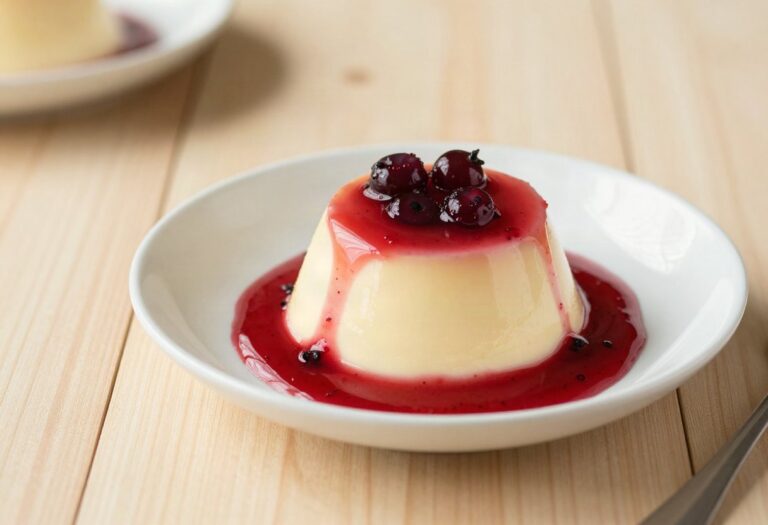
Panna cotta is a dessert from Piedmont: cooked cream (the literal meaning of the name), sweetened and set with gelatine. The values below are for the chilled-aisle product, with a fruit preparation or caramel.
In terms of nutrition facts: 192 kcal per 100 g, with 12.1 g of fat of which 8.21 g saturated fatty acids, 15.9 g of carbohydrate of which 15.8 g sugars, and only 2.63 g of protein. It provides 75.8 mg of calcium per 100 g.
Macronutrient breakdown
Nutrition table per 100 g
| Calories | 192 kcal |
| Kilojoules | 802 kJ |
| Protein | 2,7 g |
| Carbohydrate | 15,9 g |
| Fat | 12,1 g |
| Fibre | 1,5 g |
Micronutrients per 100 g
All measured nutrients, ranked by share of the daily reference intake.
- Calcium75,8 mg9 %
- Omega-3 ALA0,05 g3 %
- Omega-6 LA0,2 g2 %
Anses Ciqual 2025. Source: Anses, 2025, Ciqual food composition table
Tips
It is cream, and it shows. 12.1 g of fat of which 8.21 g saturated, for only 2.63 g of protein: the ratio is that of a sweetened fat, not a nourishing dairy product.
One pot weighs 100 g: count on 192 kcal. It is the densest dessert in this aisle along with crème brûlée.
The coulis adds most of the sugars. 15.8 g per 100 g, of which a large share comes from the fruit preparation or the caramel. A plain panna cotta is noticeably less sweet.
Homemade, replace some of the cream with milk. The gelatine does the setting, not the fat: half cream and half milk gives a very similar texture with a third less fat. See our panna cotta recipe.
It contains gelatine. It is of animal origin, so unsuitable for vegetarian diets. Agar-agar replaces it perfectly in a homemade recipe.