Group · Starchy foods
Shortcrust pastry (pâte brisée)
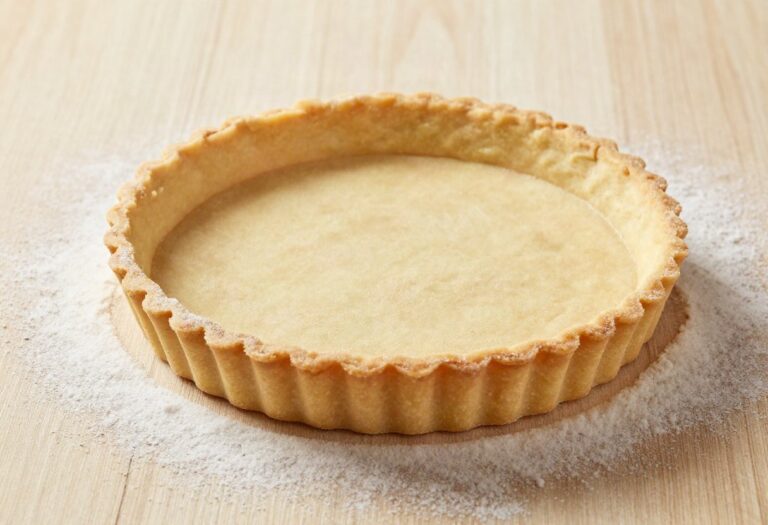
Pâte brisée (savoury shortcrust pastry) is the base for savoury tarts and quiches: flour, butter, water and salt, with no sugar. This is what sets it apart from sweet pâte sablée and from puff pastry, which is much fattier.
On the nutrition side, it provides 390 kcal per 100 g raw, with 45 g of carbohydrate, 20 g of fat, of which 13 g saturated, 6.5 g of protein and 2 g of fibre. The often overlooked point is the salt: 1.69 g per 100 g, more than many ready meals.
Macronutrient breakdown
Nutrition table per 100 g
| Calories | 390 kcal |
| Kilojoules | 1630 kJ |
| Protein | 6,5 g |
| Carbohydrate | 45 g |
| Fat | 20 g |
| Fibre | 2 g |
Micronutrients per 100 g
All measured nutrients, ranked by share of the daily reference intake.
- Omega-6 LA0,63 g6 %
- Omega-3 ALA0,1 g5 %
Anses Ciqual 2025. Source: Anses, 2025, Ciqual food composition table
Tips
Salt, not sugar. With 1.69 g of salt per 100 g, a 230 g tart base provides nearly 4 g of salt on its own, half the 5 g daily guideline, before the filling. This is the real point of attention with this pastry.
Comparing the three pastries. Shortcrust 390 kcal, sweet shortcrust 383, puff 560: puff pastry stands out clearly, because of the butter folded into the layers. For a quiche, shortcrust is therefore the most restrained choice.
Homemade or pre-packed? Made at home, you control the salt and the amount of butter, and you can swap part of the white flour for wholemeal flour to gain fibre; 2 g per 100 g is not much.
Weight watching. The tart base is rarely what people keep an eye on, and yet it is what weighs most: a slice of quiche gets a large share of its calories from the pastry. A tart with no top crust, or a more thinly rolled pastry, changes the total without taking anything away from the dish.