Group · Starchy foods
Puff pastry
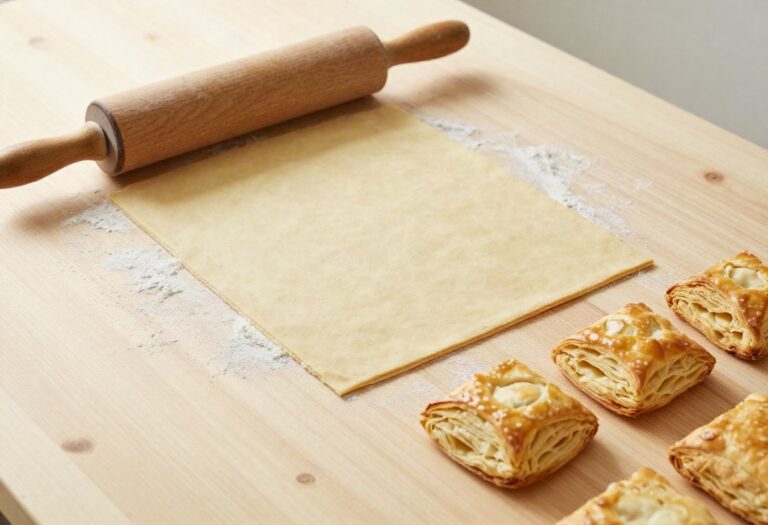
Puff pastry is a bakery and pastry preparation made by careful lamination, where layers of dough (flour and water) alternate with a fat, most often butter. This folding technique gives it crisp, airy layers when baked. It features in a multitude of sweet and savoury recipes: tarts, vol-au-vents, pastries, palmiers, galettes and pies. Rich and indulgent, it is also very high in calories. At around 560 kcal per 100 g, including 40.5 g of fat and 42 g of carbohydrate, puff pastry remains a treat food, to be included in moderation in a balanced diet.
Macronutrient breakdown
Nutrition table per 100 g
| Calories | 560 kcal |
| Kilojoules | 2330 kJ |
| Protein | 6,3 g |
| Carbohydrate | 42 g |
| Fat | 40,5 g |
| Fibre | 1,2 g |
Micronutrients per 100 g
All measured nutrients, ranked by share of the daily reference intake.
- Iodine13 µg9 %
Anses Ciqual 2025. Source: Anses, 2025, Ciqual food composition table
Tips
Puff pastry wins people over with its crisp texture, but its nutrition facts call for moderation. Its high fat content (40.5 g per 100 g) comes from the butter folded into the layers, which explains its high calorie density. The carbohydrates (42 g) come from wheat flour, with little fibre (1.2 g) and a rather high glycaemic index. A sensible portion, the equivalent of a slice of thin tart or a small pastry, is plenty to treat yourself.
- Portions: limit yourself to 50 to 80 g of pastry per person and choose a light filling (vegetables, fromage frais) rather than a rich cream.
- Cooking: in the oven, on baking paper, with no extra fat. An egg wash is enough for shine.
- Storage: in the fridge for a few days, or in the freezer. Raw pastry keeps well rolled up in its paper.
To lighten your recipes, you can replace part of the puff pastry with wholemeal flour in homemade preparations, or opt for more filling starchy foods such as quinoa and bulgur, richer in fibre and protein. Puff pastry belongs to the broad starchy foods family, but it stands out for its high fat content, which puts it closer to a treat food.
Culinary uses: all-butter puff pastry tastes better than margarine-based versions. It comes as classic, inverted or rough puff. Think of party pastries, quiches, turnovers or millefeuilles. For savoury dishes, pair it with seasonal vegetables to add volume and micronutrients without piling on calories.
For active people: puff pastry is not the best choice around training, because its fat slows digestion. As a snack before exercise, choose more digestible carbohydrates. If you are watching your body composition, keep it for occasional meals and count it in your overall calorie budget.
Weight control: its energy density is a point to watch. A small portion savoured fully is better than a big portion eaten without thought. As part of a balanced diet, puff pastry remains compatible if it stays occasional and is paired with filling, minimally processed foods.