Group · Vegetables
Pumpkin
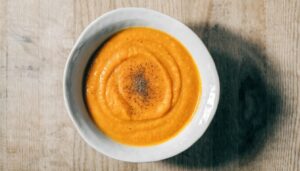
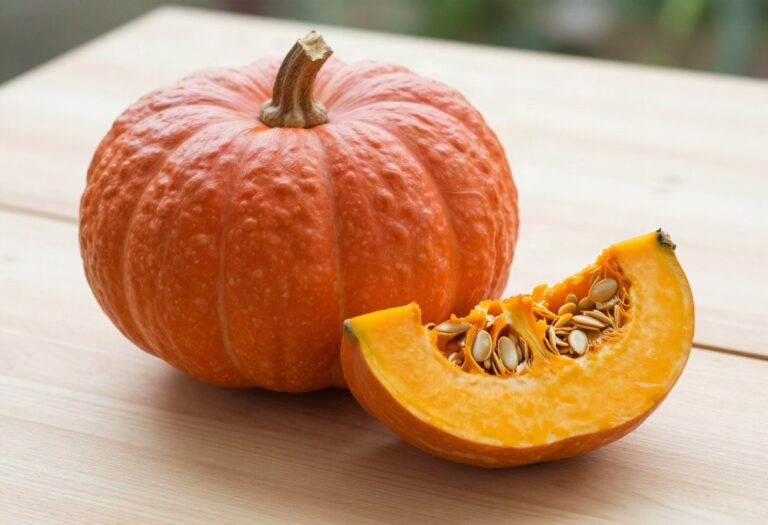
Pumpkin (potiron) is a winter squash with bright orange, stringy flesh, more watery than red kuri squash. It is the squash for soups and velouté, and its colour signals what it contains: beta-carotene, in quantity.
On the nutrition side, cooked pumpkin provides just 26.1 kcal per 100 g, with 4.47 g of carbohydrate, 2 g of fibre and 0.81 g of protein. Its major asset: 502 µg of vitamin A and 6,020 µg of beta-carotene per 100 g, which is 63% of the reference intake for vitamin A.
Macronutrient breakdown
Nutrition table per 100 g
| Calories | 26 kcal |
| Kilojoules | 110 kJ |
| Protein | 0,9 g |
| Carbohydrate | 4,5 g |
| Fat | 0,1 g |
| Fibre | 2 g |
Micronutrients per 100 g
All measured nutrients, ranked by share of the daily reference intake.
- Vitamin A502 µg63 %
- Potassium230 mg12 %
- Vitamin B60,06 mg4 %
- Copper0,04 mg4 %
- Phosphorus21 mg3 %
- Vitamin B50,14 mg2 %
- Manganese0,04 mg2 %
- Vitamin E0,24 mg2 %
- Vitamin B9dietary folate equivalents2,5 µg
See the other 8 nutrients
- Magnesium6,9 mg2 %
- Vitamin B10,02 mg2 %
- Calcium13 mg2 %
- Vitamin B30,22 mg1 %
- Iron0,18 mg1 %
- Total omega-30,03 g1 %
- Vitamin C0,84 mg1 %
- Zinc0,1 mg1 %
Anses Ciqual 2025. Source: Anses, 2025, Ciqual food composition table
Tips
Beta-carotene needs fat to be absorbed. This is the most useful tip for all squashes: a teaspoon of olive oil or a little cream in the soup noticeably increases the absorption of carotenoids. Pumpkin cooked in plain water delivers much less.
26 kcal, but a soup can reach 200. Pumpkin itself is very light; the cream, butter and croutons do all the rest. A pumpkin and coconut milk soup is not a light dish, and that is perfectly fine, as long as you know it.
Roasted rather than boiled. Its flesh is watery: in water, it gets washed out. In the oven, the water evaporates and the sugars caramelise, which concentrates the flavour without adding anything. By far the best way to cook it.
The seeds are a food in their own right. Rinsed, dried and toasted for twenty minutes, they provide protein, magnesium and zinc. They are one of the few parts of a vegetable that people throw away, even though they beat the flesh on these points.
It keeps for months whole. In a cool, dry place, an uncut pumpkin lasts all winter. Once cut, it needs to be wrapped in cling film and eaten within a few days, or cooked and frozen as a purée.
Sources
Average nutrition values per 100 g, given as a guide only (they may vary by brand and preparation).