Group · Vegetables
Squash
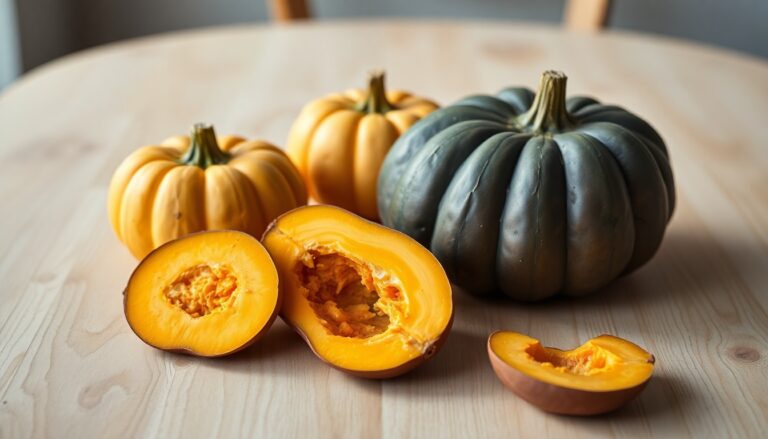
Squash refers to a large family of gourds that colours the markets from autumn. Under this name hide a multitude of varieties: red kuri, butternut, musquée squash, spaghetti squash and pumpkin, each with its own texture and more or less sweet flavour. At around 56.1 kcal per 100 g, squash is a vegetable moderate in calories, rich in natural carbohydrate and very low in fat (0.6 g). Its tender flesh, mild taste and lovely orange colour make it a versatile ingredient, enjoyed in soup as much as in a gratin or mash. It easily finds its place in a balanced, tasty and comforting diet throughout the cold season.
Macronutrient breakdown
Nutrition table per 100 g
| Calories | 56 kcal |
| Kilojoules | 236 kJ |
| Protein | 1,4 g |
| Carbohydrate | 10 g |
| Fat | 0,6 g |
| Fibre | 2,6 g |
Micronutrients per 100 g
All measured nutrients, ranked by share of the daily reference intake.
- Potassium436 mg22 %
- Vitamin C13,9 mg17 %
- Phosphorus32,8 mg5 %
- Calcium24,7 mg3 %
- Magnesium10,8 mg3 %
- Iron0,4 mg3 %
- Vitamin B10,02 mg1 %
Anses Ciqual 2025. Source: Anses, 2025, Ciqual food composition table
Tips
Squash can be cooked in a thousand ways. For cooking, favour the oven (roasted with a drizzle of oil), steaming or soup to best preserve its qualities. Gentle cooking limits the loss of nutrients while concentrating the flavours: you can take inspiration from our advice on gentle cooking to preserve nutrients. A reasonable portion of 150 to 200 g suits a side dish or a soup base perfectly.
On nutrition facts, squash provides carbohydrate (9.98 g per 100 g) which gives it its slightly sweet taste, little protein and almost no fat. Its orange flesh is known for pigments from the carotenoid family, compounds with antioxidant power also found in other antioxidant-rich foods. It also supplies water, which makes it a filling vegetable for a contained number of calories.
To vary things, combine squash with other seasonal vegetables such as carrot in a soup, or with leek for a more fragrant soup. It also goes very well with mild spices (cumin, nutmeg, curry) and a touch of nuts for crunch.
- Varieties and seasonality: red kuri, butternut, pumpkin, spaghetti squash, mostly available from autumn to winter.
- Storage: whole, squash keeps for several weeks in a dry, cool place; once cut, put it in the fridge and eat it within a few days.
- Culinary uses: soup, mash, gratin, oven-roasted, in risotto or even in sweet versions (compote, cake).
Tips for active people: thanks to its digestible carbohydrate and low fat content, squash is a good side in a recovery meal after exercise, alongside a source of protein (poultry, fish, pulses). You can build it into a batch cooking routine to prepare balanced portions in advance for the week. Its sweetness also makes it a nice base for comforting dishes after training.
Weight control: squash stays low in calories, but its sweet flavour sometimes tempts you to add butter, cream or sugar. Keep a light hand with these additions to keep its slimming appeal. To put together varied meals around it, explore the vegetable family and play on the diversity of colours and textures on your plate.