Group · Fats & oils
Coconut milk
Coconut milk is a creamy preparation made by pressing the flesh of the coconut. Smooth and lightly sweet, it is the base of many curries, soups and exotic desserts. High in fat, it adds softness and roundness to dishes, and should be measured to keep things light.

Macronutrient breakdown
Nutrition table per 100 g
| Calories | 199 kcal |
| Kilojoules | 821 kJ |
| Protein | 2 g |
| Carbohydrate | 4,3 g |
| Fat | 19,2 g |
| Fibre | 0,8 g |
Micronutrients per 100 g
All measured nutrients, ranked by share of the daily reference intake.
- Manganese0,77 mg39 %
- Iron3,3 mg24 %
- Copper0,22 mg22 %
- Phosphorus96 mg14 %
- Magnesium46 mg12 %
- Potassium220 mg11 %
- Vitamin B914 µg7 %
- Zinc0,56 mg6 %
See the other 10 nutrients
- Selenium3 µg5 %
- Vitamin B30,64 mg4 %
- Vitamin B50,15 mg3 %
- Calcium18 mg2 %
- Vitamin B60,03 mg2 %
- Vitamin B10,02 mg2 %
- Omega-6 LA0,16 g2 %
- Vitamin C1 mg1 %
- Omega-3 ALA0,02 g1 %
- Iodine1 µg1 %
Anses Ciqual 2025. Source: Anses, 2025, Ciqual food composition table
Tips
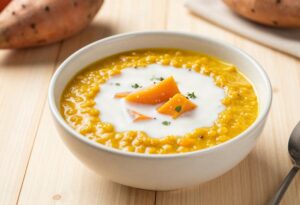
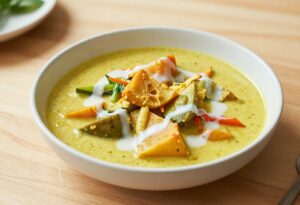
Coconut milk binds and softens spicy dishes: it is essential to the red lentil curry and the vegetable curry. It is also used in sweet dishes, in desserts and chia puddings.
- Nutrition values: high in fat (including medium-chain saturated fatty acids); there are lighter versions to cut the calories.
- Good to know: the fat in coconut milk helps the absorption of the curcumin in turmeric, hence their frequent pairing in curries.
Do not confuse it with coconut drink (much more diluted). Once opened, keep it in the fridge for a few days. You will find it in the Fats family.
Sources
Average nutrition values per 100 g, given as a guide only (they may vary by brand and preparation).