Group · Sweet foods
Shortbread biscuit
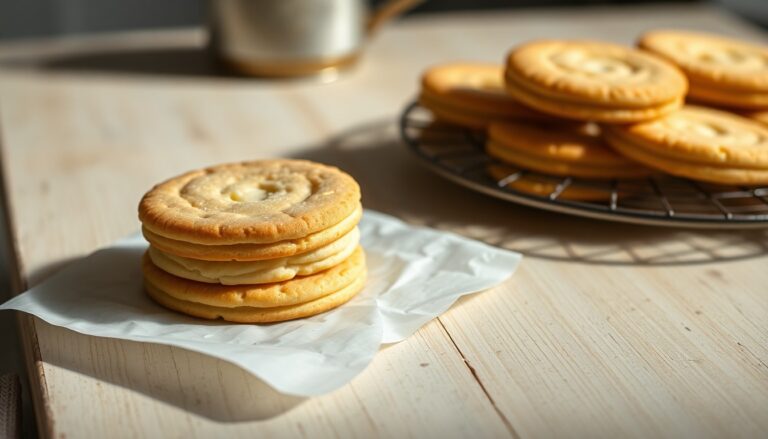
The French sablé is a small dry biscuit, emblematic of French baking and recognisable by its crumbly, melt-in-the-mouth texture that breaks apart as you bite. Made from flour, butter, sugar and sometimes egg, it comes in many versions: butter-rich Breton sablé, Nantes sablé, sablé diamant rolled in sugar, or sablé with almonds. At 484 kcal per 100 g, it is a treat with a high calorie density, providing mainly carbohydrate (59.4 g) and fat (22.9 g). Indulgent at teatime or with a coffee, the sablé has a place in a balanced diet as long as you enjoy a small amount, for pleasure above all.
Macronutrient breakdown
Nutrition table per 100 g
| Calories | 484 kcal |
| Kilojoules | 2030 kJ |
| Protein | 8,4 g |
| Carbohydrate | 59,4 g |
| Fat | 22,9 g |
| Fibre | 3,3 g |
Micronutrients per 100 g
All measured nutrients, ranked by share of the daily reference intake.
- Vitamin B120,79 µg32 %
- Vitamin A175 µg22 %
- Phosphorus131 mg19 %
- Vitamin E1,4 mg12 %
- Selenium6,3 µg11 %
- Vitamin B50,58 mg10 %
- Vitamin B914,5 µg7 %
- Vitamin B20,09 mg6 %
See the other 5 nutrients
- Vitamin B60,09 mg6 %
- Potassium123 mg6 %
- Magnesium21,8 mg6 %
- Calcium31,9 mg4 %
- Vitamin B30,3 mg2 %
Anses Ciqual 2025. Source: Anses, 2025, Ciqual food composition table
Tips
To enjoy the sablé without overdoing it, rely on a sensible portion: two or three biscuits are enough to satisfy a sweet craving. Its calorie density (around 484 kcal per 100 g) and its butter content call for moderation, especially if you are watching your weight. Pair it with an unsweetened hot drink, tea or coffee, to slow down the nibbling and prolong the pleasure.
- Composition: wheat flour, butter, sugar, sometimes egg yolk and flavourings (vanilla, orange blossom, lemon).
- Nutrition facts: rich in carbohydrate (59.4 g) with a sweet taste, and in fat (22.9 g) from the butter, with 8.38 g of protein and 3.3 g of fibre per 100 g.
- Glycaemic index: fairly high, like most biscuits made with refined flour and sugar.
For storage, keep your sablés in an airtight tin away from humidity to preserve their crunch. You can also make them at home, which lets you reduce the sugar, choose a good-quality butter or add ground almonds. To vary the treats, serve them with a compote with no added sugar or a fresh fruit that brings fibre and vitamins.
If you like crunchy sweet treats, you will probably enjoy the petit beurre or the oat biscuit, the latter being richer in fibre. The sablé belongs to the large family of sugary foods, to be eaten with discernment in a varied diet.
For active people: the carbohydrates in the sablé make it a quick source of energy, handy as a snack before a short or moderate effort. However, its fat content slows digestion, which makes it less ideal just before an intense session. During recovery, it is better to favour a combination of protein and carbohydrate: discover our high-protein snack ideas to replenish your stores more completely. Keep the sablé as a small occasional pleasure, not as a base of your sports nutrition.
Finally, keep an eye on quantities if you are slimming: nibbling through the whole packet quickly pushes up the day’s calorie total. To place the sablé among other foods, consult our food calorie table. The key remains balance: a sablé enjoyed mindfully brings pleasure without guilt.