Group · Vegetables
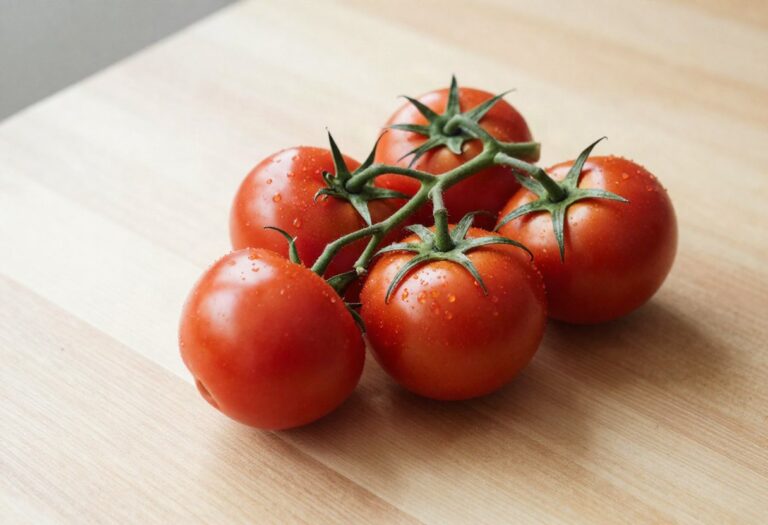
Vine tomato
The vine tomato is sold with its stalk and stem, which is more than a presentation point: the stem releases aromatic compounds and slows the dehydration of the fruit.
In terms of nutrition facts, raw it provides 19.8 kcal per 100 g, with 3.67 g of carbohydrate, 1.5 g of fibre and 0.5 g of protein. It provides 20.1 mg of vitamin C, 966 µg of beta-carotene and 200 mg of potassium per 100 g, and contains 94.1 g of water.
Macronutrient breakdown
Nutrition table per 100 g
| Calories | 20 kcal |
| Kilojoules | 84 kJ |
| Protein | 0,5 g |
| Carbohydrate | 3,7 g |
| Fibre | 1,5 g |
Micronutrients per 100 g
All measured nutrients, ranked by share of the daily reference intake.
- Vitamin C20,1 mg25 %
- Vitamin A80,5 µg10 %
- Potassium200 mg10 %
- Manganese0,12 mg6 %
- Vitamin B60,07 mg5 %
- Vitamin E0,55 mg5 %
- Vitamin B10,04 mg3 %
- Vitamin B30,47 mg3 %
- Vitamin B9dietary folate equivalents15 µg
See the other 8 nutrients
- Phosphorus20 mg3 %
- Copper0,02 mg2 %
- Magnesium6,5 mg2 %
- Vitamin K10,97 µg1 %
- Iron0,18 mg1 %
- Vitamin B50,06 mg1 %
- Calcium6,6 mg1 %
- Zinc0,08 mg1 %
Anses Ciqual 2025. Source: Anses, 2025, Ciqual food composition table
Tips
966 µg of beta-carotene: the best score among round tomatoes. It is ahead of the round tomato and the beefsteak. Being picked riper on the plant explains the gap.
1.5 g of fibre: more than the other tomatoes in this group. A little more than the round tomato or the cherry tomato, which makes it slightly more filling.
Never put it in the fridge. Below 12 °C, the aromas break down for good and the flesh turns mealy. This is the absolute rule for all tomatoes.
Keep it on the vine until the last moment. Once detached, it dries out faster through the stem scar.
Lycopene is released by cooking. A simmered tomato sauce provides far more than a raw tomato, and a drizzle of olive oil improves absorption further.