Group · Condiments & sauces
Tomato sauce
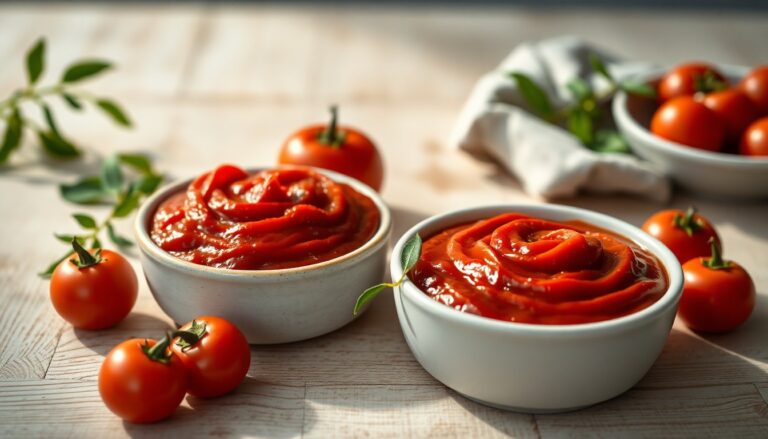
Tomato sauce is one of the most universal condiments in cooking. Made from cooked tomatoes, sometimes simmered with onions, garlic and aromatic herbs, it comes in many versions: plain, Italian-style, spicy or flavoured with basil. With just 41.5 kcal per 100 g, it stays light while adding flavour, moderate carbohydrates (4.71 g), a little protein (2.04 g) and nearly 2.81 g of fibre. Very low in fat, it fits easily into a balanced diet. Versatile, tomato sauce goes with pasta, vegetables, meat and fish, and is an ideal base for tasty, low-calorie homemade dishes.
Macronutrient breakdown
Nutrition table per 100 g
| Calories | 42 kcal |
| Kilojoules | 174 kJ |
| Protein | 2,1 g |
| Carbohydrate | 4,8 g |
| Fat | 0,8 g |
| Fibre | 2,9 g |
Micronutrients per 100 g
All measured nutrients, ranked by share of the daily reference intake.
- Potassium908 mg45 %
- Vitamin B922 µg11 %
- Vitamin B60,15 mg11 %
- Vitamin C7 mg9 %
- Vitamin B31,13 mg7 %
- Vitamin B50,4 mg7 %
- Iron0,9 mg6 %
- Vitamin B10,07 mg6 %
See the other 6 nutrients
- Calcium50 mg6 %
- Magnesium18 mg5 %
- Phosphorus29 mg4 %
- Vitamin B20,05 mg4 %
- Total omega-30,07 g3 %
- Omega-6 LA0,23 g2 %
Anses Ciqual 2025. Source: Anses, 2025, Ciqual food composition table
Tips
Tomato sauce is a valuable ally in everyday cooking: it livens up dishes without weighing them down. To get the most from its nutrition facts, choose a homemade or lightly processed version, as shop-bought sauces often hide added sugar and salt. A portion of 80 to 100 g is plenty to coat a dish of pasta or vegetables.
- Cooking methods: simmer the sauce gently with a drizzle of olive oil, garlic, onion and herbs (basil, oregano, thyme). Slow cooking concentrates the aromas and the colour.
- Pairings: it goes well with starchy foods, lean meats, fish, eggs or stuffed vegetables. A little tomato puree thickens the preparation naturally.
- Storage: 3 to 4 days in the fridge in an airtight container, or several months in the freezer in individual portions, ideal for batch cooking.
In terms of nutrients, tomato sauce provides fibre that helps digestive comfort, potassium and vitamin C when lightly cooked. Its glycaemic index remains moderate, especially with no added sugar. It is an excellent way to add taste to weight-loss recipes without multiplying the calories, unlike fattier condiments such as mayonnaise.
For active people: combined with wholewheat pasta or rice, tomato sauce provides useful carbohydrates to replenish glycogen stores after exercise. A dish of pasta with tomato sauce and a source of protein (chicken, tuna, eggs) makes a balanced, easily digested recovery meal. Its low fat content makes it a good choice when cutting or watching your weight. To go further, discover the principles of fitness nutrition.
Points to watch: beware of shop-bought sauces that are too high in salt and added sugars, which turn a light condiment into a source of hidden calories. Read the labels and compare. To explore other options in the same category, browse the condiments and sauces family or check the food calorie table to adjust your portions. Made at home and eaten in moderation, tomato sauce remains a tasty, light asset in a balanced diet.