Group · Herbs & spices
Aniseed
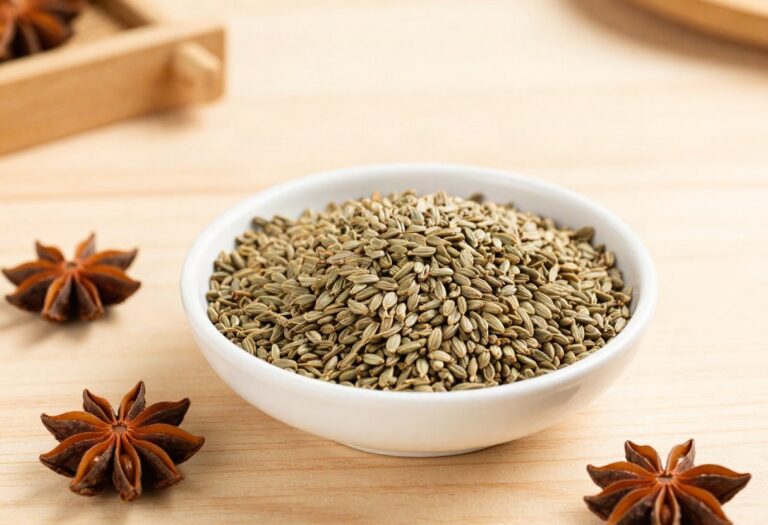
Aniseed, or green anise, is an aromatic plant whose small seeds, with their sweet, liquorice-like flavour, are the part mostly eaten. Used since antiquity, it flavours pastries, drinks, breads and some savoury dishes alike. You will find it as whole seeds, ground, or as an infusion. In a balanced diet, it is used in small amounts, like a seasoning, which means its high nutrition facts (337 kcal per 100 g) have no real impact on your daily intake. Rich in fibre, plant protein and minerals, aniseed brings above all flavour and lets you lift dishes while limiting added salt and sugar.
Macronutrient breakdown
Nutrition table per 100 g
| Calories | 337 kcal |
| Kilojoules | 1411 kJ |
| Protein | 17,6 g |
| Carbohydrate | 50,1 g |
| Fat | 15,9 g |
| Fibre | 14,6 g |
Micronutrients per 100 g
All measured nutrients, ranked by share of the daily reference intake.
- Iron36,96 mg264 %
- Manganese2,3 mg115 %
- Copper0,91 mg91 %
- Calcium646 mg81 %
- Potassium1441 mg72 %
- Phosphorus440 mg63 %
- Zinc5,3 mg53 %
- Vitamin B60,65 mg46 %
See the other 8 nutrients
- Magnesium170 mg45 %
- Vitamin B10,34 mg31 %
- Vitamin C21 mg26 %
- Vitamin B20,29 mg21 %
- Vitamin B33,06 mg19 %
- Vitamin B50,8 mg13 %
- Selenium5 µg9 %
- Vitamin A16 µg2 %
USDA FoodData Central (SR Legacy)
Tips
Aniseed is mostly enjoyed in small pinches. Whole seeds can be dry-toasted in a frying pan for a few seconds to release their aromas, then ground with a pestle and mortar just before use. Add them to cakes, gingerbread, biscuits and fruit compotes, but also to savoury dishes such as fish, braised vegetables or stocks. As an infusion, a teaspoon of seeds in a cup of hot water makes a digestive, calorie-free drink, perfect after a meal.
Varieties and flavour profile: do not confuse green anise (seeds), star anise (badiane) and fennel, whose notes are similar. To vary your aniseed flavours, you can explore fennel seeds or coriander seeds, which feature in many spice blends. Aniseed also pairs very well with cinnamon powder in winter desserts.
Key nutrients: per 100 g, aniseed provides 17.6 g of protein, 50.02 g of carbohydrates, 15.9 g of fat and above all 14.6 g of fibre. It supplies iron, calcium, magnesium and manganese. These figures are impressive, but remember that a real portion is counted in grams, or even fractions of a gram. Its calorie impact is therefore negligible if you are slimming or following a balanced diet.
For active people: aniseed is not a source of energy in itself, but it is an excellent ally for flavouring without sugar or fat. An aniseed infusion can go with a recovery snack, and its seeds pleasantly lift a plain yoghurt or a porridge before exercise. It is a smart way to make a controlled diet tastier, without unnecessary calories.
- Portions: 1 to 2 g per preparation is more than enough.
- Storage: whole seeds in an airtight jar, away from light and damp, for up to 2 years.
- Tip: grind at the last moment to preserve the volatile aromas.
- Ideal moment: as a digestive infusion after a meal.
You will find more ideas for flavouring your dishes in the Herbs & Spices family, and you can compare values with the food calorie table. Used in moderation, aniseed helps you cut back on salt and sugar while keeping the pleasure of taste.