Group · Vegetables
Raw fennel
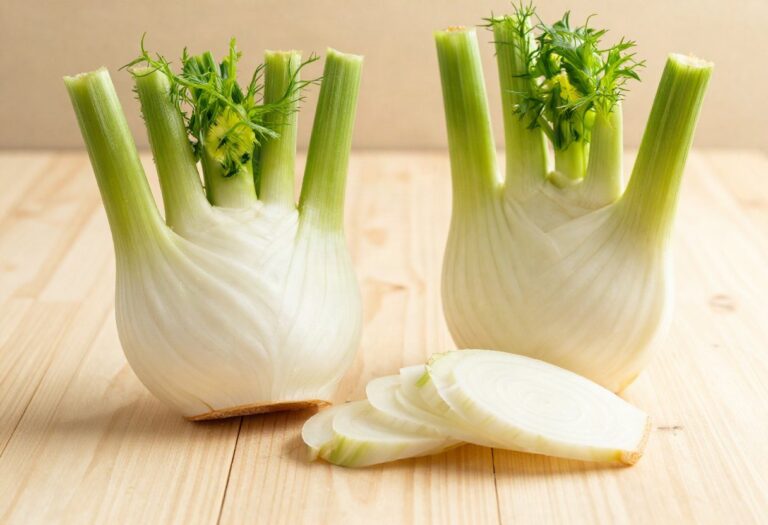
Raw fennel is a bulb vegetable with a characteristic aniseed taste, both crunchy and refreshing. Recognisable by its pearly white bulb topped with green stems and finely cut fronds, it belongs to the large umbellifer family, like carrot or celery. Eaten raw, it shows all its freshness and its slightly sweet note. Particularly light, raw fennel has only 18.2 kcal per 100 g, while providing fibre, water and various minerals. It fits naturally into a balanced diet, whether in a salad, with drinks or as a crunchy side. It is a great choice for anyone watching their weight without sacrificing pleasure.
Macronutrient breakdown
Nutrition table per 100 g
| Calories | 18 kcal |
| Kilojoules | 76 kJ |
| Protein | 1 g |
| Carbohydrate | 2,7 g |
| Fat | 0,2 g |
| Fibre | 2,6 g |
Micronutrients per 100 g
All measured nutrients, ranked by share of the daily reference intake.
- Potassium320 mg16 %
- Copper0,08 mg8 %
- Manganese0,1 mg5 %
- Calcium37 mg5 %
- Phosphorus28 mg4 %
- Vitamin B50,22 mg4 %
- Vitamin B60,05 mg4 %
- Vitamin C2,57 mg3 %
- Vitamin B9dietary folate equivalents19,6 µg
See the other 5 nutrients
- Magnesium11 mg3 %
- Zinc0,19 mg2 %
- Iron0,2 mg1 %
- Total omega-30,03 g1 %
- Vitamin A0,67 µg0 %
Anses Ciqual 2025. Source: Anses, 2025, Ciqual food composition table
Tips
Raw fennel can be eaten in many ways. Slice it finely on a mandoline for a crisp salad, or cut it into sticks to dip in a yoghurt sauce. Its aniseed flavour goes wonderfully with citrus fruits (orange, lemon), fish, olives and a drizzle of olive oil. A portion of 80 to 150 g is an ideal amount to enjoy its fibre without weighing down the meal.
On nutrition facts, raw fennel is remarkably low in calories (18.2 kcal per 100 g), low in fat (0.2 g) and moderate in carbohydrate (2.63 g). Its 2.6 g of fibre support digestive comfort and fullness, which makes it an asset for slimming. It also provides vitamin C, potassium and plenty of water, with a low glycaemic index. Crunching raw fennel between meals is a good idea for a light snack.
- Seasonality: it is mainly found from summer to autumn, but also in winter depending on the variety.
- Storage: keep it in the vegetable drawer of the fridge, wrapped, and eat it quickly to preserve its crunch.
- Preparation: cut off the tough base and the fibrous stems, and keep the fronds to flavour your dishes.
For more crunchy variety, alternate fennel with other fresh vegetables such as cucumber or celery, which are also very thirst-quenching. You can explore the whole range of the vegetable family to put together colourful, balanced plates.
Tip for active people: light and rich in water, raw fennel fits well into a recovery or cutting diet. Its low energy density makes it valuable during fat loss, where it helps fill the plate without excess calories. Combine it with a source of protein (fish, poultry, fresh cheese) for a complete, filling meal. To optimise your training nutrition, discover our advice on fitness nutrition.
Weight control: raw fennel is one of the foods to favour without any particular limit, as long as you stay careful with added sauces, which can quickly push up the calorie count. Prefer a light vinaigrette or a simple squeeze of lemon juice. To place this food among others, consult the food calorie table and plan your menus with full knowledge of the facts.