Group · Fruit
Plantain
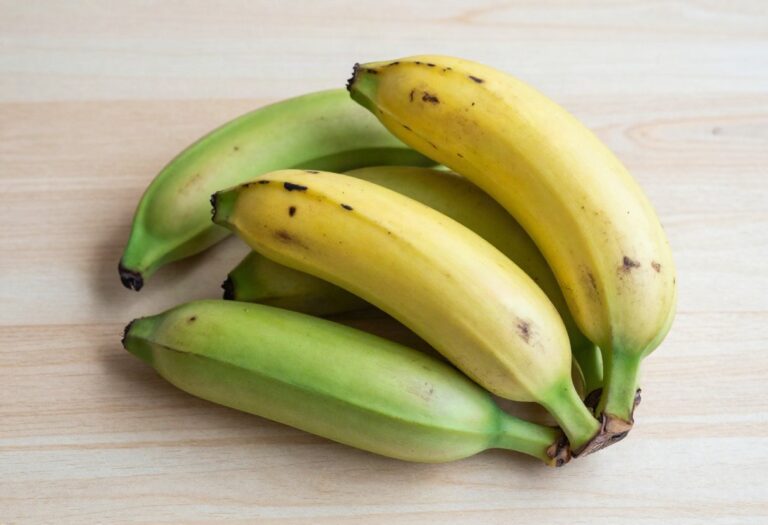
The plantain is a tropical fruit from the same family as the ordinary banana, but much richer in starch. Often called a ‘cooking banana’, it is rarely eaten raw: green, yellow or black, its taste and texture change as it ripens. A star of African, Caribbean and Latin American cooking, it is closer to a starchy food than to a dessert fruit. With around 132 kcal per 100 g, nearly 29.6 g of carbohydrate and 2.3 g of fibre, it is an interesting, filling source of energy. Its nutritional values make it a nourishing staple, to include in a varied diet according to your energy needs.
Macronutrient breakdown
Nutrition table per 100 g
| Calories | 132 kcal |
| Kilojoules | 557 kJ |
| Protein | 1,3 g |
| Carbohydrate | 29,6 g |
| Fat | 0,4 g |
| Fibre | 2,3 g |
Micronutrients per 100 g
All measured nutrients, ranked by share of the daily reference intake.
- Potassium499 mg25 %
- Vitamin C18,4 mg23 %
- Vitamin B60,3 mg21 %
- Magnesium37 mg10 %
- Copper0,08 mg8 %
- Phosphorus34 mg5 %
- Vitamin A38,1 µg5 %
- Vitamin B10,05 mg5 %
- Vitamin B9dietary folate equivalents22 µg
See the other 9 nutrients
- Vitamin B50,26 mg4 %
- Vitamin B30,69 mg4 %
- Iron0,6 mg4 %
- Vitamin B20,05 mg4 %
- Iodine2,5 µg2 %
- Zinc0,14 mg1 %
- Vitamin E0,14 mg1 %
- Vitamin K10,7 µg1 %
- Calcium3 mg0 %
Anses Ciqual 2025. Source: Anses, 2025, Ciqual food composition table
Tips
Unlike its sweet cousin, the plantain is eaten cooked. Green, it is firm and starchy, perfect as chips, boiled or mashed; fully ripe (with an almost black skin), it becomes softer and slightly sweet, ideal pan-fried or baked. You can prepare it as aloco, as crisps, as flattened fried plantain (tostones) or as a savoury side to a meat or fish dish.
Eating and cooking tips:
- Favour gentle cooking methods (steaming, baking, boiling) to limit added fat, rather than frying.
- A sensible portion is around 100 to 150 g cooked, to be counted as a starchy food on your plate rather than as a fruit.
- Keep it at room temperature; it ripens slowly and can be cooked at every stage of ripeness.
- Pair it with vegetables, pulses or a source of protein for a balanced meal.
Nutritional strengths: plantain provides complex carbohydrate in the form of starch, a good amount of fibre, potassium, magnesium, and vitamins C and B6. Its glycaemic index varies with ripeness and cooking: the greener and less processed it is, the more moderate it stays. This is an advantage for energy released gradually.
For active people: rich in carbohydrate, it is an excellent source of energy before training or for recovery, helping to replenish glycogen stores. You can include it in a post-exercise meal with a portion of protein, for example alongside a protein snack. To go further on the subject, discover our guidance on nutrition for fitness. If you like this fruit, also take a look at the regular banana, sweeter and ready to eat raw.
Weight control: with nearly 29.6 g of carbohydrate per 100 g, plantain is higher in calories than an ordinary fresh fruit, especially when fried. If you are trying to lose weight, opt for oil-free cooking, watch portions and include it in place of another starchy food, not in addition. To compare its calories with other foods, see our calorie table or explore the whole fruit family. Eaten in moderation and well cooked, it remains a nourishing, tasty food.
Plantain or sweet banana?
Plantain is larger, richer in starch and less sweet than the dessert banana. It is almost always eaten cooked: its sturdy texture withstands high temperatures without falling apart. It is therefore used as a starchy vegetable, whereas the sweet banana is eaten raw.
Benefits
Rich in complex carbohydrate, vitamins A and C, potassium and magnesium, plantain is an energy-giving, nutritious food. Its fibre supports digestion, and its glycaemic index stays moderate when it is eaten ripe and well cooked, so it can be part of a varied diet, including if you have diabetes, with the advice of a professional.
How to prepare it
Green, it goes into savoury dishes (fried aloco, sautéed plantain, gratins, mashes); fully ripe, its sweetness suits sweeter preparations. Frying, baking, steaming or grilling: adapt the cooking to the degree of ripeness.