Group · Starchy foods
Chips (French fries)
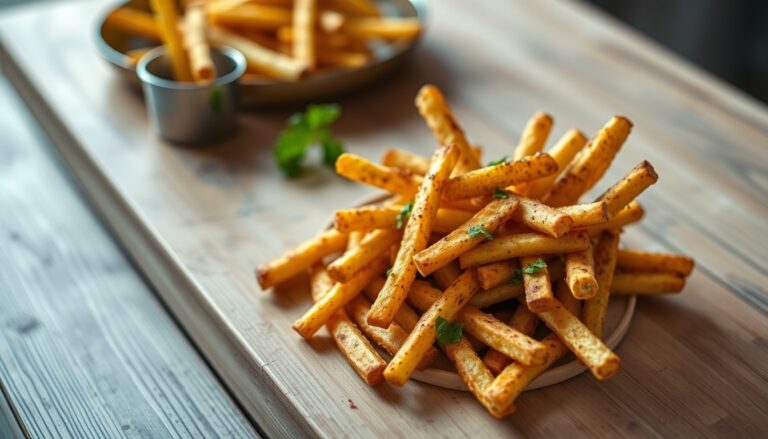
Chips (French fries) are among the great classics of fast food and sociable meals. Made from potatoes cut into sticks and then fried in oil, they come in many forms: fresh homemade chips, frozen, matchsticks, country-style potato wedges or oven chips. Crisp on the outside and fluffy inside, they win people over with their texture and comforting taste. In terms of nutrition facts, they provide around 258 kcal per 100 g, with 32.7 g of carbohydrate, 11.9 g of fat and 3.9 g of fibre. High in energy, they remain a treat to enjoy in moderation as part of a balanced diet, notably by watching the amount of oil absorbed.
Macronutrient breakdown
Nutrition table per 100 g
| Calories | 258 kcal |
| Kilojoules | 1080 kJ |
| Protein | 3,3 g |
| Carbohydrate | 32,7 g |
| Fat | 11,9 g |
| Fibre | 3,9 g |
Micronutrients per 100 g
All measured nutrients, ranked by share of the daily reference intake.
- Potassium684 mg34 %
- Vitamin B60,37 mg26 %
- Vitamin C19 mg24 %
- Omega-6 LA1,82 g18 %
- Vitamin B932,3 µg16 %
- Vitamin B32,57 mg16 %
- Phosphorus106 mg15 %
- Vitamin K111,2 µg15 %
See the other 12 nutrients
- Copper0,12 mg12 %
- Vitamin B10,11 mg10 %
- Manganese0,16 mg8 %
- Vitamin B50,43 mg7 %
- Iron0,9 mg6 %
- Magnesium23,3 mg6 %
- Vitamin B20,06 mg4 %
- Zinc0,36 mg4 %
- Calcium23,8 mg3 %
- Omega-3 ALA0,06 g3 %
- Vitamin B120,04 µg2 %
- Vitamin A1,25 µg0 %
Anses Ciqual 2025. Source: Anses, 2025, Ciqual food composition table
Tips
Chips are delicious, but their energy density calls for restraint. A sensible portion is around 100 to 125 g, as part of a meal that also includes vegetables and a source of protein to balance the plate. Avoid combining chips and a sugary drink on the same day.
- Cooking methods: classic deep-frying remains the most calorific. To lighten them, favour the oven or an air fryer, with a spoonful of olive oil: you cut the fat noticeably while keeping the crunch. Discover other techniques in our article on gentle cooking that preserves nutrients and flavour.
- Varieties: frozen, fresh, matchstick, steak fries or paprika wedges. Thick-cut versions absorb less oil than thin chips.
- Storage: chips are best eaten right after cooking. Reheated in the oven, they regain their crunch better than in the microwave.
Nutritionally, the potato provides complex carbohydrate, a little fibre (3.9 g per 100 g), vitamin C and potassium. But the glycaemic index of chips is high and frying adds a lot of fat. Beware of sauces: mayonnaise is very high in calories, while ketchup is lighter but sweet. Serving chips with a hamburger quickly adds to the meal’s calorie bill.
Tip for active people: chips can provide useful carbohydrate to replenish glycogen stores after intense exercise, but their fat content slows digestion and makes them poorly suited to just before training. For effective recovery, it is better to pair an easier-to-digest carbohydrate source with good-quality protein. If your goal is to gain muscle, an occasional portion of chips can meet a high calorie need, as long as you stay within an otherwise controlled diet.
Weight control: at 258 kcal per 100 g, chips belong among the occasional pleasures. Limit them to once or twice a week and favour homemade oven versions. To manage your intake better, see the food calorie table and explore the other options in the Starchy foods family so you can vary without excess.
If you have diabetes: the glycaemic index of potato ranges from 53 boiled to 86 as instant mash. The detail is in our guide potatoes and diabetes.