Group · Snacks & nibbles
Pretzels
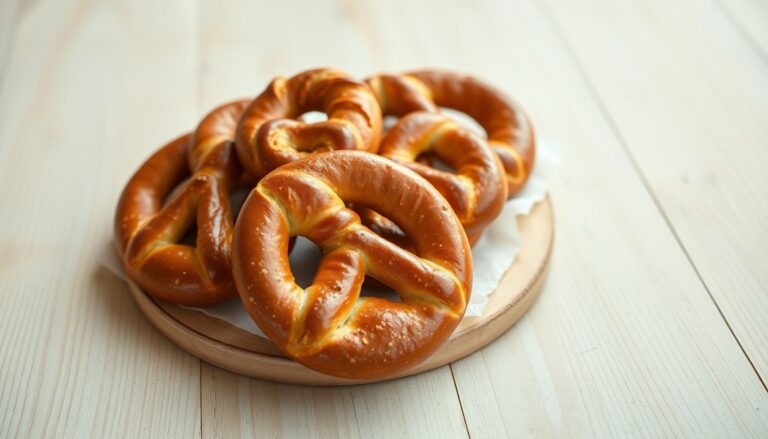
The pretzel is a savoury baked treat of Germanic origin, recognisable by its characteristic knotted shape and its golden-brown crust sprinkled with coarse salt. Made from a dough based on wheat flour, it comes in several forms: the large, soft bakery pretzel, the dry, crunchy mini pretzels sold in bags for snacking, and chocolate-coated versions. Nutritionally, the pretzel provides around 330 kcal per 100 g, with a high proportion of carbohydrate (54.6 g), some protein (10.1 g) and little fat (7.1 g). Classed among party snacks, it is best enjoyed in moderation as part of a balanced, varied diet.
Macronutrient breakdown
Nutrition table per 100 g
| Calories | 330 kcal |
| Kilojoules | 1390 kJ |
| Protein | 10,1 g |
| Carbohydrate | 54,6 g |
| Fat | 7,1 g |
| Fibre | 3,8 g |
Micronutrients per 100 g
All measured nutrients, ranked by share of the daily reference intake.
- Manganese0,55 mg28 %
- Phosphorus170 mg24 %
- Omega-3 ALA0,45 g23 %
- Total omega-30,47 g19 %
- Omega-6 LA1,41 g14 %
- Vitamin B10,15 mg14 %
- Vitamin B926,4 µg13 %
- Copper0,13 mg13 %
See the other 11 nutrients
- Vitamin E1,37 mg11 %
- Vitamin B50,6 mg10 %
- Zinc0,88 mg9 %
- Potassium170 mg9 %
- Vitamin K15,54 µg7 %
- Magnesium25 mg7 %
- Calcium53 mg7 %
- Iron0,84 mg6 %
- Vitamin B60,08 mg5 %
- Vitamin B30,68 mg4 %
- Vitamin B20,04 mg3 %
Anses Ciqual 2025. Source: Anses, 2025, Ciqual food composition table
Tips
The pretzel appeals with its crisp crust and dense crumb, but it is still a processed product to eat in moderation. A sensible portion is a small handful of mini pretzels (about 30 g, or around 100 kcal) or the occasional bakery pretzel. Its high carbohydrate content makes it a quick-energy snack, and its fairly high glycaemic index means you should not overdo it between meals.
In terms of nutrition facts, the pretzel stands out for its low fat content (7.1 g per 100 g) compared with other fried party snacks. It is often a slightly less fatty alternative to barbecue flavour crisps or corn chips. It also provides fibre (3.8 g) and protein (10.1 g), particularly in wholegrain versions. Its main point of caution is salt: the coarse salt on the surface noticeably increases the sodium intake, which matters if you are watching your blood pressure or following an approach such as the DASH diet.
To eat pretzels sensibly:
- Choose small portioned packs to keep better control of calories and avoid finishing the bag without noticing.
- Pair them with raw vegetables, soft cheese or a light yoghurt dip rather than rich sauces.
- Where possible, choose pretzels made with wholemeal flour, which are higher in fibre and more filling.
- Keep them for a sociable moment, such as an occasional drinks party or a savoury break, rather than automatic snacking.
- Store dry versions in an airtight tin to keep them crunchy.
For active people, the pretzel can be useful now and then: its carbohydrate density and sodium content make it a practical snack for topping up glycogen stores and replacing salt lost after prolonged exercise or in hot weather. However, it does not replace a proper recovery strategy: to optimise your intake, turn instead to balanced protein snacks. If your goal is performance or body composition, fit these products into your overall plan with care, as our guide to nutrition for fitness explains.
When you are watching your weight, the pretzel remains a calorific product that is not very filling for its volume. Its place is that of an occasional treat among party snacks, eaten in small amounts and without guilt, within a diet that is otherwise varied and rich in whole foods.