Group · Herbs & spices
Vanilla extract
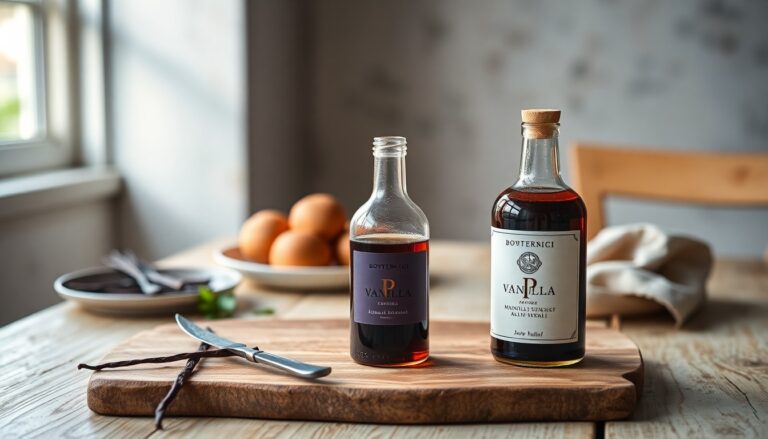
Vanilla extract is a liquid flavouring obtained by macerating vanilla pods in a mixture of water and alcohol. A star of desserts and baking, it flavours creams, cakes, yoghurts and drinks with a warm, indulgent note. It comes in several forms: natural extract, pure extract or synthetic flavouring, to be distinguished from the whole pod and vanilla powder. With about 240 kcal and 2.41 g of carbohydrate per 100 g, vanilla extract is an ingredient used in very small doses, which greatly limits its real calorie impact. In a balanced diet, it serves above all as an aromatic ally to naturally sweeten the perception of a dish without piling on added sugars.
Macronutrient breakdown
Nutrition table per 100 g
| Calories | 240 kcal |
| Kilojoules | 996 kJ |
| Protein | 0,1 g |
| Carbohydrate | 2,5 g |
Micronutrients per 100 g
All measured nutrients, ranked by share of the daily reference intake.
- Manganese0,48 mg24 %
- Vitamin B20,07 mg5 %
- Potassium98 mg5 %
- Phosphorus22 mg3 %
- Copper0,02 mg2 %
- Vitamin B30,32 mg2 %
- Vitamin B60,02 mg1 %
- Magnesium5 mg1 %
See the other 4 nutrients
- Iron0,13 mg1 %
- Vitamin B10,01 mg1 %
- Zinc0,06 mg1 %
- Vitamin B50,03 mg0 %
Anses Ciqual 2025. Source: Anses, 2025, Ciqual food composition table
Tips
Vanilla extract is used in drops or teaspoons, never in large amounts: one to two teaspoons are enough to flavour a cake batter or a litre of milk-based preparation. At this dose, its calorie and carbohydrate contribution is negligible, which makes it an excellent habit for weight loss, boosting the indulgence of a dessert without adding sugar.
- Culinary uses: custards, panna cotta, flans, rice pudding, fromage blanc, smoothies, coffee, but also some sweet-and-savoury marinades and sauces.
- Pairings: it enhances fruit, chocolate and caramel and goes nicely with warm spices such as ground cinnamon or ground cardamom.
- Storage: away from light and heat, with the cap tightly closed. The alcohol in the extract acts as a natural preservative and ensures a long shelf life.
As for nutrition facts, vanilla extract contains almost no protein, fat or fibre. Its carbohydrates come partly from residual sugars from the extraction and from the alcohol. As it is consumed in tiny amounts, these figures are anecdotal in the balance of a day. Choose a natural vanilla extract rather than an artificial flavouring to enjoy a more authentic fragrance and a shorter ingredients list.
For active people, vanilla is a clever trick: a few drops in a fromage blanc, a porridge or a protein snack add a dessert-like touch without empty calories. It also improves the taste of a shaker or a protein drink, which makes it easier to stick to a recovery routine. This lets you sweeten a snack while keeping control of your carbohydrate intake.
For weight control, remember that the risk comes not from the extract itself, but from the sweet preparations it is often added to. Use it wisely to reduce added sugar: the perception of sweetness that vanilla brings lets you cut back on sugar without frustration. To compare its value with other flavourings and organise your cupboards, explore the herbs and spices family or discover the fragrant subtlety of saffron. To place this ingredient in your overall balance, also see the food calorie table.