Group · Herbs & spices
Cardamom powder
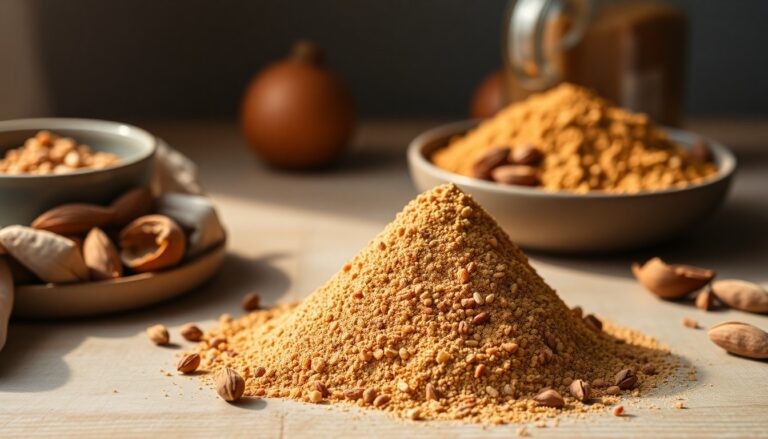
Cardamom powder is a refined spice made by grinding the seeds inside green (sometimes black) cardamom pods. Very popular in Indian, Middle Eastern and Scandinavian cooking, it is recognised by its warm, lemony, slightly minty aroma. It is used in savoury dishes (curries, rice, stews) as well as in sweet preparations (pastries, coffee, chai tea). Used in small pinches, it remains a seasoning and not a significant source of calories in a balanced diet. In terms of nutrition facts, it provides 321 kcal per 100 g, but also fibre, protein and various minerals. An aromatic spice that is perfect for lifting your recipes without extra salt.
Macronutrient breakdown
Nutrition table per 100 g
| Calories | 321 kcal |
| Kilojoules | 1340 kJ |
| Protein | 10,8 g |
| Carbohydrate | 40,5 g |
| Fat | 6,7 g |
| Fibre | 28 g |
Micronutrients per 100 g
All measured nutrients, ranked by share of the daily reference intake.
- Manganese28 mg1400 %
- Iron14 mg100 %
- Zinc7,47 mg75 %
- Magnesium229 mg61 %
- Potassium1120 mg56 %
- Calcium383 mg48 %
- Copper0,38 mg38 %
- Vitamin C21 mg26 %
See the other 5 nutrients
- Phosphorus178 mg25 %
- Vitamin B10,2 mg18 %
- Vitamin B60,23 mg16 %
- Vitamin B20,18 mg13 %
- Vitamin B31,1 mg7 %
Anses Ciqual 2025. Source: Anses, 2025, Ciqual food composition table
Tips
Cardamom powder is always used in small amounts: a pinch (about 0.5 to 1 g) is enough to flavour a dish for several people. At that scale, its calorie contribution is negligible, which makes it a useful ally for seasoning your slimming recipes without weighing them down. Per 100 g, it provides 312 kcal, 10.8 g of protein, 40.5 g of carbohydrates, 6.7 g of fat and nearly 28 g of fibre, but you will never eat such a quantity in one go.
How to eat cardamom. Add it towards the end of cooking to preserve its volatile aromas, or infuse it in a hot drink. It pairs remarkably well with:
- coffee, black tea and plant-based milk for a homemade chai;
- rice, lentils and curries, where it sits alongside turmeric powder and cumin;
- desserts (compotes, cakes, rice pudding), in a duo with cinnamon powder.
Storage: keep ground cardamom in an airtight jar, away from light and damp. Like all ground spices, it quickly loses its aroma: buy it in small quantities and use it within six months. If you want an even more intense flavour, grind the seeds yourself just before use.
For active people: cardamom does not provide any energy useful for exercise, but it lets you vary the flavours of dishes rich in complex carbohydrates (rice, semolina) eaten before training, and makes lean protein sources more appetising during recovery. You can also add a touch to porridge, yoghurt or a post-workout smoothie to add flavour without adding sugar. To go further with meal planning, take a look at our advice on nutrition for fitness.
Weight control: the major advantage of spices like cardamom is that they lift the taste of dishes without added salt, sugar or fat. Used wisely, it helps make home cooking tasty and easier to sustain over time. Be wary, though, of sugary, fatty preparations (pastries, syrupy lattes) where it mostly serves as a flavouring: it is the base, not the spice, that weighs on the calorie balance.
Keen to discover other fragrant spices? Explore the whole family of herbs and spices and compare their values in the food calorie table.