Group · Fats & oils
High-oleic safflower oil
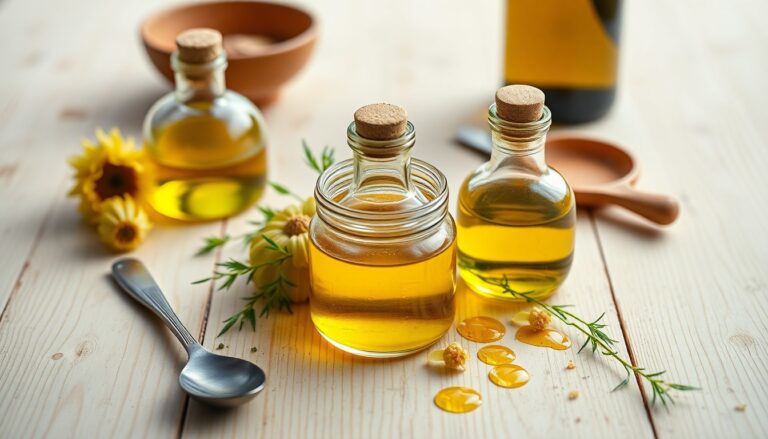
High-oleic safflower oil is a vegetable fat made from the seeds of safflower, a yellow-orange flowering plant related to the thistle. Unlike its cousin rich in linoleic acid, this version has been selected for its high content of monounsaturated fatty acids, similar to those in olive oil. Clear, with a neutral, mild taste, it suits dressing as well as some cooking. Like all oils, it provides 885 kcal and 100 g of fat per 100 g, with no protein or carbohydrate. In a balanced diet, it supplies good-quality fats, to be included in moderation to benefit from its interesting nutrition facts.
Macronutrient breakdown
Nutrition table per 100 g
| Calories | 884 kcal |
| Kilojoules | 3699 kJ |
| Fat | 100 g |
Micronutrients per 100 g
All measured nutrients, ranked by share of the daily reference intake.
- Vitamin E34,1 mg284 %
- Omega-6 LA12,72 g127 %
- Vitamin K17,1 µg9 %
- Omega-3 ALA0,1 g5 %
USDA FoodData Central (SR Legacy)
Tips
High-oleic safflower oil stands out for its heat stability, which is higher than that of the version rich in linoleic acid. Its high smoke point makes it a decent option for pan-frying or wok cooking, although gentle cooking is always preferable to preserve the quality of the fats. For vinaigrettes and cold dishes, its neutral taste leaves all the room for aromatics and herbs.
How to use it? Aim for a sensible portion, about one tablespoon (10 g, or nearly 90 kcal). A few ideas for use:
- to dress raw vegetables, cereals or steamed vegetables;
- to gently soften food without burning the fat;
- as an occasional replacement for another neutral oil in a marinade.
Key nutrients. This oil is 100% fat, dominated by oleic acid, a monounsaturated fatty acid. It contains no carbohydrate, protein or fibre, and its glycaemic index is zero. To vary your fatty acid profiles, alternate it with other oils such as olive oil or, for an omega-3 boost, rapeseed oil. You can compare all the fats on the page for the fats and oils family.
Advice for active people. Fats are a dense source of energy, useful for supporting your calorie intake over the day, especially during a bulking phase. Add a drizzle of oil to your recovery dishes rich in starchy foods and protein, rather than just before an intense session, when light digestion is preferable. Keep in mind that fats do not replace the overall balance of fitness nutrition, which rests mainly on combining carbohydrate, protein and hydration.
Weight control. At 884 kcal per 100 g, this oil is very high in calories: its nutritional value does not excuse you from measuring it. If you are trying to lose weight, measure it with a spoon rather than pouring freely, and favour variety in your sources of good fats. If you are structuring your meals, a well-thought-out balanced diet will help you include oils without overdoing it.
Storage. Keep the bottle away from light and heat, tightly closed, to limit oxidation and preserve its qualities.