Group · Condiments & sauces
Vinaigrette
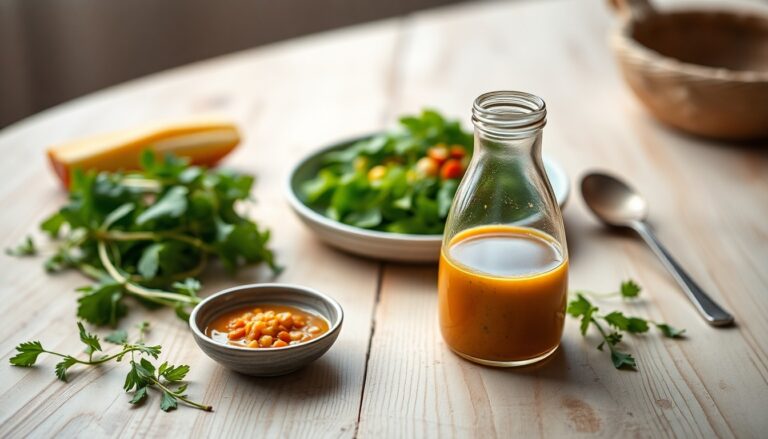
Vinaigrette is one of the most universal dressings in French cooking. Made with oil and vinegar, sometimes enriched with mustard, herbs, shallot or lemon juice, it livens up salads, raw vegetables, steamed vegetables and even cold meats. It comes ready to use from the shop, or homemade, which is easier to portion. In terms of nutrition facts, vinaigrette is high in fat: it provides around 475 kcal per 100 g, with nearly 51 g of fat and 2.91 g of carbohydrate. It is therefore a tasty but calorific condiment, to be eaten in moderation in a balanced diet, where a small amount is enough to transform a dish.
Macronutrient breakdown
Nutrition table per 100 g
| Calories | 475 kcal |
| Kilojoules | 1950 kJ |
| Protein | 0,6 g |
| Carbohydrate | 3 g |
| Fat | 51 g |
| Fibre | 0,8 g |
Micronutrients per 100 g
All measured nutrients, ranked by share of the daily reference intake.
- Vitamin K198,8 µg132 %
- Vitamin E12,9 mg108 %
- Vitamin B10,12 mg11 %
- Manganese0,14 mg7 %
- Potassium110 mg6 %
- Phosphorus33 mg5 %
- Iron0,64 mg5 %
- Vitamin B60,05 mg4 %
See the other 10 nutrients
- Vitamin B96,58 µg3 %
- Magnesium12 mg3 %
- Calcium20 mg3 %
- Vitamin B30,4 mg3 %
- Copper0,02 mg2 %
- Zinc0,18 mg2 %
- Vitamin A13 µg2 %
- Vitamin B120,04 µg1 %
- Vitamin B50,05 mg1 %
- Vitamin B20,01 mg1 %
Anses Ciqual 2025. Source: Anses, 2025, Ciqual food composition table
Tips
Vinaigrette is delicious, but its energy density calls for moderation. One tablespoon (about 15 g) already provides nearly 70 kcal, so there is no need to drown your salad in it. To portion it well, pour it into the bottom of the salad bowl, then add the leaves and toss just before serving, so that you get a thin coating rather than an excess.
How to eat it sensibly:
- Go for a homemade version where you control the oil to vinegar ratio (classically 3 to 1) and the amount of salt.
- Choose good-quality oils (olive, rapeseed, walnut) for their unsaturated fatty acids, and vary the flavours.
- Lighten it by replacing part of the oil with plain yoghurt, stock or water to cut the calories.
- Add mustard, fresh herbs, garlic or lemon juice to intensify the taste without making it heavier.
You can compare the profiles with homemade vinaigrette, which is generally easier to control, or explore the basics such as vinegar and yellow mustard to personalise your recipes. Other options from the condiments and sauces family can add variety to your dressings depending on the dish.
Nutrition facts: vinaigrette contains almost no protein (0.55 g) or fibre, but plenty of fat (51 g) and carbohydrates from sugar or additives in shop-bought versions. Its value comes mainly from the oils used, which are sources of fatty acids and vitamin E. Read the labels: some ready-made products contain added sugar, preservatives and a lot of salt.
For active people: vinaigrette is not an energy food for exercise, but a little healthy fat in a meal helps you absorb the fat-soluble vitamins in vegetables. On a complete post-workout salad (with a source of protein and starchy foods), a light vinaigrette adds flavour without upsetting the balance of the meal. If you are watching your weight or cutting, keep an eye on portions: oil is calorific, even if it is healthy.
Weight control: measure your amounts with a spoon rather than a generous drizzle. To go further in your choices, see the food calorie table and compare before dressing. Properly portioned, vinaigrette remains a tasty ally for your everyday salads.