Group · Fats & oils
Coconut oil
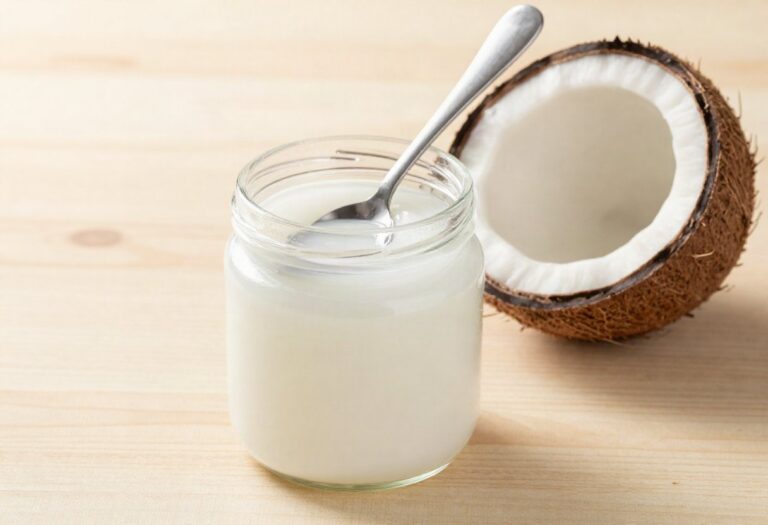
Coconut oil is a fat extracted from the flesh (copra) of the coconut palm fruit. At room temperature it is often solid and white, then becomes liquid and translucent once heated above about 24 °C. It comes in a virgin version (cold-pressed, with a marked tropical scent) or a refined one (more neutral and more heat-resistant). In terms of nutrition facts, it provides 900 kcal per 100 g and 100% fat, dominated by saturated fatty acids, notably lauric acid. High in energy and popular in both cooking and baking, it has a place in a balanced diet as long as it is used in moderation.
Macronutrient breakdown
Nutrition table per 100 g
| Calories | 900 kcal |
| Kilojoules | 3700 kJ |
| Fat | 100 g |
Micronutrients per 100 g
All measured nutrients, ranked by share of the daily reference intake.
- Omega-3 ALA11,9 g595 %
- Omega-6 LA56,7 g567 %
- Vitamin K115 µg20 %
- Iodine0,8 µg1 %
- Vitamin A0 µg0 %
Anses Ciqual 2025. Source: Anses, 2025, Ciqual food composition table
Tips
Very high in calories (about 900 kcal per 100 g, or nearly 90 kcal per tablespoon), coconut oil is used in small amounts. A teaspoon is enough to flavour a dish. Its high content of saturated fatty acids means it is best seen as a treat, to alternate with oils richer in unsaturated fatty acids.
- Cooking: its decent smoke point makes it handy for sautéing and pan-frying and for some deep-frying. The refined version tolerates heat better, while the virgin version suits gentle cooking and brings a characteristic coconut taste.
- Culinary uses: curries, stir-fries, Asian and Indian dishes, vegan baking, granolas, or as a substitute for butter in some recipes. It can also stand in for other fats in smoothies and homemade energy balls.
- Storage: away from light and heat, in an airtight jar. It keeps for a long time and simply changes state depending on the room temperature.
On the nutrition side, remember that it contains no protein, carbohydrate or fibre: it is a pure source of fat. To vary your fatty acid profiles, alternate it with an olive oil or a rapeseed oil, which are richer in monounsaturated and polyunsaturated fatty acids. You can compare all the options in the fats and oils family to build up your oil cupboard. Végétaline, which also comes from coconut, works on a similar principle for cooking.
For active people: its energy density makes it an ally when calorie needs are high, for example during a bulking phase. A small amount in a porridge, a smoothie or a snack preparation easily boosts energy intake. However, it provides no protein: for recovery and muscle building, pair your fat intake with real sources of protein and carbohydrate. To go further, see our guidelines on fitness nutrition.
Weight control: like any oil, it is the most calorific item in the meal. Measure it with a spoon rather than going by eye, favour cooking methods that need only a drizzle and keep an overall view of your total fat intake over the day. Used in moderation, it fits easily into a varied, tasty diet.