Group · Fats & oils
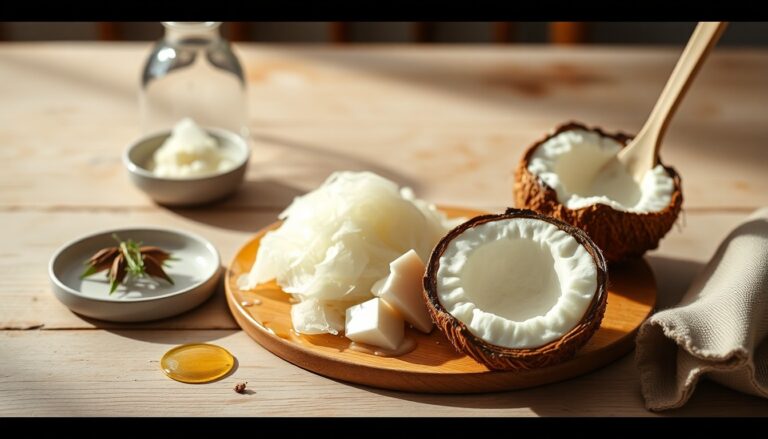
Végétaline (coconut oil)
Végétaline is a plant-based fat that is solid at room temperature, traditionally made from hydrogenated or refined coconut oil (and sometimes palm kernel oil). Recognisable by its firm, white texture, it melts quickly with heat and withstands high temperatures well, which makes it a classic for frying. In terms of nutrition facts, it is pure fat: 100% fat, 900 kcal per 100 g, with no protein, carbohydrate or fibre. It is mainly made up of saturated fatty acids, including medium-chain fatty acids. Very high in calories and concentrated, Végétaline has a place in a balanced diet in small amounts, especially for cooking that calls for a stable fat.
Macronutrient breakdown
Nutrition table per 100 g
| Calories | 900 kcal |
| Kilojoules | 3700 kJ |
| Fat | 100 g |
Micronutrients per 100 g
All measured nutrients, ranked by share of the daily reference intake.
- Omega-6 LA1,8 g18 %
- Vitamin E0,3 mg3 %
- Iron0,06 mg0 %
- Iodine0,4 µg0 %
- Calcium1 mg0 %
Anses Ciqual 2025. Source: Anses, 2025, Ciqual food composition table
Tips
Végétaline shines above all in high-temperature cooking. Its high smoke point makes it ideal for frying, fritters, homemade chips or fast pan-frying. Stick to a measured portion: one to two tablespoons are enough to grease a pan or sear food. Like all fats, it provides about 9 kcal per gram, which is why it is worth measuring with a spoon rather than going by eye.
Nutritionally, coconut-based Végétaline contains mostly saturated fatty acids, including a share of medium-chain fatty acids. It provides no protein, carbohydrate or fibre, and its glycaemic index is zero. To vary your fatty acid profile day to day, alternate with oils richer in unsaturated fats, such as olive oil for dressing, or rapeseed oil for its omega-3. In composition, Végétaline is close to coconut oil and palm kernel oil.
Practical tips:
- Keep Végétaline for cooking and use liquid oils for vinaigrettes and cold dishes.
- Store it away from light and heat; its solid texture softens as soon as it nears its melting point.
- Do not reuse frying oil too many times: filter it and change it regularly.
- Pair it with crunchy vegetables or starchy foods for filling, balanced dishes.
For active people: Végétaline is a dense source of energy, useful when preparing for high calorie demands, for example during a bulking phase. However, it provides no protein or carbohydrate that your body can use directly during exercise. Before or after training, favour sources of complex carbohydrates and protein, and keep fats for meals further from your session so as not to weigh down digestion. To structure your intake around sport, draw on the principles of fitness nutrition.
Weight control: at 900 kcal per 100 g, Végétaline is among the most calorific foods, like the other fats and oils. If you are trying to lose weight, limit how often you use it, favour gentle cooking methods and measure quantities precisely. Used in moderation, it has its place in a varied, tasty diet.