Group · Seafood
Octopus
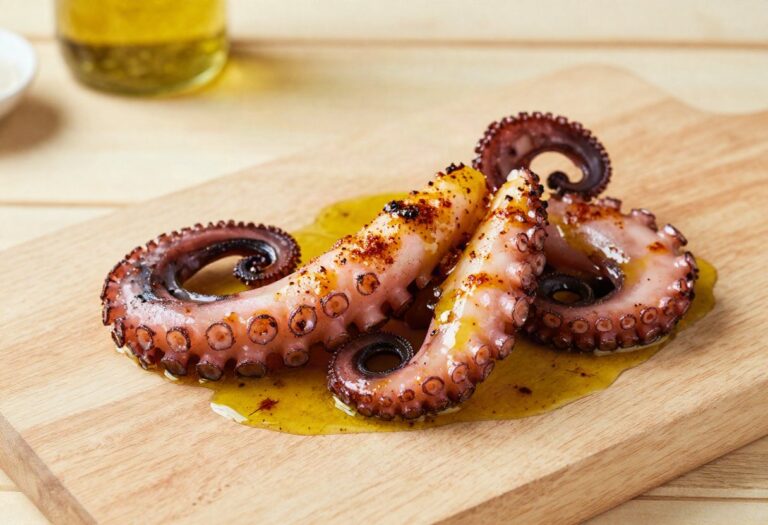
The octopus is a cephalopod mollusc highly prized in Mediterranean, Asian and Latin American cooking. It is sold fresh, frozen or already cooked, to prepare whole or in pieces (tentacles, mantle). Its firm, slightly iodine-rich flesh appeals to food lovers and athletes alike. Nutritionally, octopus is an excellent source of protein (nearly 29.8 g per 100 g) while staying low in fat, which makes it an interesting food in a balanced, slimming-minded diet. With around 156 kcal per 100 g, it fits well into a light plate, paired with vegetables and a drizzle of olive oil.
Macronutrient breakdown
Nutrition table per 100 g
| Calories | 156 kcal |
| Kilojoules | 659 kJ |
| Protein | 29,8 g |
| Carbohydrate | 4,4 g |
| Fat | 2,1 g |
Micronutrients per 100 g
All measured nutrients, ranked by share of the daily reference intake.
- Vitamin B1236 µg1440 %
- Copper0,74 mg74 %
- Iron9,54 mg68 %
- DHA0,16 g64 %
- EPA0,15 g60 %
- Vitamin B60,65 mg46 %
- Phosphorus279 mg40 %
- Zinc3,36 mg34 %
See the other 13 nutrients
- Potassium630 mg32 %
- Vitamin B33,78 mg24 %
- Magnesium60 mg16 %
- Vitamin B50,9 mg15 %
- Calcium106 mg13 %
- Total omega-30,31 g12 %
- Vitamin B924 µg12 %
- Vitamin C8 mg10 %
- Vitamin E1,2 mg10 %
- Vitamin B20,08 mg5 %
- Vitamin B10,06 mg5 %
- Manganese0,05 mg2 %
- Vitamin K10,1 µg0 %
Anses Ciqual 2025. Source: Anses, 2025, Ciqual food composition table
Tips
Octopus needs well-controlled cooking to bring out its tenderness. The classic technique is to poach it for a long time in barely simmering water (45 minutes to 1 hour depending on size), sometimes with a wine cork according to tradition. You can also braise it, grill it on the plancha after poaching, or prepare it raw and marinated. Once cooked, it is eaten cold in a salad with potatoes, lemon, parsley and olive oil (the famous pulpo a la gallega), or hot as tapas.
In terms of nutrition facts, octopus has a remarkable profile: rich in good-quality protein, low in fat (about 2.08 g/100 g) and moderate in calories. It also provides interesting minerals such as iron, selenium, copper and zinc, as well as vitamin B12. Its glycaemic index is very low thanks to its low carbohydrate content, an advantage for fullness and steady energy.
- Recommended portion: 120 to 150 g as a main course, served with vegetables or wholegrain starchy foods.
- Storage: eat fresh octopus within 1 to 2 days, or keep it frozen (freezing also helps to tenderise the flesh).
- Pairings: garlic, lemon, smoked paprika, tomato and fresh herbs enhance its iodine-rich taste without weighing down the dish.
For active people, octopus is a great ally: its high protein density supports muscle recovery and the building of lean mass, while staying light. You can include it in a post-workout meal with a source of carbohydrate such as rice or sweet potato. To go further on daily protein intake, discover our ideas for protein snacks and our advice on fitness nutrition.
As for weight control, octopus is interesting because it is filling for few calories, as long as you watch how it is prepared: fried versions or those coated in fatty sauces push up the energy bill. Favour gentle cooking and light seasoning. If you enjoy seafood, you can vary things with squid or cuttlefish, which share a similar lean, protein-rich profile. To compare calorie intakes, see our food calorie table.