Group · Dairy
Asiago
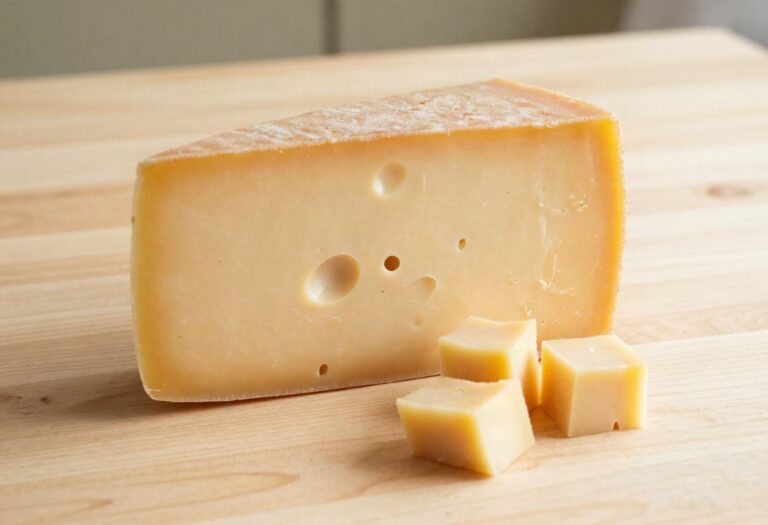
Asiago is a cheese from the Veneto that comes in two radically different versions: pressato, young, mild and supple, and d’allevo, matured for up to two years, hard and brittle. The values below correspond to the average of the Ciqual entry.
In terms of nutrition facts: 356 kcal per 100 g for 31.4 g of protein (one of the highest levels of any cheese) and 25.6 g of fat of which 15.9 g is saturated. It provides 770 mg of calcium and 530 mg of phosphorus per 100 g, with 1.9 g of salt.
Macronutrient breakdown
Nutrition table per 100 g
| Calories | 356 kcal |
| Kilojoules | 1480 kJ |
| Protein | 31,4 g |
| Fat | 25,6 g |
Micronutrients per 100 g
All measured nutrients, ranked by share of the daily reference intake.
- Calcium770 mg96 %
- Phosphorus530 mg76 %
- Vitamin B20,35 mg25 %
- Vitamin A188 µg24 %
- Zinc2,2 mg22 %
- Vitamin B940 µg20 %
- Vitamin B60,09 mg6 %
- Iron0,7 mg5 %
See the other 4 nutrients
- Potassium97 mg5 %
- Vitamin D0,19 µg4 %
- Vitamin B10,03 mg3 %
- Vitamin B30,1 mg1 %
Anses Ciqual 2025. Source: Anses, 2025, Ciqual food composition table
Tips
31.4 g of protein for 356 kcal. It rivals Grana Padano on this measure, with a little less fat. A 30 g portion provides 9.4 g of protein for 107 kcal.
The aged version is naturally lactose-free. Like all hard cheeses matured for more than a year. The young pressato still contains traces.
770 mg of calcium: a portion covers 29% of the requirement. The drier d’allevo concentrates even more than the average shown.
Choose the version for the use. The young one melts and slices for a sandwich; the aged one is grated over pasta and replaces Parmesan for less money. Both are sold under the same name, so check the label.
1.9 g of salt. A 30 g portion provides 0.57 g, or 11% of the daily guideline. That is in the upper average for pressed cheeses.