Group · Dairy
Parmesan
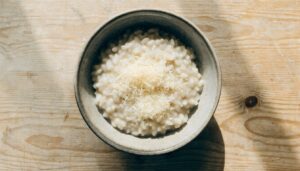
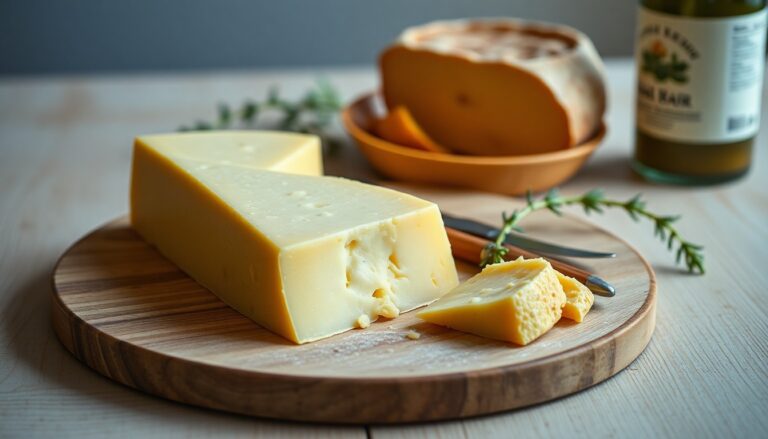
Parmesan, or Parmigiano Reggiano in its protected Italian version, is a hard cheese made from cow’s milk and matured for a long time (from 12 to 36 months, sometimes more). Its grainy texture, characteristic crystals and intense flavour make it a kitchen staple, whether grated, shaved into curls or enjoyed in chunks. Nutritionally, it is a remarkable concentrate: around 432 kcal, 30.5 g of protein, 31 g of fat and only 1.14 g of carbohydrate per 100 g. Very rich in protein and calcium, and low in lactose thanks to maturing, it fits into a balanced diet in small amounts, where its aromatic power means you need only a little.
Macronutrient breakdown
Nutrition table per 100 g
| Calories | 411 kcal |
| Kilojoules | 1710 kJ |
| Protein | 30,5 g |
| Carbohydrate | 1,2 g |
| Fat | 31 g |
Micronutrients per 100 g
All measured nutrients, ranked by share of the daily reference intake.
- Calcium980 mg123 %
- Vitamin B122,64 µg106 %
- Phosphorus630 mg90 %
- Copper0,71 mg71 %
- Iodine90 µg60 %
- Vitamin A336 µg42 %
- Zinc3,9 mg39 %
- Selenium20 µg36 %
See the other 15 nutrients
- Vitamin B20,26 mg19 %
- DHA0,04 g16 %
- Vitamin B60,18 mg13 %
- Magnesium40 mg11 %
- Vitamin B916 µg8 %
- Vitamin B31,23 mg8 %
- Total omega-30,19 g8 %
- Omega-3 ALA0,14 g7 %
- Omega-6 LA0,67 g7 %
- Vitamin B50,34 mg6 %
- Potassium110 mg6 %
- Vitamin K11,53 µg2 %
- Vitamin E0,17 mg1 %
- Manganese0,02 mg1 %
- Iron0,1 mg1 %
Anses Ciqual 2025. Source: Anses, 2025, Ciqual food composition table
Tips
Parmesan is a natural flavour enhancer: a small portion is enough to season a dish. If you are watching your weight, keep in mind that its calorie density is high. A sensible portion is around 15 to 20 g, equivalent to a few spoonfuls of grated cheese. There is no need to overdo it: its intensity does the work.
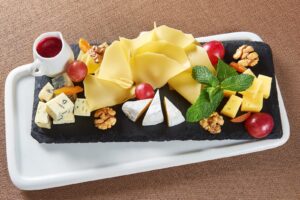
- How to eat Parmesan: grated over pasta, a risotto or a vegetable soup, shaved over a salad or a carpaccio, in chunks with drinks, or mixed into a gratin topping.
- Cooking: it melts and browns well, but is best added at the end of cooking to preserve its aromas. The rind, once cleaned, can flavour a stock.
- Storage: wrapped in baking paper and then a cloth, at the bottom of the fridge. A whole piece keeps better than grated cheese, which dries out quickly.
In terms of nutrition facts, Parmesan stands out for its complete protein (nearly 30.5 g per 100 g) and its richness in calcium, phosphorus and zinc. Its long maturing greatly reduces the lactose, which often makes it better tolerated than fresh cheeses. Its fat is nonetheless mostly saturated: moderation is needed, especially if you are watching your fat intake.
For active people, Parmesan provides good-quality protein that helps muscle recovery and a little salt that helps make up for losses after intense exercise. As a snack, a few chunks with dried fruit or raw vegetables make a nutrient-dense bite. For a more complete protein intake over the day, you can combine it with other sources such as eggs or 0% fat fromage blanc at snack time. To go further on the subject, see our protein snack ideas.
If you are looking for a milder or lower-calorie alternative in the kitchen, semi-skimmed milk ricotta or mozzarella offer a different, lighter profile. You can explore the whole dairy products family to vary your calcium intake through the week.
In short, Parmesan is a flavoursome, high-protein cheese that has its place in a balanced diet, as long as you keep to small portions. Its flavour-to-quantity ratio makes it a smart ally for lifting your dishes without piling on calories.
Recipes with parmesan
Light Caesar salad
Quinoa and mushroom risotto
Courgette, lemon and ricotta pasta
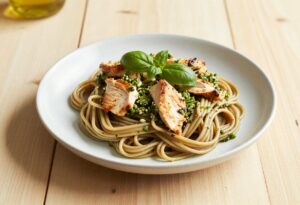
Wholewheat pasta with chicken and pesto
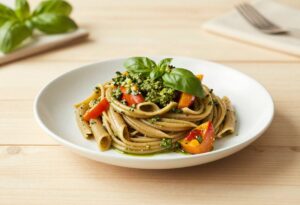
Wholewheat pasta with pesto and vegetables
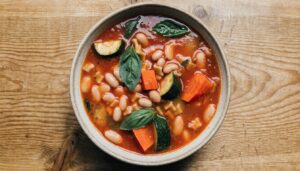
Minestrone (Italian vegetable soup)
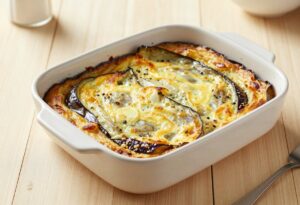
Light aubergine gratin
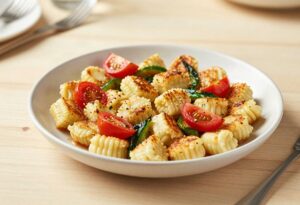
Pan-fried gnocchi with tomatoes and vegetables
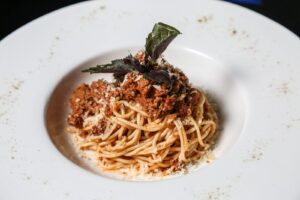
Spaghetti bolognese
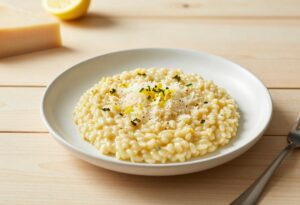
Lemon risotto