Group · Meat
Beef kidney
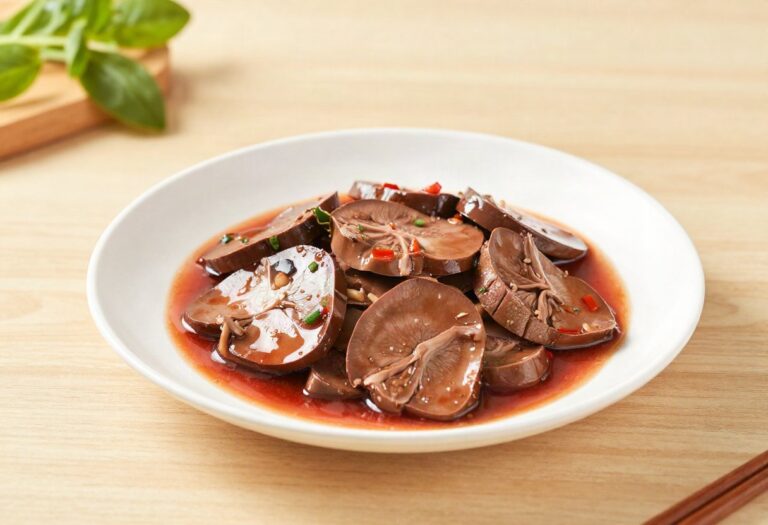
Beef kidney is one of the most popular offal in traditional French cooking. Firm and with a strong taste, it is recognisable by its characteristic lobed shape. It is a lean and rich meat: with around 171 kcal per 100 g, it provides nearly 27 g of protein, only 7 g of fat and 0 g of carbohydrate. A natural source of high-quality protein, it fits into a balanced diet as long as it is well prepared to soften its marked taste. Often cooked in a sauce, with mustard or Madeira, beef kidney remains an economical and nourishing classic, to be rediscovered without going overboard.
Macronutrient breakdown
Nutrition table per 100 g
| Calories | 171 kcal |
| Kilojoules | 718 kJ |
| Protein | 27 g |
| Fat | 7 g |
Micronutrients per 100 g
All measured nutrients, ranked by share of the daily reference intake.
- Vitamin B1226 µg1040 %
- Vitamin B22,97 mg212 %
- Iron9,5 mg68 %
- Copper0,56 mg56 %
- Vitamin B60,66 mg47 %
- Phosphorus304 mg43 %
- Vitamin B983 µg42 %
- Vitamin B36,5 mg41 %
See the other 11 nutrients
- Vitamin B10,43 mg39 %
- Vitamin B52,34 mg39 %
- Zinc3,1 mg31 %
- Vitamin D1,1 µg22 %
- Manganese0,19 mg10 %
- Potassium135 mg7 %
- Iodine10 µg7 %
- Magnesium12 mg3 %
- Calcium19 mg2 %
- Vitamin E0,08 mg1 %
- Omega-3 ALA0,01 g1 %
Anses Ciqual 2025. Source: Anses, 2025, Ciqual food composition table
Tips
To get the most from beef kidney, preparation is essential. Start by removing the thin membrane and the fatty central parts, then soak it for a few minutes in cold water with vinegar to soften its smell. Quick, hot cooking (a very hot pan, sautéing) keeps the kidney tender and pink in the middle. Cooking it for too long makes it rubbery: it is better to sear it quickly or simmer it gently in a sauce.
Serving ideas and pairings:
- In a mustard, Madeira, port or red wine sauce.
- With mushrooms, shallots or steamed potatoes.
- Served with rice, wholewheat pasta or green vegetables to balance the plate.
As for nutrition facts, beef kidney appeals with its richness in protein (over 27 g per 100 g) and its low fat and carbohydrate content. Like most offal, it naturally provides iron, zinc and B vitamins. A reasonable portion is around 100 to 150 g. If you are watching your figure, it is an asset: its calorie density remains moderate and its zero glycaemic index makes it an interesting food when slimming, as long as you limit fatty and creamy sauces that push up the calorie total.
For active people: beef kidney is an excellent source of lean protein to support muscle recovery after exercise. Paired with wholegrain starchy foods, it helps replenish your energy stores while promoting the repair of muscle fibres. You can include it in a post-workout meal, alternating with other lean meats such as chicken breast or minced beef. To top up your daily protein intake, also discover our protein snack ideas.
Storage: beef kidney is a fragile offal. Buy it very fresh, keep it in the fridge and eat it within 24 to 48 hours. You can freeze it raw, once well cleaned, to prepare it later.
If you like offal, explore other options such as the milder veal kidney or beef liver. And to browse all the cuts available, go to the Meat family page. Well prepared and eaten in moderation, beef kidney remains a tasty meat, rich in protein and suited to many nutritional goals.