Group · Herbs & spices
Raw shallot
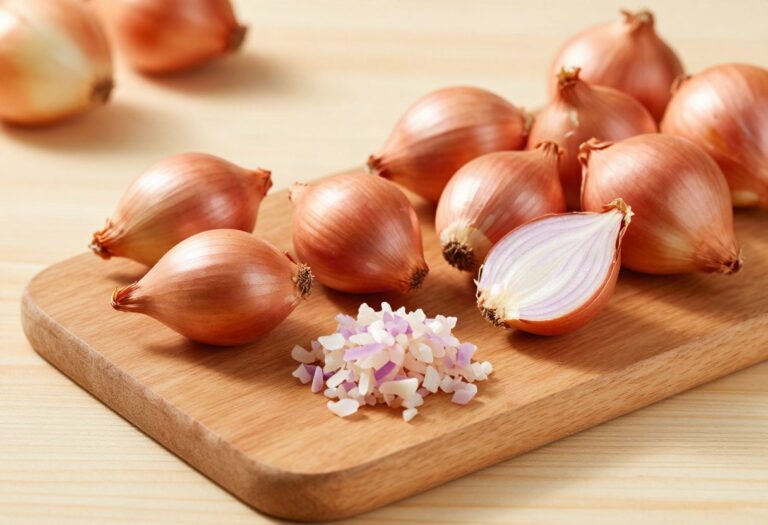
The raw shallot is an aromatic seasoning from the allium family, close to onion and garlic, but with a finer, delicately sweet flavour. It comes in several varieties (grey shallot, Jersey shallot, long shallot), recognisable by their elongated bulb and coppery skin. Finely sliced raw, it subtly lifts vinaigrettes, salads and tartares. In terms of nutrition, the raw shallot provides about 61.7 kcal per 100 g, with 12.2 g of carbohydrate, 1.81 g of protein, very little fat and nearly 2.6 g of fibre. Used in small amounts, it brings a lot of flavour for very few calories, making it a perfect ally for tasty, light cooking.
Macronutrient breakdown
Nutrition table per 100 g
| Calories | 62 kcal |
| Kilojoules | 261 kJ |
| Protein | 1,9 g |
| Carbohydrate | 12,2 g |
| Fat | 0,1 g |
| Fibre | 2,6 g |
Micronutrients per 100 g
All measured nutrients, ranked by share of the daily reference intake.
- Potassium220 mg11 %
- Vitamin C8 mg10 %
- Vitamin B60,1 mg7 %
- Copper0,07 mg7 %
- Phosphorus46 mg7 %
- Manganese0,08 mg4 %
- Vitamin B10,04 mg3 %
- Vitamin B50,19 mg3 %
- Vitamin B9dietary folate equivalents10,2 µg
See the other 7 nutrients
- Magnesium7,5 mg2 %
- Zinc0,2 mg2 %
- Vitamin B30,2 mg1 %
- Total omega-30,03 g1 %
- Calcium9,5 mg1 %
- Iron0,12 mg1 %
- Vitamin A0,21 µg0 %
Anses Ciqual 2025. Source: Anses, 2025, Ciqual food composition table
Tips
The strength of the raw shallot is its ability to flavour a dish without adding to the calorie bill. As it is used by the spoonful rather than the handful, its real contribution stays minimal: a vinaigrette lifted with chopped shallot adds almost nothing to your plate while multiplying the flavours.
How to eat it?
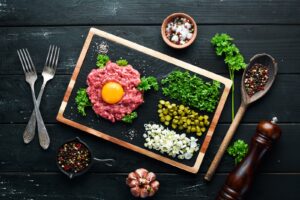
- Very finely sliced in a vinaigrette, on a carpaccio, or in a beef or fish tartare.
- Raw in a mixed salad, a lentil salad or a warm potato salad.
- As a fresh condiment with oysters and a splash of vinegar.
- To soften its bite, soak it for a few minutes in cold water or a little vinegar before using it.
Nutritional profile. The raw shallot is rich in sulphur compounds (responsible for its aroma) and gentle fibre that supports digestive comfort, and provides minerals such as potassium and a little manganese, as well as vitamin C and flavonoid-type antioxidants. Its glycaemic index remains moderate, and its near absence of fat makes it ideal in light cooking. It fits fully into the idea of foods rich in antioxidants to include every day.
Winning pairings. Shallot goes with fresh herbs and the other seasonings in the Herbs & Spices family. Try it with fresh parsley in a light persillade, or with chives to flavour fromage blanc. For a milder, more practical version, freeze-dried shallot is handy when you run out of fresh produce.
For active people. The raw shallot is not strictly a source of energy or protein, but it helps make healthy, low-calorie dishes tasty, which makes it easier to stick to a controlled diet, whether cutting or lean bulking. A shallot-flavoured vinaigrette lets you liven up a big raw vegetable salad without fatty sauces. It complements a plate rich in lean protein and green vegetables.
Storage and points to watch. Keep the bulbs in a dry, cool, airy place, away from light. Once peeled, keep it in the fridge in an airtight container and use it quickly. For weight control, the shallot remains a friend: its calorie density is low and its uses are naturally moderate. Watch instead the sauces and fats that go with it. To place its nutrition facts among your ingredients, see the food calorie table.