Group · Meat
Beef steak
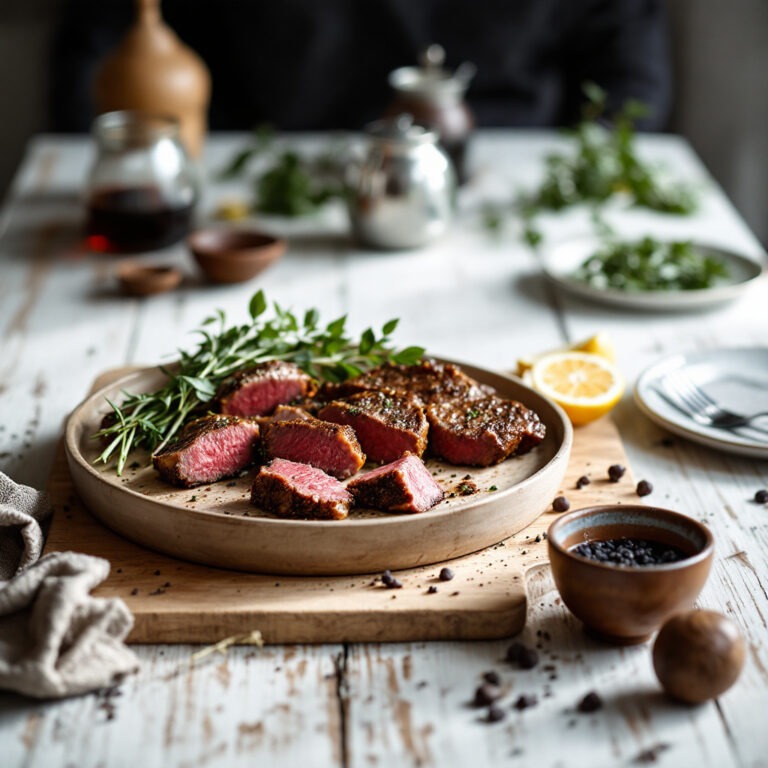
Beef steak (rump, bavette, sirloin) is a red meat rich in high-quality protein, well-absorbed haem iron and zinc. Depending on the cut, its fat content varies: lean cuts make it an excellent source of protein, to be included in moderation in a balanced diet.
Macronutrient breakdown
Nutrition table per 100 g
| Calories | 128 kcal |
| Kilojoules | 541 kJ |
| Protein | 27,6 g |
| Fat | 2 g |
Micronutrients per 100 g
All measured nutrients, ranked by share of the daily reference intake.
- Vitamin B122,7 µg108 %
- Zinc5,39 mg54 %
- Vitamin B60,46 mg33 %
- Vitamin B35,15 mg32 %
- Potassium371 mg19 %
- Iron2,21 mg16 %
- Magnesium28,9 mg8 %
- Copper0,08 mg8 %
See the other 5 nutrients
- Iodine6 µg4 %
- Calcium7,07 mg1 %
- Manganese0,01 mg1 %
- Omega-6 LA0,06 g1 %
- Omega-3 ALA0 g0 %
Anses Ciqual 2025. Source: Anses, 2025, Ciqual food composition table
Tips
Beef steak is quickly seared over a high heat to stay juicy, sliced into strips for stir-fries, or eaten raw as a tartare. It features in lomo saltado, bo bun or a classic tartare.
- Nutrition values: rich in complete protein, haem iron and vitamin B12; choose lean cuts (5-10% fat).
- For athletes: an excellent source of protein and iron to support muscle mass and oxygen transport.
Guidelines recommend limiting red meat to around 500 g a week. Leaner still, 5% fat minced beef is another option. See the Meat family.
Sources
Average nutrition values per 100 g, given as a guide only (they may vary by brand and preparation).