Group · Nuts & seeds
Black olives
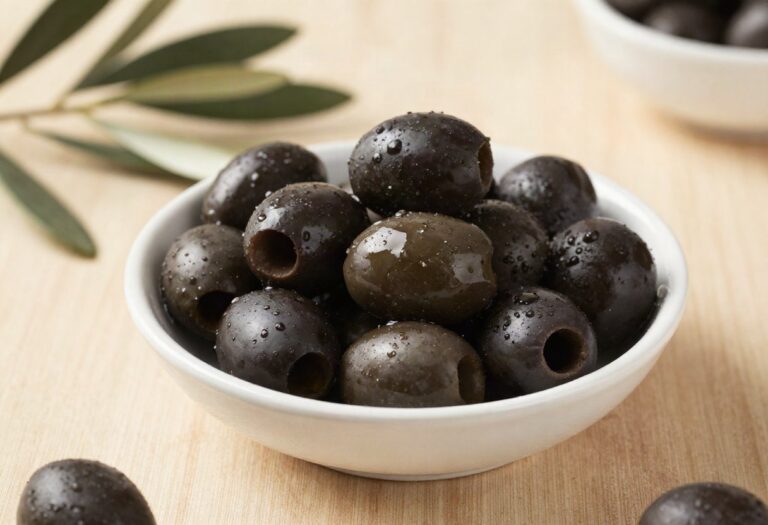
The black olive is the ripe fruit of the olive tree, picked at full maturity, which gives it its dark colour and soft flesh. A staple of Mediterranean cooking, it comes in many varieties (Kalamata, Niçoise, Tanche, Lucques) and is sold whole, pitted, sliced, brined or preserved in oil. Rich in healthy fats from the olive tree, it also provides fibre and antioxidants. At around 173 kcal per 100 g, it is an energy-dense food, best enjoyed in small amounts. Versatile, the black olive suits nibbles and slow-cooked dishes alike, and fits easily into a balanced, tasty diet.
Macronutrient breakdown
Nutrition table per 100 g
| Calories | 173 kcal |
| Kilojoules | 709 kJ |
| Protein | 1,4 g |
| Carbohydrate | 3,8 g |
| Fat | 17,2 g |
| Fibre | 6,2 g |
Micronutrients per 100 g
All measured nutrients, ranked by share of the daily reference intake.
- Iron8,5 mg61 %
- Vitamin E6,1 mg51 %
- Copper0,18 mg18 %
- Omega-6 LA1,36 g14 %
- Calcium80 mg10 %
- Omega-3 ALA0,14 g7 %
- Total omega-30,15 g6 %
- Magnesium16 mg4 %
See the other 9 nutrients
- Manganese0,07 mg4 %
- Vitamin A22,1 µg3 %
- Vitamin K11,4 µg2 %
- Vitamin B60,03 mg2 %
- Vitamin B10,02 mg2 %
- Zinc0,14 mg1 %
- Phosphorus7,9 mg1 %
- Potassium19 mg1 %
- Vitamin B50,04 mg1 %
Anses Ciqual 2025. Source: Anses, 2025, Ciqual food composition table
Tips
To enjoy the benefits of black olives without weighing down your calorie count, a reasonable portion is around 5 to 10 olives, or 20 to 30 g. They go well with drinks and nibbles, in mixed salads, homemade tapenades, pizzas, vegetable bakes or slow-cooked dishes such as chicken with olives. Their intense flavour lifts recipes with very little added fat.
In terms of nutrition facts, black olives stand out for their fat, which is mostly unsaturated and similar to that found in good-quality fats and oils. They also provide fibre (6.2 g per 100 g) that helps digestion, a little protein, and antioxidants such as vitamin E and phenolic compounds. Their glycaemic index is very low thanks to their low carbohydrate content (3.8 g).
- Watch the salt: olives kept in brine are often salty. Rinse them under water before eating if you are keeping an eye on your sodium intake.
- Calorie density: at 173 kcal per 100 g, it is better to count them as part of your nibbles than to graze without limit.
- Storage: once opened, keep the jar in the fridge with the olives covered by their brine.
If you are trying to lose weight or follow a balanced diet, black olives are a good ally as long as you control the amount: their healthy fats bring fullness and flavour. To vary your nibbles without falling back on snacks that are too fatty and salty, alternate with other nuts such as pistachios or almonds, which are rich in plant protein.
For active people, black olives offer good-quality fats for long-lasting energy and a little sodium, which helps make up for the minerals lost through sweat. Add them to a full salad after training, with a source of carbohydrate and protein, for a balanced recovery. They are still calorie-dense, though: when cutting, measure them out precisely.
Black olives fit perfectly into the Cretan diet, known for its balance. Discover similar foods in the Nuts & Seeds family and adjust your portions to your goals.