Group · Meat
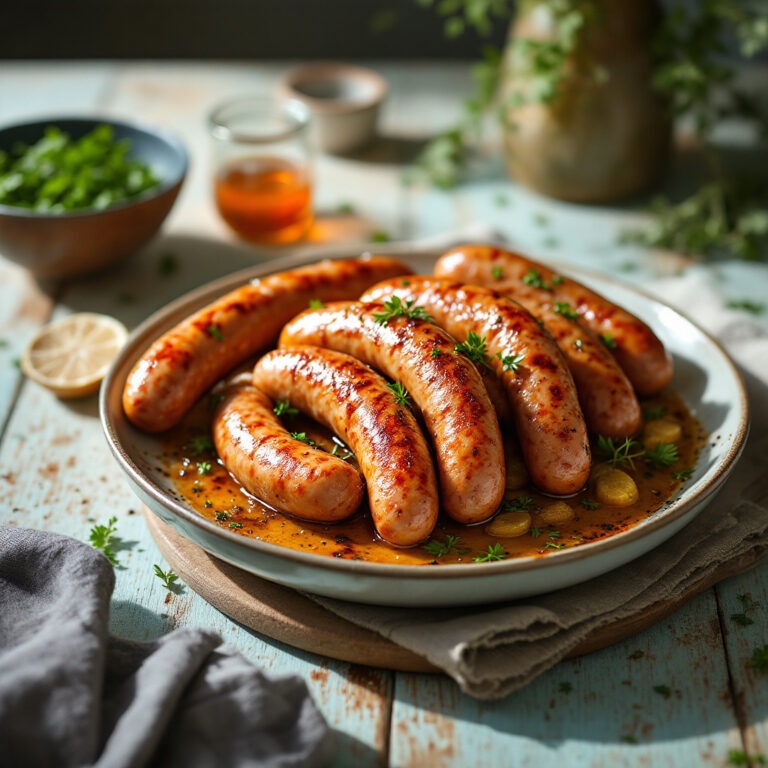
Poultry sausage (cooked)
Poultry sausage is presented as a light alternative to pork sausage. The reality depends entirely on the recipe: a charcuterie-style sausage made with poultry is still a processed meat, with the fat and salt that go with it.
In terms of nutrition facts: 239 kcal per 100 g, with 19.1 g of fat of which 6.2 g saturated fatty acids, and 15.6 g of protein. It also contains 1.75 g of salt per 100 g.
Macronutrient breakdown
Nutrition table per 100 g
| Calories | 239 kcal |
| Kilojoules | 992 kJ |
| Protein | 15,6 g |
| Carbohydrate | 1,2 g |
| Fat | 19,1 g |
Micronutrients per 100 g
All measured nutrients, ranked by share of the daily reference intake.
- Calcium8 mg1 %
Anses Ciqual 2025. Source: Anses, 2025, Ciqual food composition table
Tips
« Poultry » does not mean lean. That is the main message of this page: 19.1 g of fat, far more than a turkey escalope at 1.09 g. The fat comes from the sausage formulation, not from the animal.
And the protein is lower. 15.6 g per 100 g, against 28 to 29 g for unprocessed poultry meat. The rest of the weight is water, fat and texture additives.
Salt is the second issue. 1.75 g per 100 g: an 80 g sausage provides 1.4 g, nearly a third of the daily benchmark. See salt.
Read the ingredients list, it speaks volumes. The percentage of meat varies from 60 to over 90% depending on the brand. It is the only criterion that really distinguishes two products from the same aisle.
It remains an acceptable standby. Grilled without added fat and served with vegetables rather than chips, it has its place from time to time. As with any processed meat, frequency is what decides.
Sources
Average nutritional values per 100 g, provided for guidance only (may vary by brand, cut and preparation).