Group · Drinks
Cola
Cola is one of the most widely consumed sugary fizzy drinks in the world. Brown, sparkling and flavoured (notes of vanilla, citrus and spices such as the kola nut), it comes in a classic, light or sugar-free version. In terms of nutrition facts, cola provides about 40.1 kcal per 100 g, or nearly 10 g of carbohydrate, entirely in the form of fast sugars, with no protein, fat or fibre. It is therefore a treat drink, to be enjoyed in moderation in a balanced diet. Understanding its calories and the place it takes in your day lets you enjoy it occasionally, without making it a reflex for quenching your thirst.

Macronutrient breakdown
Nutrition table per 100 ml
| Calories | 40 kcal |
| Kilojoules | 170 kJ |
| Protein | 0,1 g |
| Carbohydrate | 10 g |
| Fat | 0,1 g |
| Fibre | 0,1 g |
Micronutrients per 100 ml
All measured nutrients, ranked by share of the daily reference intake.
- Phosphorus10 mg1 %
- Iron0,11 mg1 %
- Magnesium2,44 mg1 %
- Iodine0,8 µg1 %
- Copper0 mg0 %
- Calcium1,92 mg0 %
- Potassium2 mg0 %
- Zinc0,01 mg0 %
Anses Ciqual 2025. Source: Anses, 2025, Ciqual food composition table
Tips
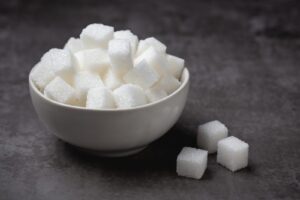
Cola is above all a treat drink. A standard 33 cl can contains about 132 kcal and the equivalent of 7 sugar cubes. It is therefore better to consider it an occasional extra rather than an everyday drink. To limit your sugar intake, you can turn to a lighter version such as diet cola, which greatly reduces calories while keeping the taste.
How to enjoy it sensibly:
- Serve it well chilled, in a small portion, at a sociable meal or on a night out, rather than as a hydrating drink.
- Avoid systematically pairing it with fatty, sugary dishes like those in Drinks, where the calories add up quickly.
- Alternate with still or sparkling water such as Perrier for the bubbles without the sugar.
- Keep opened bottles tightly closed and cool to preserve the fizz.
Nutritional profile. Cola stands out for its high glycaemic index: its carbohydrates are simple sugars that raise blood sugar quickly. It also contains caffeine (except in decaffeinated versions) and phosphoric acid, which give it its stimulating, tangy profile. It provides no protein, no fat, no fibre and no notable vitamins: it is essentially liquid calories. To explore more nutritious alternatives, you can compare with an orange juice or discover the whole drinks family.
Tip for active people. Cola sometimes comes up in the endurance world: its fast sugars and caffeine can give a boost during very long efforts (trail running, ultra events). Outside this specific context, it is of little use for performance or recovery, as it contains neither suitable electrolytes nor protein. After training, choose a real recovery source such as a post-training shaker and hydrate with water.
Weight control. Because of its density of fast sugars and its lack of filling fibre, cola is one of the drinks to limit when you are watching your waistline. Liquid sugars are drunk quickly and do not make you feel full, which can encourage a hidden calorie surplus. If you are trying to lose weight or follow a balanced diet, keep cola for special occasions, choose sugar-free versions and make water your go-to drink.