Group · Starchy foods
Durum wheat semolina
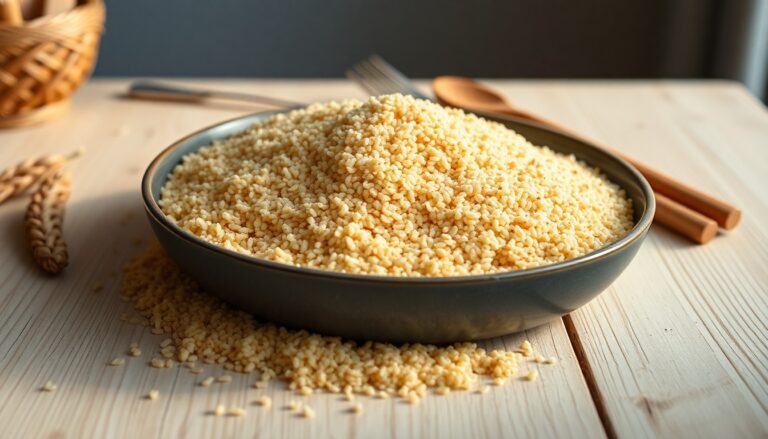
Durum wheat semolina is a starchy food made by coarsely milling durum wheat grains (Triticum durum). It comes in several grades: fine, medium or coarse, depending on the use. It is the star ingredient of couscous, tabbouleh and many sweet preparations. Its grainy texture and mild flavour make it a versatile base, easy to cook and quick to prepare.
In terms of nutrition facts, durum wheat semolina provides around 350 kcal per 100 g (raw weight), with nearly 69.8 g of carbohydrates, 13 g of plant protein, little fat and some fibre. Rich in complex carbohydrates, it is an excellent source of energy in a balanced diet, to be measured out according to your activity and goals.
Macronutrient breakdown
Nutrition table per 100 g
| Calories | 350 kcal |
| Kilojoules | 1480 kJ |
| Protein | 13 g |
| Carbohydrate | 69,8 g |
| Fat | 1,3 g |
| Fibre | 3,7 g |
Micronutrients per 100 g
All measured nutrients, ranked by share of the daily reference intake.
- Vitamin K130 µg40 %
- Vitamin B972 µg36 %
- Manganese0,62 mg31 %
- Vitamin B10,28 mg25 %
- Vitamin B33,31 mg21 %
- Phosphorus136 mg19 %
- Copper0,19 mg19 %
- Magnesium47 mg13 %
See the other 12 nutrients
- Zinc1,05 mg11 %
- Vitamin B50,58 mg10 %
- Potassium186 mg9 %
- Iron1,23 mg9 %
- Vitamin B60,1 mg7 %
- Vitamin B20,08 mg6 %
- Omega-6 LA0,4 g4 %
- Iodine3,5 µg2 %
- Calcium17 mg2 %
- Selenium1 µg2 %
- Omega-3 ALA0,03 g1 %
- Vitamin E0,1 mg1 %
Anses Ciqual 2025. Source: Anses, 2025, Ciqual food composition table
Tips
Durum wheat semolina is prepared in no time: simply cover it with hot water or stock, leave it to swell for a few minutes, then fluff it with a fork and a drizzle of olive oil. For a suitable portion, allow about 60 to 80 g of dry semolina per adult (a generous plate once rehydrated). Athletes and very active people can go up to 100 g depending on their energy needs.
Culinary uses and varieties:
- Medium semolina for traditional couscous and tagines;
- Fine semolina for fresh tabbouleh, summer salads and desserts (semolina cake, semolina pudding);
- Coarse semolina for more rustic, hearty dishes.
Combine it with colourful vegetables, pulses such as chickpeas, and a source of lean protein for a complete, filling meal. The combination of cereal and pulse improves the quality of the plant protein in the dish.
Nutritional strengths: durum wheat semolina offers complex carbohydrates, plant protein (about 13 g per 100 g) and fibre (3.7 g), which contribute to fullness and digestive comfort. It also provides minerals and B vitamins. Its glycaemic index is more moderate than that of very refined starchy foods, especially if you eat it al dente and with fibre and good-quality fats.
Tips for active people: thanks to its richness in carbohydrates, semolina is ideal for replenishing glycogen stores. Before exercise, plan it a few hours ahead for lasting energy; after training, pair it with a source of protein to support recovery. To go further, discover our advice on nutrition for fitness.
Weight control: the calorie density of raw semolina is high, but it swells a great deal when cooked, which sharply reduces the amount per portion once rehydrated. What matters is controlling the quantity and above all the additions (butter, fatty sauces, cured meats). If you are looking for more fibre, alternate with bulgur or couscous, other members of the starchy foods family. Store dry semolina in an airtight container, away from damp; once cooked, keep it for 2 to 3 days in the fridge.